

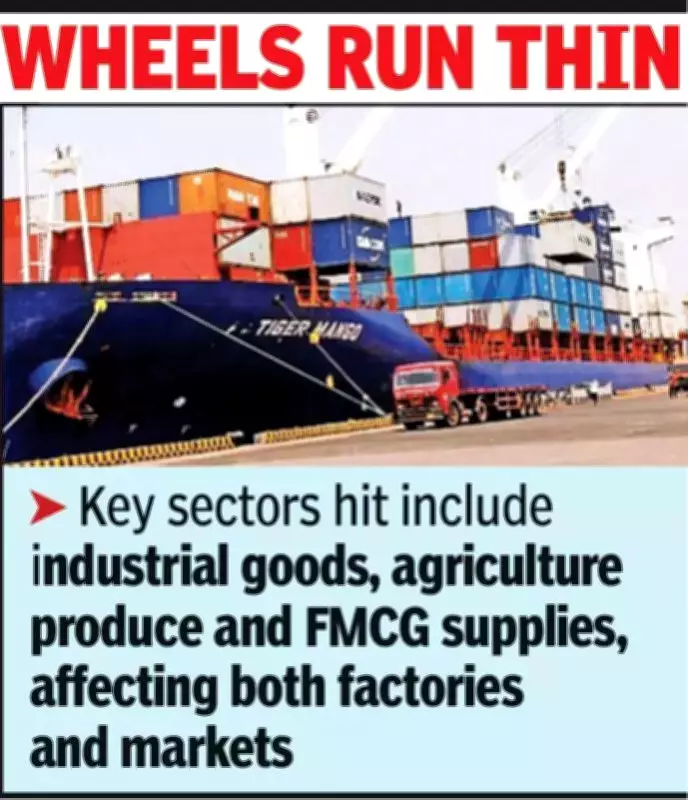
Madhya Pradesh Freight Movement Plummets 30% Amid US-Israel-Iran Conflict
Freight movement across Madhya Pradesh has dropped by nearly 30 percent over the past week, as the ongoing conflict involving the United States, Israel, and Iran has severely disrupted industrial supply chains. This geopolitical tension has slowed the movement of raw materials and finished goods, creating significant challenges for the state's transport and industrial sectors.
Sharp Decline in Commercial Vehicle Activity
According to transport operators, the estimated daily to-and-fro movement of commercial vehicles in Madhya Pradesh normally handles around 65,000 to 70,000 tonnes of goods. However, this volume has seen a drastic reduction due to the conflict's impact on global and local supply chains. CL Mukati, President of the Indore Truck Operators and Transport Association, explained, "Loads from industries, traders, and agricultural commodities all dropped. The fall was mainly led by industries because they were not receiving raw material supplies, and this eventually slowed dispatches of finished goods."
Idle Vehicles and Falling Freight Charges
The disruption has led to a noticeable decline in transport business, with many vehicles standing idle. Paramveer Singh, President of the Jabalpur Transport Association, reported, "Vehicles are standing idle, and transport business dropped by around 25 percent. Because of lower demand, freight charges also fell by nearly 15 percent." This downturn highlights the broader economic repercussions of the conflict, affecting not just international trade but also regional logistics and pricing.

Broader Implications for Supply Chains
The conflict's ripple effects are evident in the slowdown of industrial activities, as raw material shortages hinder production and distribution. Key points include:
- Reduced movement of goods across Madhya Pradesh, impacting industries and traders.
- Lower demand for transport services, leading to financial strain on operators.
- Decreased freight charges due to reduced competition and supply chain bottlenecks.
This situation underscores how geopolitical tensions can quickly translate into tangible economic challenges at the local level, disrupting everyday business operations and supply chain efficiency.






