

Mysuru Hosts Major Gathering to Champion Sustainable Agriculture
The Kisan Swaraj Sammelan, a significant event dedicated to raising awareness about the critical importance of traditional and sustainable agricultural practices, commenced at the Karnataka State Open University (KSOU) campus in Mysuru on Friday. This three-day conference and mela is a collaborative effort organized by the Alliance for Sustainable and Holistic Agriculture (ASHA) and the Prasaranga wing of KSOU, attracting nearly 1,000 delegates from various regions across India.
Call to Shift from Chemical to Natural Farming
Inaugurating the event, KSOU Vice-Chancellor Sharanappa Halase reflected on India's agricultural history. He acknowledged that the Union government initiated an agricultural revolution during the 1970s to enhance food production and address the demands of a rapidly expanding population. However, Halase pointed out that the over-reliance on chemical fertilizers to boost crop yields has resulted in severe ecological damage and significant public health concerns. He made a passionate appeal to farmers to embrace natural and organic farming techniques while drastically reducing the use of chemical inputs.
Halase further emphasized the growing distress among Indian farmers, citing declining prices for agricultural produce and recurrent crop failures due to unpredictable weather patterns. He underscored the urgent necessity for national policymakers to provide robust support to farmers, recognizing their indispensable role in maintaining the nation's food security.

Farmers Advocate for Indigenous Seeds and Policy Consultation
Davanagere-based natural farmer Raghava Aikanthika urged the farming community to abandon hybrid seeds and instead focus on preserving indigenous seed varieties. He argued that these native seeds possess greater resilience against diseases and are better suited to local environmental conditions. Kerala-based natural farmer Vishalakshan highlighted the importance of farmer involvement in policy decisions, insisting that the government must consult with farmers' organizations before finalizing any free trade agreements with the United States that involve agricultural imports, seeds, and related issues.
Women's Leadership in Agricultural Revival
Bibi Jan, a distinguished farmer leader from Kundagol and a recipient of the prestigious United Nations Equator Initiative Award, spoke eloquently about the vital contributions of women in agriculture. She detailed the impactful work of the Bibi Fatima Women's Association, which established a community seed bank and successfully revived numerous vanishing varieties of millets and pulses. This initiative has empowered over 5,000 farmers to resume millet cultivation, showcasing a model of community-led agricultural conservation.
Biodiversity Fair and Organic Showcase
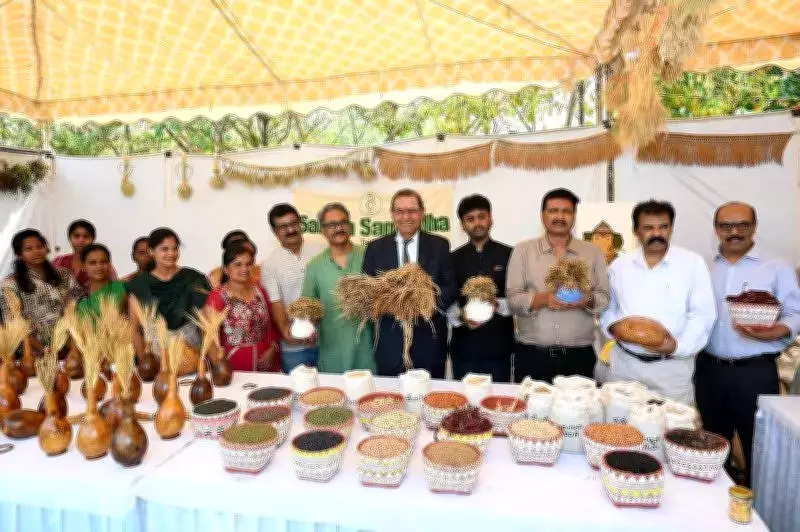
A vibrant biodiversity fair served as the centerpiece of the Sammelan, featuring more than 100 seed conservators from various states. They displayed an impressive collection of over 2,000 varieties of seeds, tubers, and fruits across 40 dedicated stalls. The event also includes 37 stalls showcasing organic products and seven traditional food stalls representing different states, offering a taste of regional culinary heritage.
Live demonstrations added a practical dimension to the conference, with highlights including a traditional bullock-driven oil extraction unit and charkha-based hand spinning by skilled weavers from Andhra Pradesh. These exhibits underscore the integration of age-old techniques with modern sustainable practices, reinforcing the Sammelan's mission to foster a holistic approach to agriculture that benefits both farmers and the environment.






