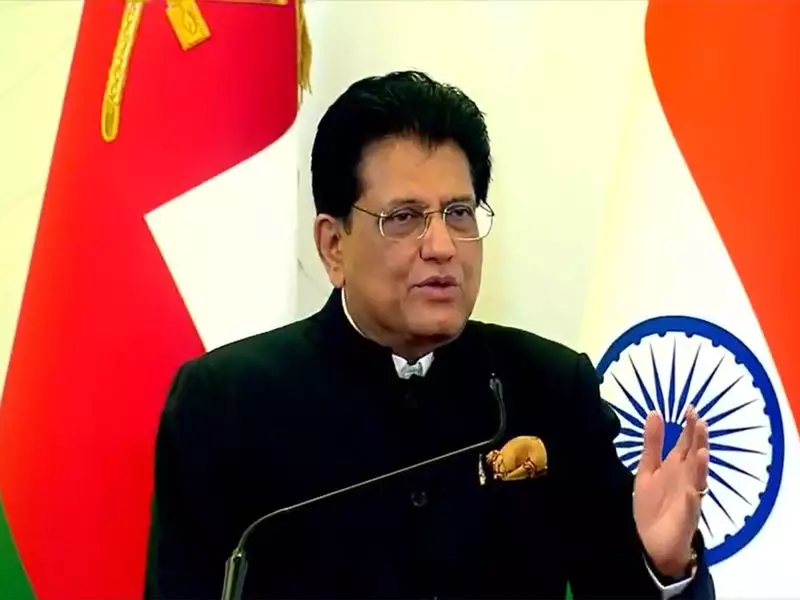
In a significant boost for Indian professionals and service providers, the newly signed India-Oman Comprehensive Economic Partnership Agreement (CEPA) has dramatically extended the permissible stay duration in the Sultanate. Union Minister for Commerce & Industry, Piyush Goyal, announced that the pact increases the stay period for contractual service suppliers from the existing 90 days to a substantial two years.
Key Mobility Provisions Under the New Trade Pact
The landmark agreement, signed on March 15, 2024, and set to be implemented after the completion of legal and ratification processes, addresses a long-standing hurdle for the services sector. The enhanced mobility clause is a cornerstone of the CEPA, designed to facilitate smoother and deeper economic engagement. This provision specifically benefits Indian professionals in sectors like IT, healthcare, engineering, and accounting, who work on a contractual basis for Omani clients.
Minister Goyal highlighted this feature as a major win for India's skilled workforce. He emphasized that the extension from a short-term three-month window to a two-year period provides the necessary stability and continuity for executing complex projects and delivering high-quality services. This change is expected to make Indian service exports more competitive and reliable in the Omani market.

Broader Economic Impact and Strategic Partnership
The CEPA with Oman is India's first such agreement with a West Asian nation and is anticipated to be a game-changer for bilateral trade. Beyond services, the pact aims to eliminate duties on a vast range of goods, stimulate cross-investment, and create a robust economic corridor. The Minister expressed confidence that the agreement would generate substantial employment opportunities in both nations by fostering a more integrated and predictable business environment.
The strategic partnership is poised to unlock new avenues in key Indian export sectors, including:
- Textiles and Apparel: Duty-free access for Indian garments and fabrics.
- Engineering Products: Boost for machinery, auto parts, and electrical goods.
- Chemicals and Pharmaceuticals: Enhanced market access for Indian medicines and agro-chemicals.
- Dairy and Agricultural Products: New opportunities for Indian farmers and food processors.
Oman, in return, gains improved access to the vast Indian market for its downstream petroleum products, natural gas, and metals. The agreement also includes chapters on trade remedies, rules of origin, and technical barriers to trade, ensuring a balanced and fair framework.
Implementation Timeline and Future Outlook
While the agreement has been formally signed, its operationalization awaits the completion of domestic legal procedures and ratification by both governments. Officials are working to expedite the process, with expectations for it to come into force within the current calendar year. Business communities in both countries have welcomed the pact, anticipating a surge in bilateral trade, which currently stands at approximately $12.3 billion.
This CEPA is seen as a strategic move by India to deepen ties with the Gulf Cooperation Council (GCC) region, with Oman serving as a crucial gateway. The enhanced stay provision for service suppliers sets a positive precedent for future agreements, underscoring India's focus on securing better terms for its dynamic and skilled service professionals globally. The move is aligned with India's broader foreign economic policy to secure comprehensive partnerships that drive growth, investment, and job creation.