

Passengers in the Hubballi region have voiced strong disappointment and anger following a dual increase in train fares imposed by the South Western Railway (SWR). The railway zone implemented an additional hike on December 19, just days before a nationwide fare revision announced by Indian Railways on December 21, which becomes effective from December 26.
Double Blow for Commuters
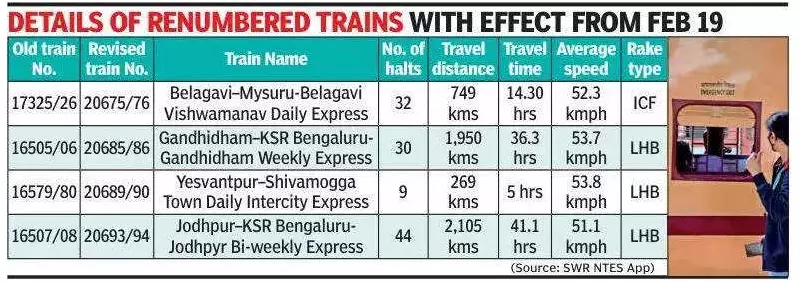
This pre-emptive move by SWR has been perceived as a double financial blow to daily travelers. Beyond the general increase, SWR also raised fares for select trains starting February, citing approval from the Railway Board for 'renumbering' these services. However, passenger groups and activists contend that the real motive behind this second hike is the quiet conversion of certain trains from the normal express category to the superfast (SF) category.
Railway officials defend the action by stating that any train operating at an average speed above 55 kilometers per hour is eligible for superfast charges. This justification has done little to placate frustrated passengers.

Unchanged Service, Higher Cost
Travelers argue that the trains in question continue to operate with the same old rakes, identical speeds, and unchanged stoppage patterns. They assert that the average speed of these trains often remains below the 55 kmph threshold required for the superfast tag, making the extra levy unjustified.
Sunil Kulkarni, president of the Kalyana Karnataka Grahakara Vedike, pointed out that SWR renumbered four pairs of trains without providing a clear reason. He interpreted the railway's press release as a transparent effort to maximize profits. "Since they convert these trains from February 19-21, this fare hike will be implemented on top of the general fare increase effective from December 26," Kulkarni explained. He insisted that if railways wish to classify a service as superfast, they must first upgrade the rakes or genuinely expedite the journey speed.
Specific Cases Highlight the Issue
Rohit S Jain, secretary of the SWR Passengers Committee, provided a stark example. He noted that the Belagavi-Mysuru train makes 24 stops over a 607-kilometer journey, taking about 11.2 hours. "Its average speed calculates to roughly 53 kmph, and it uses an older ICF rake. It is more fit to run as a shuttle train, but SWR is now charging a superfast fare for it," Jain alleged.
The concern among passenger rights organizations is that this practice may set a precedent. They fear that superfast fares could be extended to many more trains in the future without any corresponding improvement in service quality, effectively allowing railways to increase revenue through classification changes rather than infrastructure upgrades.
Ganesh Singh Byali, president of the Betgeri Railway Abhivruddhi Samiti, accused SWR and Indian Railways of creating confusion and hiking fares through opaque methods. "Instead of adopting such unfair trade practices, let the Railway hike its fare openly and countrymen will teach a lesson," he challenged. He also mentioned that attempts to get an official comment were unsuccessful, as Manjunath Kanamadi, the Chief Public Relations Officer (CPRO) of SWR, was unavailable for remarks.
The situation highlights a growing tension between railway authorities seeking to optimize revenue and passengers who feel they are being asked to pay more for the same, often subpar, travel experience.






