Polymer Shortage from Israel-Iran Conflict Threatens to Spike Prices of Essential Goods
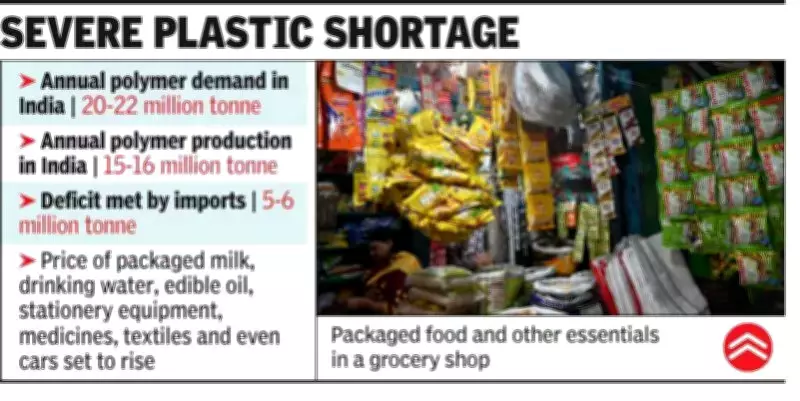
The ongoing conflict between Israel and Iran, coupled with disruptions in global supply chains, is triggering a severe shortage of polymers like polypropylene and polyethylene in India. These critical materials, derived from petrochemicals, are essential for packaging across numerous industries. The scarcity stems from a dual crisis: a shortage of raw materials and the diversion of LPG used in production units to prioritize household supply. This situation is poised to significantly increase the prices of everyday items, including packaged milk, drinking water, edible oil, stationery equipment, medicines, textiles, and even automobiles.
Root Causes: Feedstock Disruptions and Production Halts
Polymers are manufactured from propylene and ethylene, which are by-products of LPG and naphtha processing. India's heavy reliance on LPG imports has made the supply chain vulnerable. Disruptions in the Strait of Hormuz, a critical maritime route, have tightened feedstock availability. This has led to a dramatic 50-60% surge in polymer prices and created a scarcity of raw materials. Specifically, prices for key polymers such as HDPE, LLDPE, and PP have skyrocketed by 50-70%. The volatility is so extreme that prices are changing almost daily.
The shortage has forced many plastic-processing units to shut down, exacerbating the scarcity of plastic materials. Industry data reveals a concerning trend: while imports have reduced by 30%, domestic production has declined by 15%. This imbalance is straining the entire manufacturing ecosystem.

Industry Warnings: Buffer Stocks Depleting Rapidly
Amit Agarwal, president of the Indian Plastic Federation and a key figure in the plastic packaging industry, issued a stark warning. "While companies and industries that use polymer packaging or plastic had a buffer stock of around one month when the war began, it is fast depleting. Unless the war ends in the next 7-10 days, the rising polymer prices will lead to an increase in the cost of many day-to-day goods," he stated.
Agarwal highlighted that the one-month buffer stock has already diminished by 65%. "We will have a grave situation in our hands. There will be no inventory left in April," he cautioned, emphasizing the widespread use of plastic in everything from foodgrain packaging to water supply pipes.
Immediate Impact on Consumer Goods and Medical Supplies
The effects are already being felt in the market. Packaged drinking water prices, which had recently reduced to Rs 18 per litre, have now climbed to Rs 20. The detergent industry is also grappling with raw material scarcity, which could soon translate to higher prices for consumers.
Perhaps most alarmingly, the medical devices industry is facing a severe brunt. There is a looming shortage of polypropylene (PP), a thermoplastic polymer crucial for manufacturing syringes, IV bags, catheter components, blood bags, and surgical drapes. This shortage threatens to disrupt healthcare supplies at a critical time.
MSME Sector in Dire Straits, Calls for Government Intervention
The crisis is hitting micro, small, and medium-scale enterprises (MSMEs) particularly hard. These businesses constitute nearly 80% of manufacturers in the plastic industry. Alok Tibrewala, president of the PlastIndia Foundation and an industry veteran, described the situation as dire for these enterprises.
"The government will have to urgently work out a credit line for the healthy MSMEs in the plastic industry like it did during the pandemic. Otherwise, the sector can turn sick," Tibrewala urged. He stressed the need for immediate replenishment of supplies and financial support to prevent a collapse of this vital industrial segment.
In summary, the polymer shortage, fueled by geopolitical tensions and supply chain disruptions, is creating a perfect storm for price inflation across essential goods. With buffer stocks dwindling and production hampered, industry leaders are calling for swift action to mitigate what could become a widespread economic and supply chain crisis in the coming weeks.