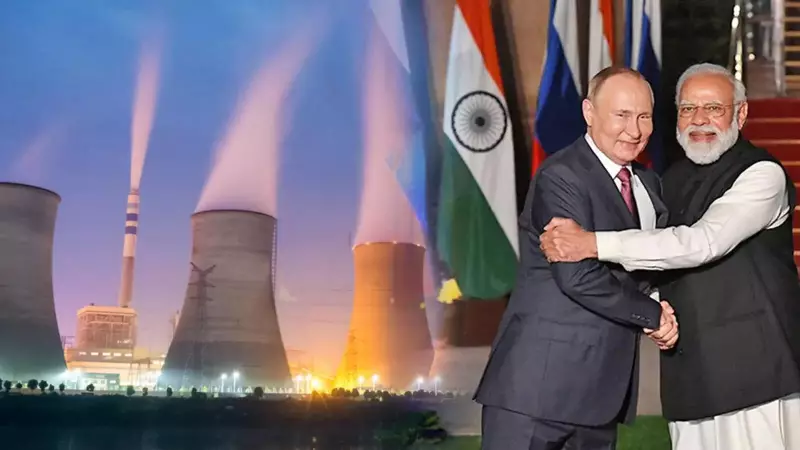
In a significant move strengthening a decades-old strategic partnership, Russia has delivered a powerful assurance for India's energy future. President Vladimir Putin has committed to advancing the Kudankulam Nuclear Power Plant to its full capacity, guaranteeing a steady fuel supply for the lifetime of its upcoming reactors. This major announcement, made on December 5, 2025, marks one of the strongest energy pledges India has received in recent years.
Fuel Delivery and Full Capacity Pledge
The commitment comes alongside tangible action. Russian state nuclear corporation Rosatom has initiated the shipment of the first consignment of nuclear fuel for Kudankulam Unit 3. This delivery is part of a massive, multi-flight cycle designed to ensure the reactor's operational readiness. President Putin's pledge to take the plant to full power, backed by a lifetime fuel guarantee, removes a critical uncertainty for India's largest nuclear power facility located in Tamil Nadu.
Expanding the Horizon of Collaboration
Beyond the immediate focus on Kudankulam, the Russian leader proposed a substantial broadening of the atomic energy partnership. The new areas of collaboration highlighted include the joint development of small modular reactors (SMRs) and floating nuclear power stations, which offer flexible deployment options. Furthermore, the cooperation is set to extend into non-energy applications of nuclear technology in vital sectors like healthcare and agriculture, promising advancements in cancer treatment and food security.

Strategic Stability and Clean Energy Goals
Prime Minister Narendra Modi underscored the deep strategic value and stability inherent in the India-Russia energy relationship. He emphasized that this robust nuclear cooperation is a cornerstone of India's ambitious transition to clean energy. The expansion of the Kudankulam plant is poised to be a game-changer for the nation's energy landscape. It is expected to significantly transform the national power grid, diversify critical energy supply chains, and solidify India's long-term energy security in an uncertain global environment.
The move is seen as a testament to the resilient strategic ties between New Delhi and Moscow, even as India navigates complex global geopolitics. The fuel supply guarantee ensures the operational viability of a key clean energy asset, directly supporting India's climate goals and its growing electricity demands.