

Southern Railway Investigates Curved Metro Station Designs to Resolve Safety Issues at Adambakkam MRTS Station
A comprehensive study of curved metro station designs is currently being conducted by the construction team of Southern Railway. This initiative aims to address critical safety flaws identified at the Adambakkam MRTS station in Chennai. Since the commissioning of the MRTS extension from Velachery to St Thomas Mount railway station on March 14, trains have not been making stops at Adambakkam due to significant safety concerns.
Safety Concerns Flagged by Railway Safety Commissioner
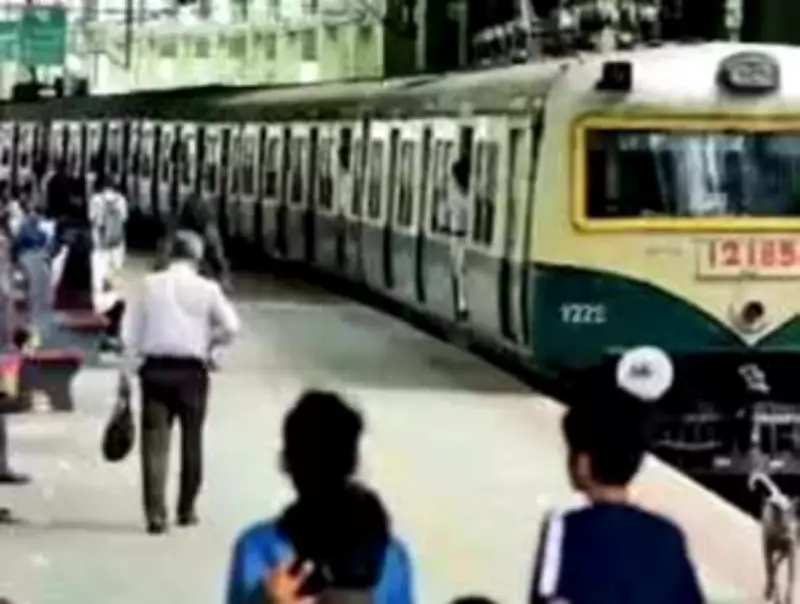
The decision to halt services at Adambakkam stems from an inspection by the Chief Commissioner of Railway Safety (CCRS). During a review of the newly opened 4.5-kilometer stretch, the CCRS highlighted a widening gap between the train coaches and the platform at Adambakkam station. This gap was registered as a serious safety hazard, with risks of passengers falling through while boarding or alighting from trains during brief halts.
Railway officials explained that the unusual gap is primarily due to the station's location on a curve, unlike other MRTS stations which are typically on straight sections. The curvature causes a slanting effect on the cars, leading to the increased separation from the platform edge.

Study Focus and Potential Solutions
In response to the CCRS's findings, the Chief Administrative Officer (Construction) of Southern Railway has been tasked with examining metro stations that are built on curves. The objective is to develop an effective solution to mitigate the gap issue at Adambakkam. Depending on the study's outcomes, corrective measures will be implemented to enable the station's operationalization in the near future.
The study is expected to evaluate various engineering approaches, including:
- Extending the platform structures to reduce the distance to the trains.
- Making adjustments to the track alignment or infrastructure to better accommodate the curved design.
- Assessing best practices from other curved metro systems to ensure passenger safety and operational efficiency.
Background on the MRTS Extension Project
The phase two extension of the MRTS up to St Thomas Mount, which connects with the Tambaram-Beach suburban corridor, was initially proposed in 2008. However, the project faced numerous challenges over the years, including delays in land acquisition and construction bottlenecks, resulting in an 18-year completion timeline.
This extension includes three new stations after Velachery: Puzhuthivakkam, Adambakkam, and St Thomas Mount. During the launch, railway authorities announced that trains would stop at Puzhuthivakkam before terminating at St Thomas Mount, but would bypass Adambakkam due to the unresolved safety issues.
Currently, the MRTS network operates 86 services daily between Chennai Beach and St Thomas Mount, with 43 trips in each direction. Additional services run up to Velachery from both terminals, maintaining connectivity while the Adambakkam station remains non-operational.
The ongoing study represents a critical step towards enhancing railway safety standards and ensuring that all stations on the MRTS line are fully functional and secure for public use.






