

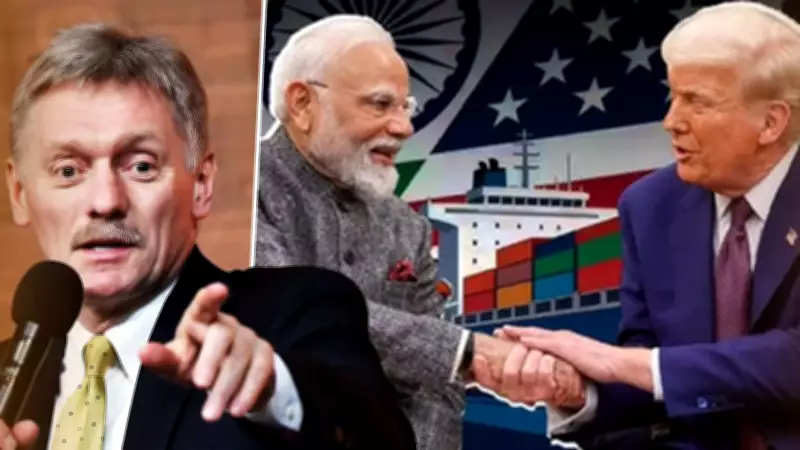
Russia Contradicts Trump's Assertion on India's Russian Oil Import Plans
In a significant diplomatic development, Russia has officially rejected claims made by former United States President Donald Trump regarding India's purported plans to cease importing Russian oil. The Russian government stated that it has received no official notification from New Delhi about any intention to halt crude purchases, directly contradicting Trump's recent statements.
Background of Trump's Claims and the India-US Trade Agreement
Former President Donald Trump had asserted that Prime Minister Narendra Modi agreed to stop importing Russian crude oil as part of a broader India–US trade deal. According to Trump, this agreement includes a reduction of US tariffs on Indian goods to 18 per cent, alongside provisions encouraging India to import oil from the United States and potentially from Venezuela.
Prime Minister Modi has publicly confirmed the tariff reduction aspect of the deal, which marks a substantial improvement in bilateral trade relations. However, he notably made no mention of any commitment to halt Russian oil imports during his announcements, leaving that specific claim unverified by Indian authorities.

Industry Insights and Current Contractual Obligations
Industry experts monitoring the situation have provided crucial context about India's current energy procurement strategy. They note that Indian refiners have existing contracts for Russian crude that are scheduled for delivery throughout February and March 2026. These contractual agreements represent binding commitments that cannot be abruptly terminated without significant financial and operational consequences.
Furthermore, the Indian government has not issued any directives to oil companies to stop purchasing Russian crude. This absence of official guidance suggests that any potential shift in supply sources would require a carefully managed transition period to fulfill existing obligations and reconfigure supply chains.
Implications for International Relations and Energy Security
This contradiction between Russian statements and Trump's claims highlights the complex geopolitical dynamics surrounding global energy markets and international diplomacy. India has maintained a balanced approach in its foreign policy, seeking to protect its energy security while navigating relationships with multiple global powers.
The situation underscores how trade agreements can become entangled with broader strategic considerations, particularly regarding energy dependencies and international alliances. As one of the world's largest oil importers, India's procurement decisions carry significant weight in global markets and diplomatic circles.
Looking Ahead: What This Means for India's Energy Strategy
Moving forward, several key factors will influence how this situation develops:
- The need for India to balance its energy security requirements with diplomatic considerations
- The practical challenges of reconfiguring established supply chains and contractual obligations
- The evolving nature of international trade agreements in an increasingly multipolar world
- The importance of clear communication between nations to prevent misunderstandings in sensitive diplomatic matters
As the situation continues to unfold, market observers and policymakers will be closely monitoring any official statements from the Indian government regarding its future energy procurement strategy and how it aligns with the broader terms of the India-US trade agreement.






