

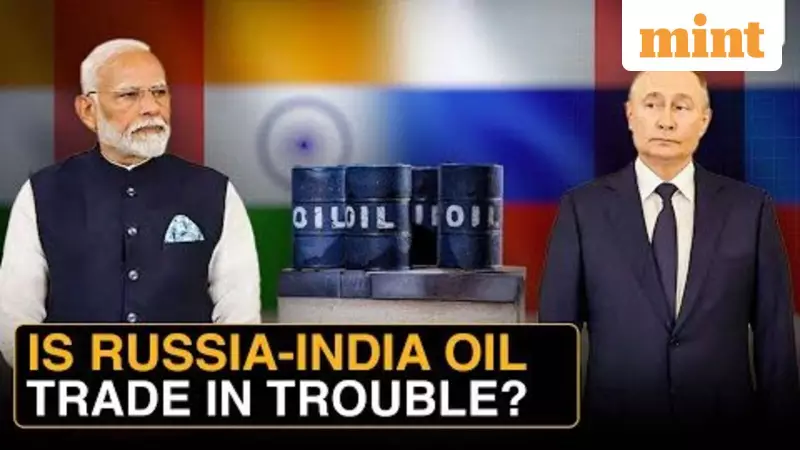
India's crucial supply of Russian crude oil has witnessed a dramatic and sudden decline, hitting its lowest point in three years as tightened US sanctions begin to take a severe toll. The flow, which had become a cornerstone of India's energy imports since the Ukraine conflict, averaged just 1.1 million barrels per day (bpd) in December 2025—the weakest monthly volume since 2022.
Sanctions Bite: Reliance Pauses, Flows Crash
The sharp drop is a direct consequence of the latest round of sanctions enforced by the Trump administration, targeting entities involved in the trade of Russian oil. The impact was immediate and significant. Reliance Industries, a major private refiner, has temporarily suspended purchases from blacklisted Russian companies. This cautious move by one of India's largest oil buyers created a substantial void in demand.
The situation became so acute that at one point in December, the daily import volumes from Russia plummeted to approximately 700,000 barrels per day (7 lakh bpd), a fraction of the peak levels seen in previous years. This crash highlights the vulnerability of India's energy procurement strategy when faced with intense Western geopolitical pressure.

State Refiners Step In, But Cautiously
In response to the disruption, India's state-owned refiners have stepped in to partially fill the gap. However, their approach has been marked by extreme caution. Companies like Indian Oil Corporation (IOC) and Bharat Petroleum (BPCL) are now selectively sourcing only non-sanctioned crude oil from Russia, navigating a complex web of regulations to avoid secondary sanctions.
This shift represents a delicate balancing act for New Delhi. While securing affordable energy remains a top priority for the world's third-largest oil importer, maintaining access to the Western financial system and avoiding diplomatic friction is equally critical. The state refiners' measured strategy reflects this tightrope walk.
What's Next for India's Oil Imports?
Industry analysts suggest a partial rebound in Russian oil flows to India is possible in 2026, as markets and traders adjust to the new sanctions regime and identify compliant channels. However, the era of reliably cheap and abundant Russian barrels appears to be over for the foreseeable future.
The ongoing situation forces India to reconsider its energy security blueprint. The nation must now weigh its dependence on discounted Russian crude against the risks of US sanctions, potentially accelerating diversification efforts to other suppliers in the Middle East, Africa, and the Americas. The tightrope walk between Western pressure and the need for affordable oil is set to continue, defining India's energy and foreign policy in the coming year.






