

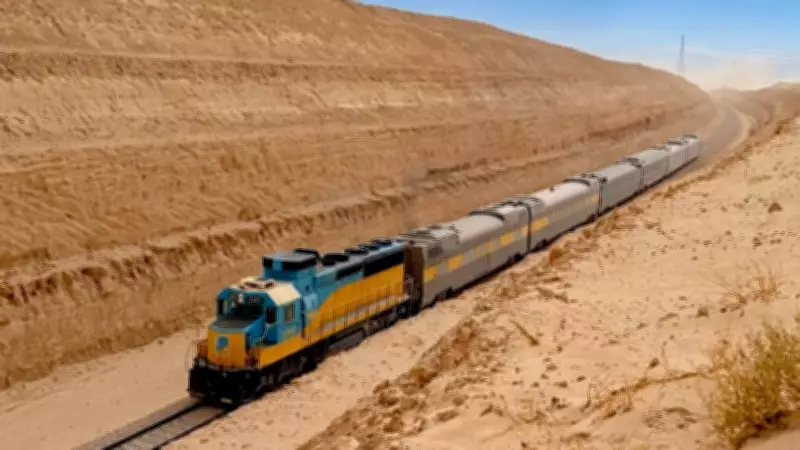
Saudi Arabia Unveils Five New Rail Logistics Corridors to Revolutionize Regional Trade
Saudi Arabia has embarked on a transformative journey to reshape regional trade dynamics with the introduction of five innovative rail logistics routes. This strategic initiative promises to accelerate cargo movement while substantially lowering transportation costs across the Kingdom. The development represents a significant leap forward in strengthening connections between vital Gulf ports and key economic centers throughout Saudi Arabia, creating more efficient and reliable supply chains for businesses and consumers alike.
Strategic Vision Behind the Rail Expansion
Announced by the Saudi Railways Company, these new corridors form an integral component of a comprehensive push to modernize national logistics infrastructure under the ambitious Vision 2030 framework. By systematically shifting cargo transportation from congested road networks to efficient rail systems, Saudi authorities aim to achieve multiple objectives: reducing traffic congestion, improving delivery timelines, and lowering operational costs for both commercial enterprises and end consumers.
The five newly established routes have been strategically designed to create direct linkages between major Gulf ports and inland dry ports, industrial zones, and commercial centers including Riyadh. This integrated network enables cargo to transition seamlessly from maritime vessels to railway systems before distribution into domestic markets, eliminating traditional bottlenecks and minimizing logistical delays.

Enhanced Connectivity and Operational Benefits
According to official statements from the Saudi Railways Company, these routes fundamentally enhance connectivity between port facilities and economic hubs, ensuring smoother cargo flow throughout the Kingdom. The primary focus remains on constructing a unified logistics ecosystem where maritime and rail operations function in perfect harmony, thereby reducing dependence on long-haul trucking and making freight movement more predictable and efficient.
One of the most significant advantages of these new rail corridors lies in their potential to dramatically reduce transit times. Rail transportation offers a consistently reliable and efficient alternative to road freight, particularly for large-volume goods shipments. With accelerated turnaround from ports to urban centers, businesses can anticipate substantial improvements in supply chain performance alongside meaningful reductions in operational expenditures.
Environmental and Economic Implications
In an official communication via social media platform X, the Saudi Railways Company emphasized that this initiative aims to "enhance logistics connectivity between ports and economic hubs" while ensuring smoother and more efficient cargo movement. This strategic shift also promises to alleviate highway congestion and reduce carbon emissions, aligning perfectly with broader sustainability objectives under Vision 2030.
For consumers, the impact may appear indirect but proves profoundly meaningful: accelerated logistics operations and diminished transport costs typically translate into more stable pricing structures and quicker availability of goods within domestic markets.
Route Implementation and Future Expansion
While the Saudi Railways Company has not publicly disclosed detailed specifications for all five routes, industry analysts anticipate the rollout will synchronize with Saudi Arabia's existing and expanding freight rail network. Current patterns suggest these corridors will likely connect major Gulf ports with inland logistics hubs including Riyadh, Dammam, and key industrial zones within the Eastern Province.
Given the Kingdom's established rail infrastructure, these routes may integrate port connections from the Arabian Gulf into the ambitious Saudi Landbridge project, which seeks to link eastern and western coasts. This integration would enable cargo arriving at Gulf ports to move efficiently across the nation, potentially reaching Red Sea ports and establishing seamless transnational trade corridors.

The implementation phase is expected to prioritize high-volume cargo lanes where transitioning freight from road to rail can deliver maximum gains in speed and cost efficiency. Over time, these routes could expand further to support cross-border Gulf Cooperation Council connectivity, solidifying Saudi Arabia's position as a central logistics hub under Vision 2030.
Broader Economic Transformation Under Vision 2030
The launch of these rail routes reflects Saudi Arabia's long-term aspiration to emerge as a global logistics powerhouse under Vision 2030. The Kingdom has been making substantial investments in transportation infrastructure, including railways, ports, and logistics zones, as part of a strategic effort to diversify its economy beyond petroleum dependence.
The Saudi Railways Company continues to play a pivotal role in this transformation by expanding freight capabilities and enhancing multimodal connectivity. By linking Gulf ports with inland economic centers, these new routes strengthen Saudi Arabia's strategic position as a crucial bridge connecting Asia, Europe, and the broader Middle East region.
As these corridors become fully operational, they are projected to significantly boost trade efficiency and deepen regional integration across the Gulf, ultimately creating a faster, more interconnected logistics network for future generations.





