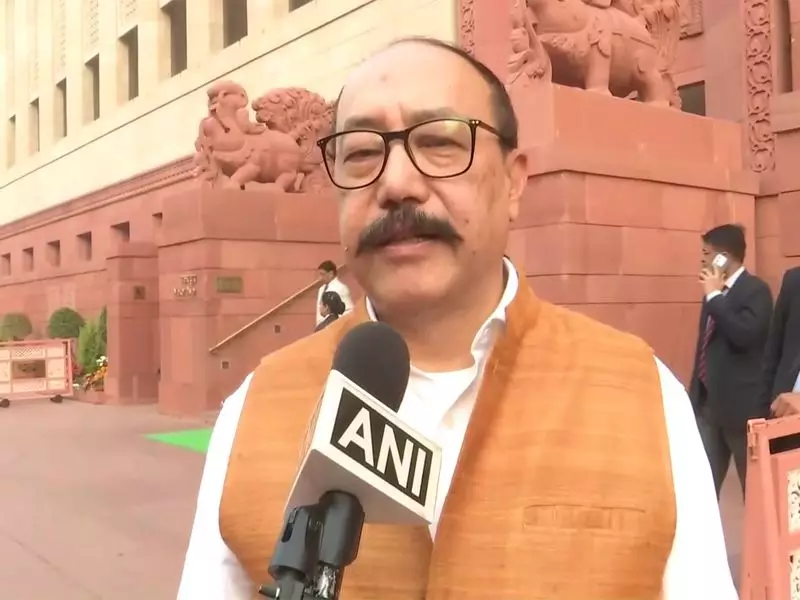
India should strategically build upon its recent trade agreement with Oman and set its sights on a more ambitious, comprehensive pact with the entire Gulf Cooperation Council (GCC), according to former Foreign Secretary Harsh Vardhan Shringla. This call to action comes as a significant step to deepen India's economic and strategic footprint in the resource-rich and geopolitically vital Gulf region.
Building on the Oman CEPA Momentum
Shringla's remarks were made during a session at the Ananta Centre on Tuesday, focusing on the newly signed India-Oman Comprehensive Economic Partnership Agreement (CEPA). He emphasized that while the bilateral deal with Oman is a crucial milestone, it should serve as a springboard for a larger engagement. The India-Oman CEPA, signed in December 2023 and expected to be implemented soon, aims to significantly boost trade and investment flows between the two nations.
The former top diplomat highlighted that Oman often acts as a gateway to the broader GCC bloc, which includes Saudi Arabia, the United Arab Emirates, Qatar, Kuwait, and Bahrain. A successful agreement with Oman, therefore, creates a positive precedent and a template that can be leveraged for negotiations with the collective council.

The Strategic Rationale for a GCC-Wide Pact
Shringla outlined a compelling case for why India must pursue a comprehensive agreement with the GCC. Firstly, the Gulf region is home to a massive Indian diaspora, exceeding 9 million people, whose remittances and cultural bridges are invaluable. Secondly, the GCC is a critical source of India's energy security, supplying a substantial portion of its oil and gas needs.
Furthermore, the Gulf nations are engaged in ambitious economic diversification plans, like Saudi Arabia's Vision 2030 and the UAE's various initiatives, which open vast opportunities for Indian expertise in infrastructure, technology, and renewable energy. A wider trade pact would provide a stable, rules-based framework to unlock this potential across multiple economies simultaneously, rather than through piecemeal bilateral deals.
Economic Benefits and Future Prospects
The economic incentives are substantial. The GCC is already one of India's largest trading partners. A comprehensive agreement would streamline regulations, reduce tariffs on a wider range of goods, and facilitate smoother trade in services. This would benefit Indian exporters across sectors like textiles, engineering goods, electronics, and agriculture, while providing GCC consumers with greater access to high-quality Indian products.
Shringla also pointed out that such an agreement would enhance strategic trust and people-to-people connections. It would position India as a reliable, long-term partner in the Gulf's transformative journey, moving beyond a traditional buyer-seller relationship to a multifaceted economic partnership.
The Road Ahead for Indian Diplomacy
The former Foreign Secretary's suggestion adds weight to the ongoing strategic recalibration of India's ties with the Middle East. India has already signed a CEPA with the UAE in 2022, which has shown positive results. The proposed GCC-wide agreement would be a logical and ambitious extension of this policy.
However, negotiating with a bloc like the GCC presents its own complexities, as it requires aligning the interests of six sovereign nations. Shringla acknowledged that while the process may be challenging, the immense long-term rewards for India's economy and strategic autonomy make it a pursuit worth prioritizing. The success of the Oman CEPA will be closely watched as a test case and a confidence-building measure for this larger vision.
In conclusion, Harsh Vardhan Shringla's advocacy marks a forward-looking diplomatic and economic strategy for India. By aiming for a comprehensive GCC agreement, India can secure a more integrated and prosperous future with one of the world's most dynamic regions, ensuring energy security, economic growth, and enhanced geopolitical influence.