

Surat Textile Industry Aims for $5 Billion EU Market with India-EU FTA
The textile industry in Surat, Gujarat, is poised for a significant transformation following the recent India-European Union Free Trade Agreement (FTA). Business leaders and trade associations are projecting ambitious growth, with exports potentially surging from the current $3 billion to $5 billion as tariffs are eliminated.
Unlocking the EU Market Potential
According to industry experts, the EU currently sources most of its textiles from Bangladesh, Pakistan, and Vietnam. With the scrapping of the 12% tariff under the FTA, Indian textiles will become more competitive, potentially redirecting EU buyers toward India. Sanjay Sarawagi, managing director of Laxmipati Group, emphasized that international brands and multinational companies in the EU will now view India as a potential market for textile apparel and fabrics.
"With this FTA, they will now keep an eye on the textile apparel and fabrics of India, thinking of it as a potential market," Sarawagi stated, highlighting the shift in global sourcing patterns.

Surat's Strategic Position in Textile Production
Surat plays a crucial role in India's textile ecosystem, contributing 40% of the country's Man-Made Fabric (MMF) production. The city dominates specific segments, producing 50% of polyester, 80% of nylon, and 90% of viscose in India. Nikhil Madrasi of the Southern Gujarat Chamber of Commerce and Industry (SGCCI) noted that while Surat does not directly export garments to the EU, it supplies fabrics to manufacturers in cities like Delhi, Mumbai, and Bengaluru, who then export to European countries.
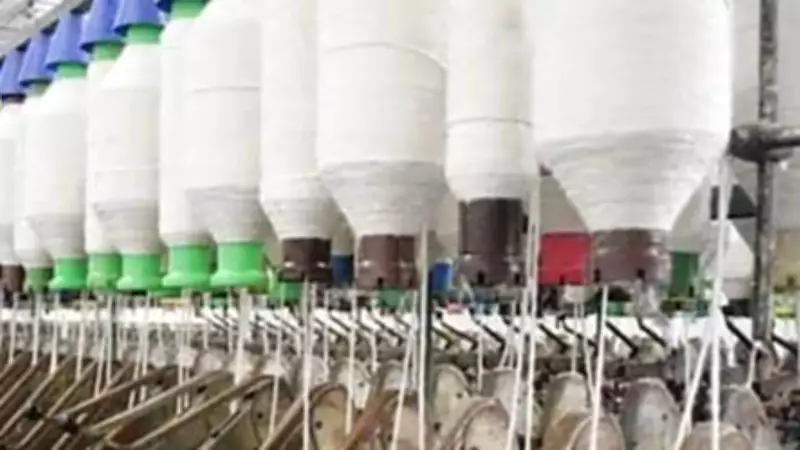
The textile supply chain in Surat is extensive, comprising over five lakh powerlooms, 400 dyeing and printing mills, and around 75,000 textile trading shops. This infrastructure supports the production of sarees, dress materials, burqas, scarves, mattresses, bedsheets, and curtain cloth, which are sold domestically and exported globally.
Expected Economic Impact and Growth Projections
Industry veteran Sanjay Saraogi anticipates a 20% boost in exports from Surat once the FTA is implemented. This growth is expected to benefit various segments, including the powerloom sector, processing units, and the garment industry. Ashish Gujarati, president of the Pandesara Weavers Cooperative Society, highlighted that textile fabrics exported to the EU could become 10-15% cheaper, making them more attractive to European buyers.
"After the implementation of the FTA, exports of textile fabrics from India to EU countries will increase to 5 billion USD from the current 3 billion USD," Gujarati explained, underscoring the potential for increased manufacturing, employment, and new investments in Surat's textile industry.
Quality Standards and Strategic Initiatives
To capitalize on this opportunity, industry leaders stress the importance of meeting EU quality standards. Sarawagi advised that Surat textile players should research fabrics in demand in the EU and manufacture accordingly. He also suggested that SGCCI take the initiative to organize delegation visits to the EU for study and interaction with Chambers of Commerce.
Madrasi echoed this sentiment, emphasizing that the textile industry must focus on fabric quality, stitches, and designs to grab the opportunity. "Due to the volatile situation in Bangladesh and Pakistan, buyers in the EU are not willing to enter into long-term business deals with either country. China has shifted its focus from textiles to electronic products. EU buyers have focused on a better alternative, and through FTA, India will get major benefits," he stated.
Broader Implications for India's Textile Sector
The India-EU FTA, concluded on January 28, represents a strategic breakthrough in India's global trade agenda. It unlocks access to the $263.5 billion EU textile market and is expected to empower artisans, youth, women, and MSMEs across the country. According to Kailash Hakim, president of the Federation of Surat Textile Traders Association, around 10% of fabrics from Surat are exported globally, with 5% going to the EU. The FTA is seen as a way to overcome recent business losses due to rising US tariffs.

This agreement is set to transform Surat's textile landscape, driving growth, innovation, and global competitiveness in one of India's most vital industrial hubs.





