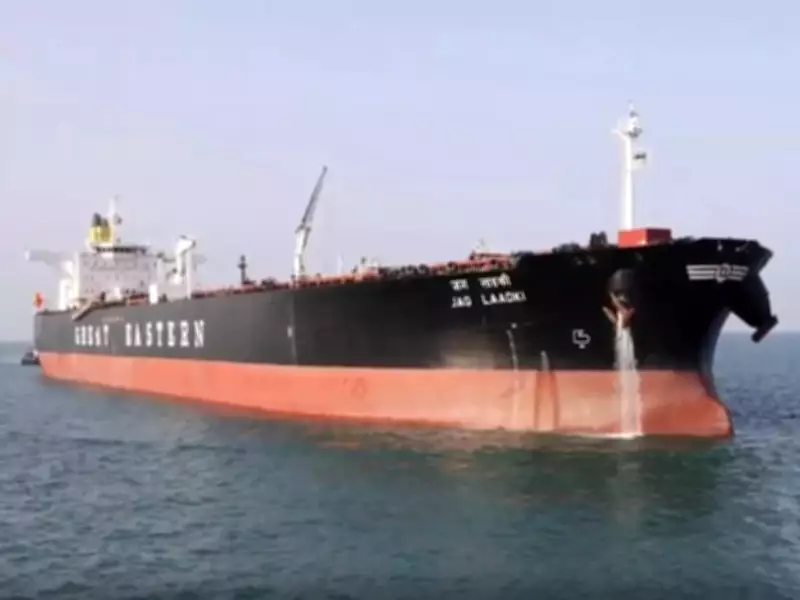
Third Indian Oil Tanker Docks at Gujarat Port Amid Escalating Middle East Tensions
In a significant development for India's energy security, the Indian-flagged crude oil tanker Jag Laadki successfully arrived at Mundra port in Gujarat on Wednesday. This marks the third such vessel to reach Indian shores in as many days, navigating through the volatile waters of the Middle East where conflict has intensified dramatically.
Critical Cargo and Strategic Timing
The Jag Laadki docked carrying an impressive 80,886 metric tonnes of crude oil, which was sourced from the United Arab Emirates and loaded at the Emirate's Fujairah Port. This arrival occurs against a backdrop of rapidly escalating tensions in the region, where Iran has effectively blocked the strategically vital Strait of Hormuz. The blockade followed joint military strikes by the United States and Israel on February 28, which triggered the current conflict.
The Strait of Hormuz represents one of the world's most crucial maritime chokepoints, handling nearly 20% of global crude oil supplies. For energy-dependent nations like India, which imports the majority of its oil requirements, maintaining access through this waterway is absolutely essential for economic stability and energy security.

Preceding Vessels and Diplomatic Efforts
Earlier this week, two other Indian-flagged vessels successfully completed similar journeys. The MT Shivalik arrived on Monday, followed by the MT Nanda Devi on Tuesday. Together, these two vessels transported approximately 92,712 metric tonnes of liquefied petroleum gas (LPG), having transited the Strait of Hormuz on March 13.
Tehran's decision to allow Indian-flagged vessels safe passage through the blocked strait came following high-level diplomatic discussions between the two nations. These included talks between the countries' foreign ministers as well as direct communication between Prime Minister Narendra Modi and Iran's President Masoud Pezeshkian. This diplomatic coordination has proven crucial in ensuring the continued flow of essential energy resources to India.
Government Monitoring and Support Measures
According to an official release, the Directorate General of Shipping is maintaining close surveillance of the situation through coordinated efforts with multiple stakeholders. These include shipowners, Recruitment and Placement Service License (RPSL) agencies, and Indian diplomatic missions stationed throughout the Persian Gulf region.
The Indian government is actively collaborating with ports, shipping lines, and logistics partners to minimize disruptions and ensure the continuity of smooth maritime operations. Port authorities have been specifically instructed to implement relief measures where necessary, including concessions on various operational charges such as:
- Anchorage fees
- Berth hire charges
- Storage costs
These proactive measures demonstrate India's comprehensive approach to navigating the complex geopolitical landscape while safeguarding its critical energy imports during this period of regional instability.