

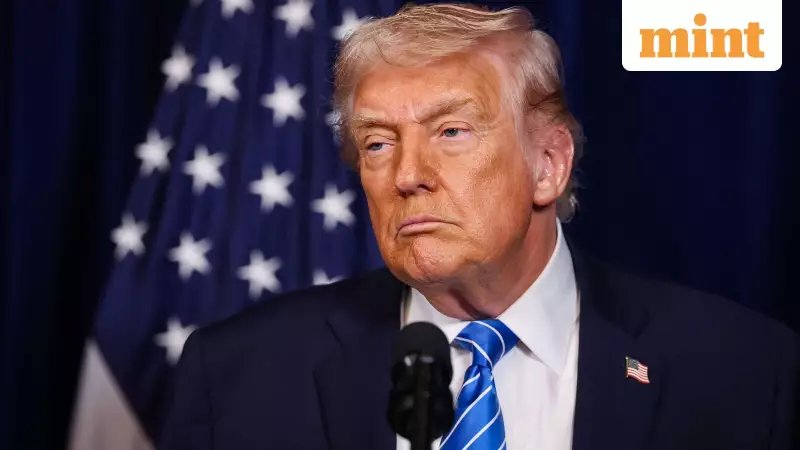
In a move that threatens to disrupt carefully nurtured diplomatic channels, US President Donald Trump has issued a fresh warning to India, linking future tariff hikes to New Delhi's ongoing purchases of Russian crude oil. This statement, made on Sunday, injects new tension into the already prolonged trade negotiations between the two nations.
The Core of the Controversy: A Direct Threat
The US President's remarks were unambiguous. "We could raise tariffs on India if they don't help on the Russian oil issue," Trump stated. This threat comes at a sensitive juncture, as officials from Washington and New Delhi continue their extended dialogue to finalize a trade deal. The comment is seen by many analysts as throwing a spanner in the works of a complex diplomatic process.
This is not the first time India has faced punitive measures from the US over its energy policy. Indian exporters already contend with a substantial 50% US import tariff, with half of this levy explicitly imposed as a punishment for India's crude oil shipments originating from Russia. The situation presents a stark irony: this tariff structure has inadvertently placed Indian businesses at a competitive disadvantage compared to Chinese exporters, despite the US being engaged in an intermittent trade war with China under the Trump administration.

Pressure Tactic or Genuine Policy Shift?
Trump's latest pronouncement raises critical questions about the future trajectory of India-US relations. It remains unclear how closely the US President follows the granular details of international trade data, leading to speculation about the intent behind his words. Many observers are questioning whether this should be interpreted as a serious policy signal or merely a high-stakes pressure tactic as trade talks enter what could be their final phase.
What is evident, however, is the apparent disregard for the painstakingly built bilateral relationship. The foundational principle that a nation's import choices, especially concerning energy security, are its sovereign right seems to have been sidelined in this public exchange. For New Delhi, which has consistently balanced its historic ties with Moscow with its growing strategic partnership with Washington, this public ultimatum creates a complex diplomatic challenge.
Potential Fallout and India's Path Forward
The immediate consequence is heightened uncertainty for businesses and negotiators. Trump's threat suggests he would have no qualms about raising the existing tariff barrier even further, potentially escalating into a wider trade dispute. This volatility contrasts sharply with the stability sought in international partnerships.
For Indian policymakers, the calculus involves several factors. A pragmatic approach to energy imports, driven by economic necessity, conflicts with the geopolitical demands of a major partner. The Indian government's likely response may be a calibrated one—neither overreacting to the public threat nor abandoning its core interests. As the editorial perspective suggests, New Delhi might choose to largely shrug off the rhetoric as negotiation posturing and carry on with its strategic objectives, while deftly managing the diplomatic fallout.
The episode underscores the fragile nature of trade diplomacy in an era of transactional politics. Whether this weekend's utterance foreshadows a more confrontational chapter or simply fades as another headline in the tumultuous Trump presidency, its impact on the trust and rhythm of India-US relations is already being felt.






