

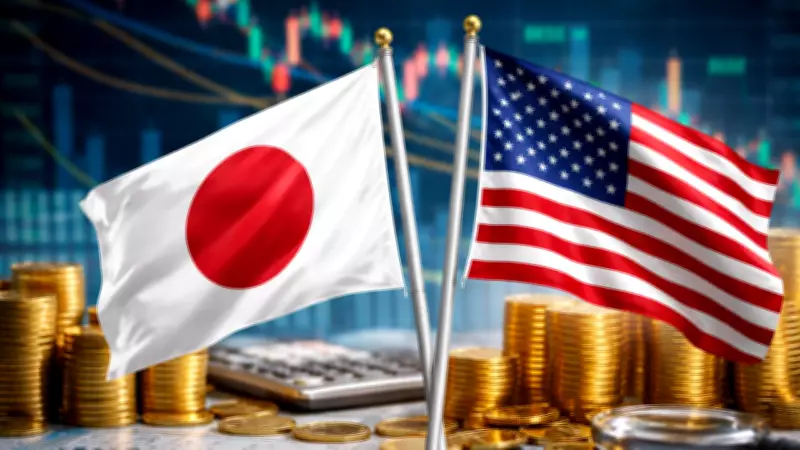
Trump Announces Historic $550 Billion US-Japan Trade Deal with Major Investments
Former US President Donald Trump on Tuesday unveiled a landmark trade agreement with Japan, heralding it as a "MASSIVE Trade Deal" that includes a staggering $550 billion commitment from Tokyo to invest in the United States. The White House revealed the initial phase of this commitment, comprising three large-scale projects valued at $36 billion, marking the first tranche under Japan's pledged investment.
Key Components of the Trade Agreement
Under the newly agreed trade arrangement, the United States will reduce tariffs on Japanese imports to 15%, facilitating enhanced bilateral trade. The initiatives announced focus on critical sectors including energy exports, power generation, and advanced manufacturing, with projects strategically located across Texas, Ohio, and Georgia.
In a post on Truth Social, President Trump emphasized the significance of the deal, stating, "Our MASSIVE Trade Deal with Japan has just launched! Japan is now officially, and financially, moving forward with the FIRST set of Investments under its $550 BILLION Dollar Commitment to invest in the United States of America — part of our Historic Trade Deal to REVITALIZE the American Industrial Base, create HUNDREDS OF THOUSANDS of GREAT American Jobs, and strengthen our National and Economic Security like never before."

Detailed Breakdown of the Investment Projects
The three major projects under this deal are as follows:
- Energy and Power Generation in Ohio: A $33 billion natural gas-fired power plant will be constructed in Portsmouth, Ohio. Commerce Secretary Howard Lutnick highlighted that this facility will generate 9.2 gigawatts of electricity annually, making it the largest natural gas-fired generating plant in US history. The output is projected to exceed the power needs of all homes in Ohio. SB Energy, a subsidiary of Japanese technology investor SoftBank Group, will operate the plant, addressing rising electricity demands driven by data centers supporting artificial intelligence applications.
- Crude Oil Export Terminal in Texas: Japan will invest in the $2.1 billion Texas GulfLink deepwater crude oil export terminal off the Texas coast. This project is expected to generate $20–30 billion annually in US crude exports, securing export capacity for refineries and reinforcing America's position as a global energy leader. Sentinel Midstream, the developer, confirmed its participation, expressing honor in partnering with the US Department of Commerce and the Japanese government.
- Advanced Manufacturing in Georgia: A synthetic industrial diamond manufacturing plant, valued at approximately $600 million, will be established in Georgia. This high-pressure facility aims to meet 100% of US demand for synthetic diamond grit, a material crucial for advanced manufacturing and semiconductor production, reducing reliance on Chinese supplies. The plant will be operated by Element Six, a unit of De Beers Group, the world's largest diamond producer.
Strategic Implications and Unresolved Details
Trump underscored the role of tariffs in enabling these large-scale projects, noting in his post, "The scale of these projects are so large, and could not be done without one very special word, TARIFFS. The Gas Power Plant in Ohio (A State I won THREE TIMES!) will be the largest in History, the LNG Facility in the Gulf of America will drive Exports, and further our Country's Energy DOMINANCE, and our Critical Minerals Facility will end our FOOLISH dependance on Foreign Sources."
However, specifics regarding the financing of these projects remain unclear. It is not yet determined how much of the total costs will be directly funded by Japanese entities or under what conditions. Under a prior US-Japan agreement, profits from such ventures were to be shared equally until Japan recovers its initial investment, after which the split would shift to 90-10 in favor of the United States.

Background and Ongoing Negotiations
The announcements followed recent meetings between Commerce Secretary Howard Lutnick and Japan's Economic and Trade Minister, Ryosei Akazawa. Akazawa indicated that several issues are still pending resolution before formal deals can be finalized, suggesting ongoing negotiations to iron out details.
This trade deal represents a significant step in strengthening US-Japan economic ties, with potential impacts on job creation, industrial revitalization, and national security. As developments unfold, further clarity on investment terms and project timelines is anticipated.





