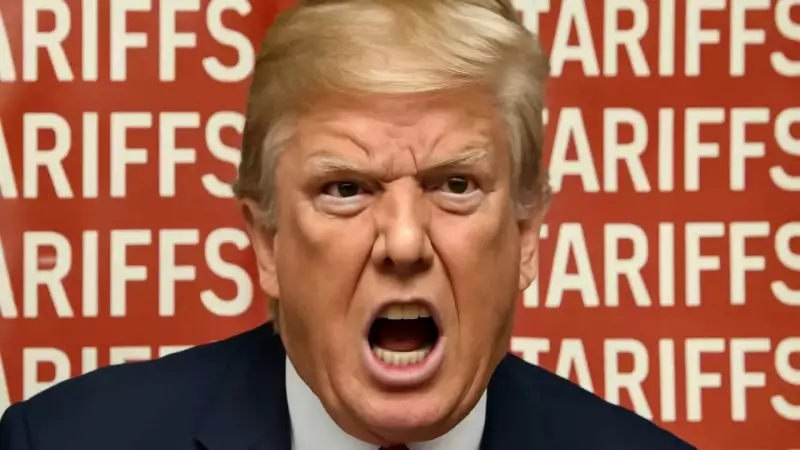
US President Donald Trump has launched a fresh wave of global tariffs targeting countries that maintain trade relations with Iran. The announcement came through a social media post on Monday, where Trump declared immediate implementation of a 25 percent tariff on all business conducted with nations trading with the Islamic Republic.
Pressure Tactics on Iran
This aggressive tariff move represents a clear pressure tactic against Iran's government. The decision follows widespread protests across Iran that have reportedly resulted in nearly six hundred fatalities. Trump has repeatedly warned about potential military action if his administration determines that Iranian authorities are using lethal force against demonstrators.
The President described this situation as a threshold that Iran is "beginning to cross." This assessment has prompted serious discussions within his national security team about what Trump calls "very strong options" for responding to developments in Iran.

Immediate Impact on Global Trade
Trump's tariff announcement affects several major economies that maintain significant trade ties with Iran. These include China, Brazil, Turkey, Russia, and India. The President's social media statement was unequivocal: "Effective immediately, any Country doing business with the Islamic Republic of Iran will pay a Tariff of 25% on any and all business being done with the United States of America."
He emphasized the finality of this decision, adding: "This Order is final and conclusive. Thank you for your attention to this matter!"
India's Complex Trade Position
India faces particular challenges from this new tariff regime. The country already contends with 50 percent tariffs on its exports to the United States. Half of these existing tariffs represent "reciprocal" measures, while the remaining 25 percent serve as penal duties for India's crude oil imports from Russia.
India-Iran Trade Relationship
India maintains important trading connections with Iran, consistently ranking among Iran's top five trading partners in recent years according to Ministry of External Affairs data. Indian exports to Iran span diverse products including premium basmati rice, tea, sugar, pharmaceutical goods, man-made staple fibres, electrical equipment, and imitation jewellery.
In return, India primarily imports dry fruits, various inorganic and organic chemicals, and glassware from Iranian markets.
Basmati Rice Exports at Risk
Iran represents a crucial market for Indian basmati rice exports. Reports indicate that Iran typically purchases more than one million tonnes of Indian basmati rice annually. This trade relationship has traditionally positioned Iran among the largest overseas markets for this premium Indian agricultural product.
Current estimates suggest Iran purchases approximately twelve lakh tonnes of Indian basmati rice each year, with the trade valued at around twelve thousand crore rupees. The new US tariffs could significantly disrupt this important agricultural export channel.
Strategic Concerns Beyond Trade
While Iran does not rank among India's top five trading partners for either imports or exports, the relationship carries substantial strategic importance. India's primary export destinations currently include the United States, United Arab Emirates, Netherlands, China, and the United Kingdom, which collectively account for 41 percent of India's total exports according to Ministry of Commerce data.
Chabahar Port Vulnerability
From a strategic perspective, India maintains significant interests in Iran's Chabahar port. Last year, the United States extended its sanctions waiver for this port by an additional six months through April of this year. This waiver had previously been withdrawn in September 2025 when the US State Department cancelled the exemption originally issued in 2018.
That original exemption allowed India to develop Chabahar port as a gateway to Afghanistan and Central Asia, providing an alternative to routes through Pakistan. The waiver's withdrawal formed part of broader US efforts to increase pressure on Tehran.

If the current exemption lapses, entities involved in operating Chabahar port or engaging in related activities could face US penalties under the Iran Freedom and Counter-Proliferation Act. This development carries particular significance as Chabahar has gained strategic relevance for India's outreach to Afghanistan, especially with gradually improving engagement with the Taliban administration in Kabul.
The new tariff announcement adds another layer of complexity to India's balancing act between maintaining important regional partnerships and navigating US economic pressures.