

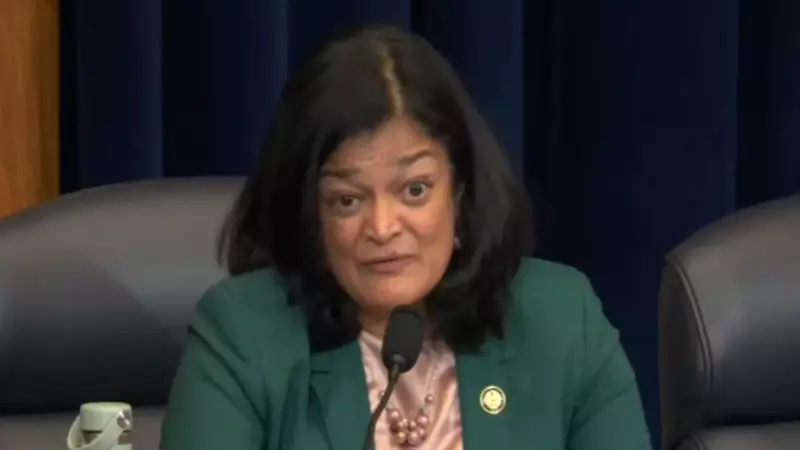
Indian-American Congresswoman Pramila Jayapal has launched a sharp critique against former President Donald Trump's escalated tariffs on goods imported from India, arguing that the policy is counterproductive on multiple fronts. She contends that the measures are not only increasing costs for American consumers but also strategically alienating a key democratic partner, potentially driving New Delhi into closer economic and political alignment with global competitors like China and Russia.
Congressional Hearing Highlights Trade Concerns
During a recent congressional hearing, Representative Jayapal directly questioned expert witness Sameer Lalwani on the ramifications of the tariff policy. She highlighted a critical disparity, pointing out that in August, President Trump doubled tariffs on numerous Indian products, pushing rates as high as 50%. This move has placed India at a perceived disadvantage compared to its regional neighbours.
"How concerned is India over the fact that its neighbors, Pakistan and Bangladesh, have secured lower tariff rates than India, while India continues to actively negotiate?" Jayapal asked. She further probed the broader geopolitical fallout, questioning how "the perception that the U.S. is no longer a reliable partner" could influence India's engagements with multilateral groups like BRICS and the Shanghai Cooperation Organization (SCO).

Expert Warns of Geopolitical Backfire
In his response, Lalwani affirmed that the tariffs are a major point of anxiety for Indian policymakers. He explained that the high duties are limiting India's export potential and inflating costs, directly impacting key industries. More significantly, he echoed Jayapal's warning, stating that such punitive trade measures could indeed catalyse a shift in India's foreign policy orientation.
Lalwani cautioned that the tariffs risk pushing India to deepen its ties within the BRICS economic bloc and the security-focused Shanghai Cooperation Organization, alliances where Russia and China hold considerable sway. This outcome, he noted, would directly undermine the original strategic goals of the U.S. tariff policy.
Economic Impact on Indian Export Sectors
The practical effects of the policy are already causing alarm within Indian trade circles. Since the August announcement, Trump's trade framework has imposed significantly higher duties on a range of Indian exports to the United States. The affected sectors include:
- Textiles and apparel
- Gems and jewellery
- Leather goods
- Seafood and agricultural products
Indian government officials and industry associations have raised red flags, predicting that these steep tariffs could lead to a sharp decline in exports to the United States, which is India's single largest export destination. The potential fallout extends beyond trade numbers, threatening employment in several labour-intensive industries that rely heavily on American market access.
Jayapal summarised the dual threat in a post on social media platform X, stating, "Trump’s tariffs on India aren’t only raising prices for Americans — they are pushing India away as a trading ally and giving the country more incentive to partner with Russia and China. That hurts our economy and makes us all less safe." Her comments underscore a growing concern that punitive trade actions can have unintended and far-reaching strategic consequences, potentially reshaping global alliances in ways that may not favour long-term U.S. interests.






