

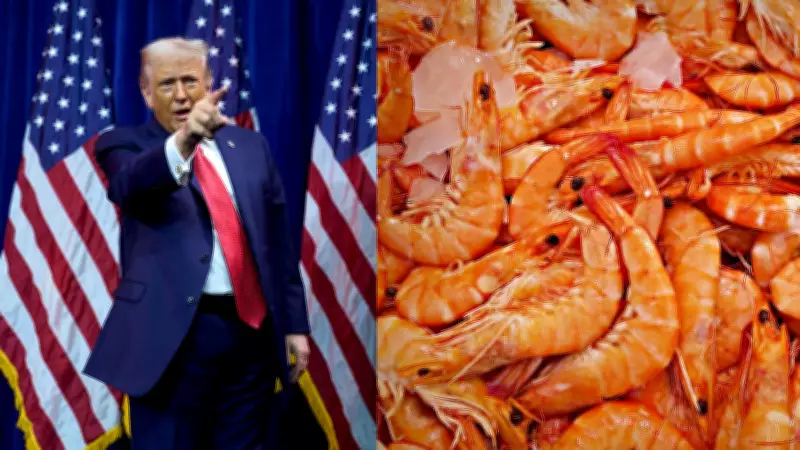
Trump's Tariff Reduction Revives Andhra's Shrimp Industry, Offering Hope to Aquafarmers
The shrimp and aquaculture sector in Andhra Pradesh is experiencing a significant revival following US President Donald Trump's decision to reduce tariffs on all Indian products to 18%. This development comes as a crucial lifeline for an industry that was on the brink of collapse due to previously imposed duties that had soared to 59.72%.
A Fighting Chance for Recovery
According to D Dileep, secretary of the Seafood Exporters Association of India for the Andhra Pradesh region, the tariff reduction provides a much-needed opportunity for recovery. "If the additional tariffs imposed on India had continued for another two or three months, the entire industry would have collapsed," he stated. "We now have a fighting chance, and we can regain the US market, which had veered towards Ecuador. The trade deal and the tariff reduction have come at the right time."
Since October, the industry had faced a complete halt in orders from the United States, primarily due to the steep tariffs. Last August, Trump announced an additional 25% tariff on top of existing duties, along with a 5.76% countervailing duty and a 3.96% anti-dumping duty. This made Indian shrimp products less competitive in the US market, allowing Ecuador to gain a foothold.

Government Support and Industry Impact
Andhra Pradesh Minister N Lokesh Naidu, whose Telugu Desam Party is an ally of the BJP, described the reduced tariff as a shot in the arm for the state's seafood exports. "It is a big boost to AP's seafood and agri exports," he emphasized.
Sources within the state government have indicated that plans to close struggling aqua farms will now be reconsidered. This decision could potentially safeguard the livelihoods of lakhs of farmers who depend on the industry. According to state estimates from last August, Andhra Pradesh is home to approximately 6.5 lakh aquafarmers, with an additional 30-40 lakh individuals employed across various stages of the industry.
Challenges and Optimism
While the tariff reduction is a positive step, industry experts caution that regaining the US market will be a slow process. Ecuador, which benefits from lower tariffs of around 15% and geographical proximity to the US, has seen its exports more than double following Trump's additional tariffs. "Ecuador is closer to the US, and the tariffs are only about 15%. After Trump's additional tariffs, Ecuador's exports to the US more than doubled. That country still has an advantage and recapturing the markets will be tough," noted one exporter.
Despite these challenges, there is renewed optimism within the industry. Activity at aqua farms, hatcheries, shrimp processing units, packaging facilities, cold storages, and ice factories, which had nearly come to a standstill, is now showing signs of revival. Anam Venkata Ramana Reddy, vice chairman of Andhra Pradesh's State Aquaculture Development Authority, expressed confidence in the industry's recovery. "On top of steep tariffs, the aqua farms were hit by enterocytozoon hepatopenaei (EHP) parasite disease, which ravaged the farms. It is under control now, and aqua farmers are already celebrating getting back to work," he said.
Economic Significance and Future Prospects
Andhra Pradesh plays a pivotal role in India's shrimp exports, producing over 60% of the country's annual output of approximately 8 lakh tonnes. The United States serves as a premium market for Indian shrimp, with almost all major superstores stocking products from the region. Notably, 40% of the shrimp in these stores originate from Andhra Pradesh. Out of the 241 aquaculture exporters in India, 171 are based in this state.
The state government had been providing support through subsidies and rebates on fish feed, and Chief Minister N Chandrababu Naidu had repeatedly appealed to Prime Minister Narendra Modi to address the tariff issue. With the recent developments, there is hope that the industry can transition back to cultivating larger, export-quality prawns, which offer higher profits compared to the smaller varieties grown for domestic markets during the crisis.

As the industry navigates this period of recovery, stakeholders remain cautiously optimistic about reclaiming their position in the global market and ensuring sustainable livelihoods for millions dependent on aquaculture in Andhra Pradesh.





