

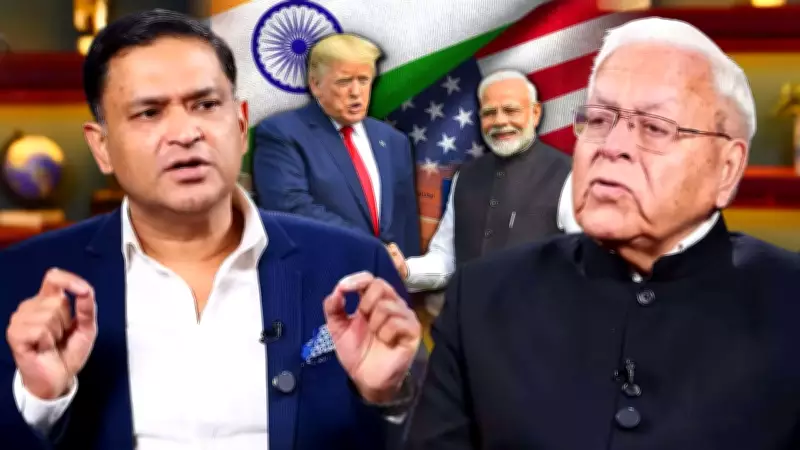
Former Ambassador Unpacks Sudden India-US Trade Deal Announcement
Former Ambassador Ashok Sajjanhar has provided crucial insights into the unexpected announcement of the India-US trade deal, shedding light on the complex negotiations that preceded it. According to his detailed analysis, the trade agreement was actually finalized and ready for implementation by July of the previous year, but faced significant delays due to external pressures and strategic considerations.
Trump's Unilateral Demands and Ceasefire Credit
Sajjanhar revealed that former US President Donald Trump sought unilateral trade benefits from India as part of the negotiations. The former president wanted exclusive advantages that would have disproportionately favored American interests, a demand that India firmly rejected based on its principles of balanced and reciprocal trade relationships.
Additionally, Trump wanted to claim credit for the India-Pakistan ceasefire agreement, attempting to leverage this diplomatic achievement for trade concessions. This approach created further complications in the negotiation process, as India maintained its position on keeping trade and security matters separate.

Tariff Pressure and India's Strategic Response
The trade deal faced a major obstacle when the United States imposed 25% tariffs on India in response to New Delhi's continued purchases of Russian oil. This punitive measure was intended to pressure India into compliance with American foreign policy objectives regarding Russia.
However, India demonstrated remarkable economic resilience and strategic positioning during this period. Sajjanhar emphasized that India's growing economic strength and its crucial strategic importance in global affairs significantly limited Washington's leverage in these negotiations.
During the same period, India successfully concluded several major trade agreements with other nations, most notably the long-pending India-European Union trade deal. These parallel negotiations served as a clear signal that India would not grant unilateral advantages to any single trading partner, maintaining its commitment to balanced international economic relationships.
The Final Agreement and Sudden Announcement
According to the former ambassador, the United States eventually recognized that no better terms could be achieved through continued pressure tactics. Washington came to understand that India's strategic autonomy and economic policies would not be compromised through tariff threats or unilateral demands.
This realization led to the US administration coming on board with the existing agreement, resulting in the sudden public announcement of the trade deal. The timing reflected the resolution of outstanding issues and mutual recognition that the negotiated terms represented the best achievable outcome for both nations.
Sajjanhar's analysis highlights how India's consistent diplomatic approach and economic policies ultimately prevailed in these complex international negotiations. The former envoy's insights provide valuable context for understanding the dynamics of India-US economic relations and New Delhi's growing confidence in managing its international trade partnerships.






