

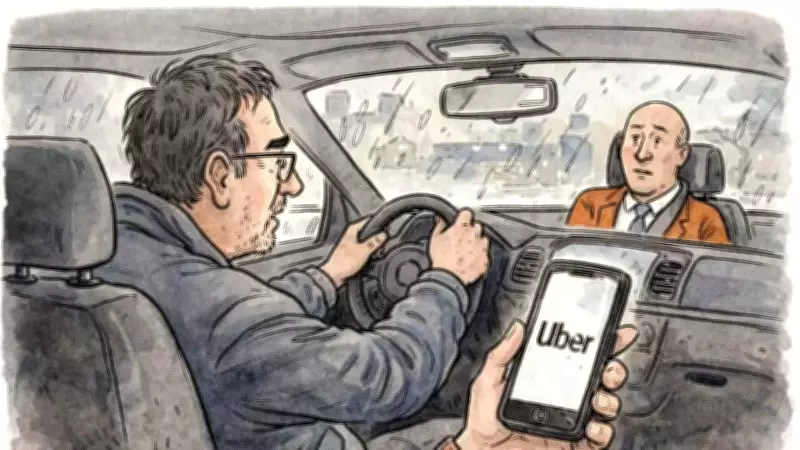
Uber has officially confirmed that it is currently engaged in discussions with France's social security agency, URSSAF, concerning the employment classification of its drivers operating within the country. This development follows a significant media report which alleged that the French agency has determined a substantial number of the ride-hailing platform's drivers should be reclassified as employees rather than independent contractors.
The French Agency's Substantial Claim
According to reports from Reuters, which cited the French investigative publication Revue21, URSSAF concluded that an estimated 71,194 Uber drivers who worked under independent-contractor agreements between the years 2019 and 2022 should have been legally classified as employees. This reclassification carries major financial implications.
The agency is reportedly seeking approximately 1.2 billion euros (around $1.4 billion) in unpaid social security contributions, plus an additional 512 million euros in associated penalties. This brings the total potential claim against Uber to nearly 1.7 billion euros.

Uber's Official Stance and Agency Response
"We are currently engaged in a collaborative, transparent, and open discussion with France's social security body, URSSAF," an Uber spokesperson stated in a communication to Reuters. The company emphasized its commitment to a constructive dialogue on the matter.
In contrast, the URSSAF agency has declined to provide any official comment on the ongoing discussions or the specific financial claim. The agency cited standard policies of confidentiality regarding individual cases and ongoing legal or administrative matters as the reason for its silence.
Broader European Regulatory Challenges
This issue in France represents just one facet of the wider regulatory and legal challenges Uber continues to confront across Europe. The core dispute revolves around the fundamental classification of app-based drivers and the operating rules governing ride-hailing services.
Interestingly, this latest challenge emerges despite a significant legal victory for Uber in France last year. In 2025, the French Supreme Court ruled that Uber drivers are indeed independent contractors. The court's decision rejected the argument that a "subordination relationship" existed between Uber and its drivers, thereby upholding a prior ruling from the Paris Court of Appeal.
"Regarding the status of drivers, recent French Supreme Court rulings have confirmed they are independent workers and clarified the framework we operate in," the Uber spokesperson added in their statement to Reuters.
Legal Battles Across the Continent
The landscape of legal challenges for Uber in Europe is complex and varies by country:
- Germany: Courts have imposed limitations on certain app-based ride-hailing services that fail to comply with established passenger transport regulations.
- Italy: Uber's licensed business model has faced direct challenges in court and has met with strong resistance from traditional taxi driver unions.
- Netherlands: Similar to France, ongoing disputes in Dutch courts continue to test the legal boundaries of ride-hailing services and driver classification.
While the 2025 French Supreme Court decision was not retroactive, its precedent is likely to influence the outcomes of other pending cases across the continent. The discussions with URSSAF and the massive financial claim highlight the ongoing tension between gig-economy business models and traditional labor and social security frameworks in Europe.






