

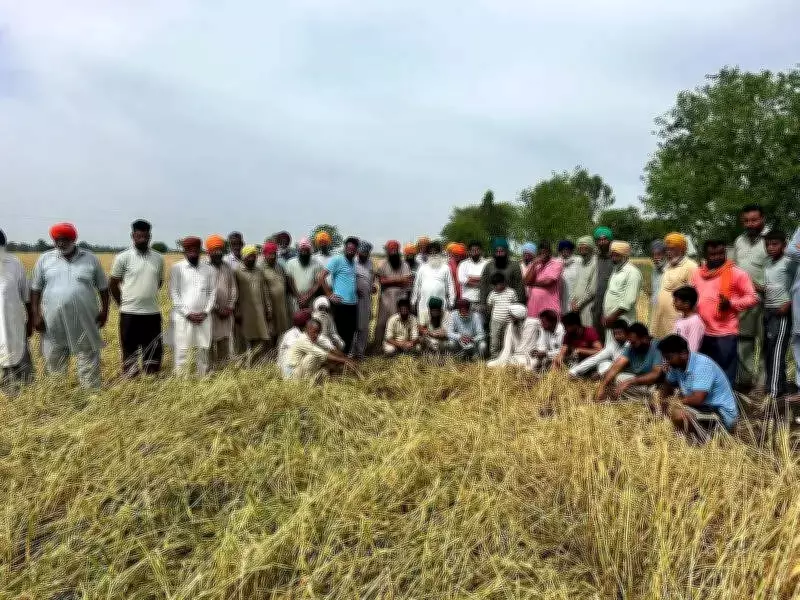
Untimely Rains and Hailstorms Devastate Wheat Crops in Punjab and Haryana
In a severe weather shock, untimely rain, hailstorms, and gusty winds have battered large parts of Punjab and Haryana, flattening standing wheat crops at the ripening stage and triggering fresh distress among farmers just ahead of the harvest season. This unexpected meteorological event has led to widespread agricultural damage, exacerbating the challenges faced by the farming community in these key agricultural states.
Record-Breaking Excess Rainfall Figures
The India Meteorological Department (IMD) reported staggering excess rainfall figures over a 24-hour period from March 31 to April 1. Punjab received 3.9 mm of rain against a normal of 0.1 mm, marking an astonishing 3,835% excess rainfall. Similarly, Haryana recorded 3.2 mm against 0.1 mm, resulting in a 3,125% excess. Himachal Pradesh also experienced significant weather activity, with 166% excess rainfall during the same timeframe, receiving 2.7 mm against a normal of 1 mm.
Widespread Crop Damage and Affected Districts
The intense weather spell, accompanied by hailstorm activity and high-velocity winds, has severely damaged wheat and mustard crops across several districts. In Punjab, the worst-hit areas include villages in Muktsar, Fazilka, Bathinda, Mansa, and Barnala. In Haryana, significant crop damage has been reported from Rohtak, Bhiwani, Rewari, Hisar, and Mahendragarh. Farmers have expressed deep concern, noting that the weather struck at the worst possible time, with wheat nearly ready for harvest.

High-Velocity Winds and Local Impact
IMD data revealed that Faridkot recorded the highest gusty winds at 61 kmph across the affected region, followed by Ferozepur at 59 kmph and Mohali at 54 kmph. Other areas like Panchkula, Sangrur, and Karnal also experienced strong winds, contributing to the crop devastation. Farmers from the Lambi block in Muktsar lamented, "We are facing such losses season after season, but only seldom get adequate compensation." This sentiment echoes the broader frustration within the agricultural community.
Political Responses and Compensation Demands
In response to the crisis, political leaders have stepped in to assess the damage and offer assurances. Punjab Agriculture Minister Gurmeet Singh Khudian, along with other officials, visited affected villages and promised support to the farmers. In Haryana, Bhiwani Congress rural district president Anirudh Chaudhary has demanded a special girdawari (crop damage assessment) and compensation of Rs 1 lakh per acre for affected farmers, highlighting the urgent need for financial relief.
Revival of Crop Insurance Debate
The recent damage has reignited debates over crop insurance schemes, particularly for Punjab, which had previously declined to adopt the Pradhan Mantri Fasal Bima Yojana (PMFBY). This incident underscores the critical importance of robust insurance mechanisms to protect farmers from such unpredictable weather events and ensure their livelihoods are safeguarded against natural calamities.
As the farming community grapples with this setback, the focus now shifts to recovery efforts and the implementation of effective support measures to mitigate the impact on agricultural productivity and farmer welfare in the region.






