

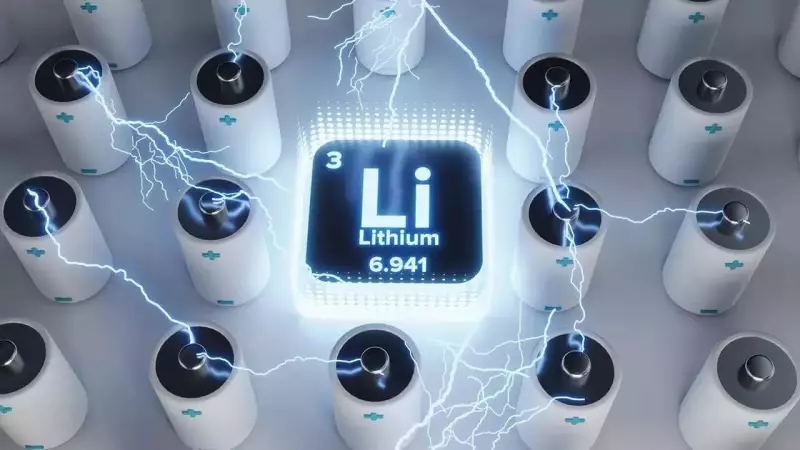
American technology corporations and the United States Department of Defense are grappling with a shared strategic vulnerability: a deep and growing dependence on China for the advanced lithium-ion batteries that power everything from artificial intelligence data centres to cutting-edge weaponry. This reliance, experts warn, poses a significant threat to both economic competitiveness and national security.
The Dual Fronts of Dependency: Silicon Valley and the Pentagon
As tech majors like those in Silicon Valley invest billions in massive data centres to fuel the global AI race, they are confronting a critical bottleneck. Their operations are powered by large-scale battery systems, a sector where China holds a commanding lead. Dan Wang, an expert at Stanford’s Hoover Institution, emphasised to the New York Times that China is ahead in nearly every industrial component of battery production, boasting superior technology and scale. This dominance places American AI ambitions at a strategic disadvantage.
Parallel concerns are echoing through the corridors of the Pentagon. Military strategists, analysing the battery-intensive nature of modern warfare as seen in Ukraine, predict a future where millions of batteries will be needed to power drones, directed-energy weapons, and other advanced systems. A report from defence analytics firm Govini revealed a startling fact: U.S. military programmes depend on Chinese supply chains for roughly 6,000 different battery components. Tara Murphy Dougherty, CEO of Govini, starkly noted at a recent defence gathering in California that foreign parts are found in 100% of American weapon systems and military platforms.

From Trade Issue to National Security Threat
While China's grip on battery production has long challenged industries like automotive manufacturing, the U.S. is now acutely recognising this gap as a direct national security threat. China is aware of its leverage; in October, amid trade tensions, it hinted at restricting exports of certain advanced lithium-ion technologies, including crucial materials like graphite anodes and cathodes.
The political landscape in Washington has added complexity to the response. The Trump administration, upon taking office, initially paused billions in federal grants for battery manufacturing allocated during the Biden era, grouping them with other clean energy technologies it sought to deprioritise. Former President Donald Trump has been publicly critical of electric vehicles. However, there has been a notable shift in understanding. The administration now recognises that battery technology is inextricably linked to core priorities like AI and defence. Over a dozen industry insiders, lobbyists, and military contacts confirm the White House's growing interest in building a domestic battery industry independent of China.
America's Push for Battery Independence
In recent weeks, the White House has held crucial meetings focused on the battery supply chain. The National Energy Dominance Council, created by President Trump, has been engaging with battery companies. Simultaneously, the Energy Department has quietly approved many of the previously paused battery manufacturing grants and recently announced funding of up to $500 million for battery materials and recycling projects.
The U.S. government has started investing in companies developing new battery technology or extracting critical minerals. As part of trade discussions, officials have encouraged Japan to invest billions in U.S.-based battery manufacturing. Legislatively, the recently passed National Defense Authorization Act includes Pentagon restrictions on purchasing batteries from 'foreign entities of concern,' primarily targeting China.
Summarising the administration's nuanced stance, Samm Gillard of the Battery Advocacy for Technology Transformation Coalition told the NYT, "They're saying we don't like electric vehicles, but we do need batteries for drones and data centres and AI. They're recognising that China's stranglehold on the battery supply chain is undermining our national security." The race to secure this critical technological foundation is now fully underway.






