

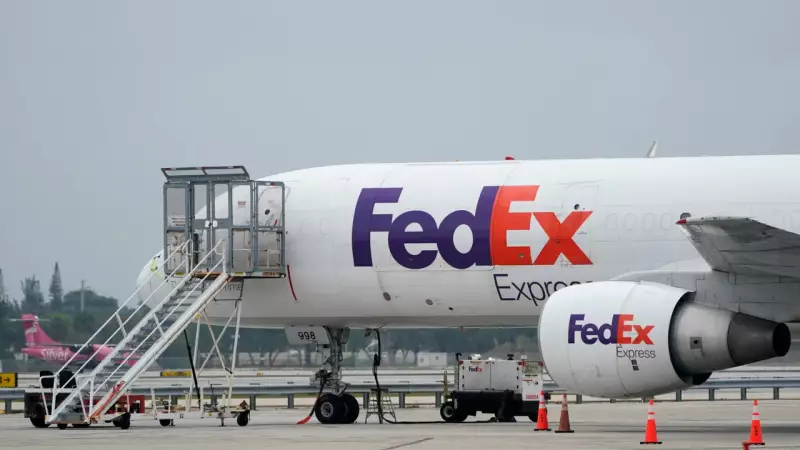
Double Blow Hits US Air Cargo Ahead of Critical Holiday Season
The American air cargo industry is confronting unprecedented challenges as two major disruptions converge just weeks before the crucial Thanksgiving and Christmas shipping period. The Federal Aviation Administration (FAA) has mandated a 10% reduction in flight operations across 40 major airports, while simultaneously, logistics giants UPS and FedEx have voluntarily grounded their McDonnell Douglas MD-11 aircraft fleets.
This dual crisis threatens to create significant bottlenecks in supply chains during the year's busiest shopping and shipping season, potentially causing delivery delays for millions of consumers.
FAA's Drastic Measures and Widespread Impact
The Federal Aviation Administration has ordered airlines to slash domestic flight operations by 10% between 6 a.m. and 10 p.m. local time at 40 key airports nationwide. This decision, reported by AP, stems from severe air traffic controller shortages caused by the prolonged government shutdown.

The flight reductions specifically target major parcel distribution hubs, including FedEx's Memphis and Indianapolis operations and UPS's Worldport hub in Louisville, Kentucky. The Louisville facility recently witnessed a tragic cargo plane crash that claimed 14 lives, including three crew members, adding to the industry's current challenges.
Major Carriers Ground Significant Fleet Capacity
Compounding the FAA's flight restrictions, both UPS and FedEx announced they are temporarily grounding their MD-11 aircraft fleets "out of an abundance of caution." This decision removes a substantial portion of their air cargo capacity—approximately 9% of UPS's total fleet and 4% of FedEx's aircraft.
Professor Patrick Penfield, a supply-chain management expert at Syracuse University, expressed grave concerns about the timing. "This is such a stressful time for both companies," he told AP. "You've got a surge in demand, and then you just lost some of your capacity. They're already scrambling, and now they're going to scramble even more."
Penfield warned that shoppers could experience delivery delays of up to two days in mid-December and strongly advised consumers to place their holiday orders earlier than usual.
Industry Response and Adaptation Strategies
Despite the challenges, both carriers have implemented contingency plans. FedEx stated it has made "operational modifications" to maintain "safe and swift" shipment movement, while UPS assured customers that its network remains "safe, resilient and reliable." Both companies emphasized that most of their flights operate outside the restricted hours, minimizing immediate impact on overnight deliveries.
Mike Short, president of global freight forwarder C.H. Robinson, highlighted the broader implications. "The reduction in commercial flights could tighten domestic air capacity and extend transit times," he noted. "Trucks and expedited ground networks can absorb some displaced volume, but not without challenges."
Specific Product Categories at Risk
Industry experts identified particular vulnerability for smaller high-value goods that heavily depend on air transport:
- Smartphones and electronic devices
- Computer chips and components
- Gaming consoles and electronics
While these shipments may face mild disruption, ground transport networks are expected to partially offset capacity losses for domestic parcels.
Long-term Implications and Industry Resilience
Brandon Fried, executive director of the Airforwarders Association, emphasized the interconnected nature of air cargo operations. "Air cargo depends on every part of the aviation ecosystem working in sync," he explained. "When capacity is cut and federal employees are stretched thin, the supply chain slows—and the longer this shutdown continues, the worse it will get."

However, logistics experts point to silver linings. The sector has developed remarkable resilience and adaptability through years of pandemic-related shocks. Eytan Buchman, chief marketing officer of Freightos, noted that "Airlines have become very good at consolidating loads and rerouting via secondary hubs. In the near term, space may feel tighter, but this isn't a one-to-one loss in capacity."
Industry observers currently anticipate limited delays, but caution that if the government shutdown extends into December, America's holiday delivery system could face its most severe stress test in years.





