

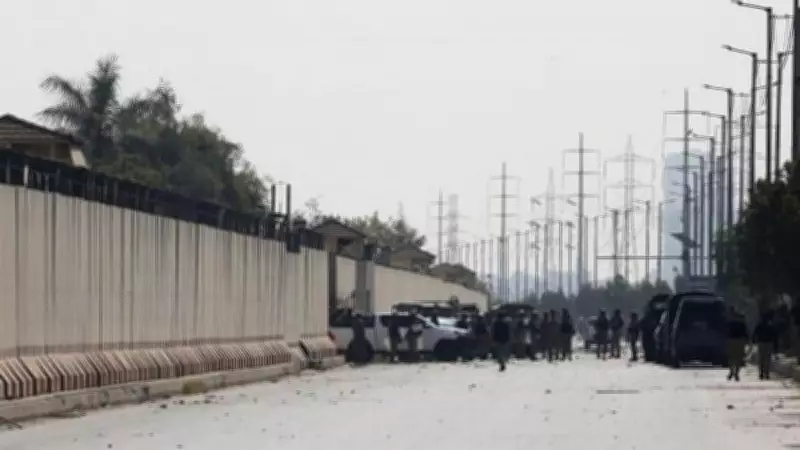
Iran's Supreme Leader Khamenei Confirmed Dead Amid Israeli Military Strike
In a development that has sent shockwaves across the globe, Iranian state media has officially confirmed the death of Supreme Leader Ayatollah Ali Khamenei. This announcement comes in the immediate aftermath of a significant military escalation in the Middle East, triggered by a pre-emptive attack launched by Israel against Iran on Saturday.
Escalation of Hostilities and Regional Tensions
The Israeli strike has plunged the already volatile Middle East into a renewed and intense phase of military confrontation. This aggressive move has severely undermined the fragile prospects for a diplomatic resolution to Tehran's protracted nuclear dispute with Western nations, casting a long shadow over international peace efforts.
This latest attack is not an isolated incident but follows a pattern of heightened hostilities. It comes directly after a fierce 12-day air war between Israel and Iran in June 2025, which had already raised regional tensions to a critical level. The current military action was precipitated by repeated and explicit warnings from both the United States and Israel. These warnings clearly stated that further strikes would be inevitable if Iran continued to advance its controversial nuclear and ballistic missile programs.

Background and Implications of the Conflict
The death of Supreme Leader Khamenei, a pivotal figure in Iranian politics and ideology, introduces a profound element of uncertainty into an already chaotic situation. His leadership has been central to Iran's strategic direction, including its nuclear ambitions and regional proxy activities.
The pre-emptive nature of the Israeli attack suggests a calculated move to disrupt Iran's military and nuclear capabilities before they could be fully deployed. This strategy, while aimed at neutralizing perceived threats, risks triggering a broader regional conflict, drawing in other state and non-state actors across the Middle East.
The international community now faces a critical juncture. The hopes for a negotiated settlement to the nuclear dispute, which have been tenuous at best, are now further dimmed. The combination of a leadership vacuum in Iran and active military engagement creates a highly unpredictable and dangerous environment.
Looking Ahead: A Region on the Brink
As events continue to unfold rapidly, the situation remains fluid and highly volatile. The confirmation of Khamenei's death adds a layer of political instability within Iran, potentially affecting its command structure and response strategies. Meanwhile, the Israeli stance appears resolute, signaling a willingness to engage militarily to counter what it views as existential threats from Iranian nuclear proliferation.
This escalation underscores the deep-seated and complex rivalries in the Middle East, where historical grievances, security concerns, and geopolitical ambitions frequently collide. The path forward is fraught with challenges, and the risk of a wider war looms large, demanding urgent and careful diplomatic engagement from global powers to prevent further deterioration.






