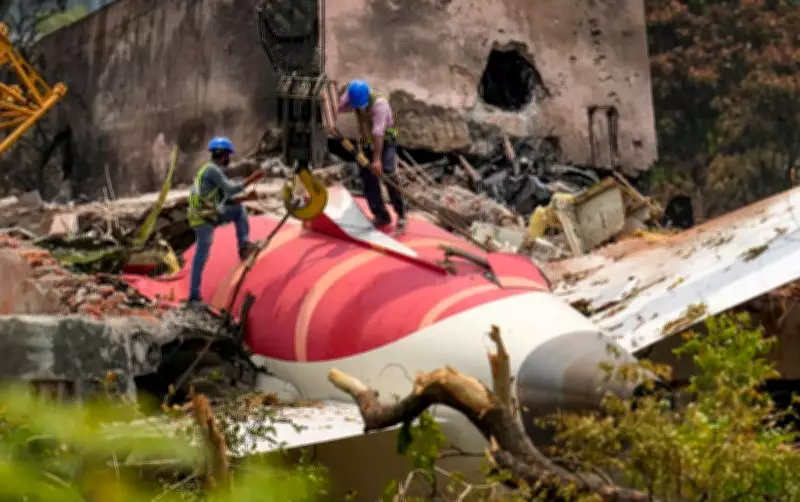
One year after the AI171 plane crash in Ahmedabad claimed 260 lives, officials recalled how, amid an unimaginable situation, the city mounted one of its largest emergency responses, swiftly coordinating medical requirements and mobilising trauma teams.
Mass Casualty Protocol Activated
On June 12 last year, the London-bound Air India flight AI-171 crashed into the hostel complex of BJ Medical College in the Meghaninagar area moments after taking off from the Sardar Vallabhbhai Patel International Airport, killing 241 persons on board and 19 on the ground. One passenger survived. For doctors at the Ahmedabad Civil Hospital, the day had begun like any other.
"We never imagined we would witness something like this in our lifetime," recalled Dr. Rakesh Joshi, medical superintendent of Ahmedabad Civil Hospital, who was in the middle of a complex pediatric surgery when the first alert came in about smoke rising near the hostel area. Within seconds came the shocking confirmation—an Air India international flight had crashed. "I couldn't believe it," he said.

Swift Coordination and Triage
What followed was one of the largest emergency medical responses the city had ever seen. Even before victims were brought in, the Civil Hospital activated its mass-casualty protocol. Messages were sent across doctors' groups, emergency medicines were arranged, blood banks were alerted, and trauma teams were mobilised. The first injured person to arrive at the hospital was a gardener working in the hostel complex. Within an hour, nearly 71 injured victims suffering from burns, fractures, and trauma had reached the hospital.
Specialised teams consisting of surgeons, neurosurgeons, physicians, anaesthetists, and emergency doctors were immediately formed to ensure critical patients received urgent treatment. "In such situations, managing the golden hour is everything. Our priority was to prevent secondary deaths and save every possible life," Dr. Joshi said. Operation theatres were readied while one entire ward was converted into a dedicated mass-casualty unit. Doctors, nurses, and paramedical staff worked continuously as patients poured in.
Heartbreaking Task of Identification
Then came the most heartbreaking part, Dr. Joshi said, when the charred bodies of victims started arriving. At that point, the management system shifted into another critical phase—scientific identification and dignified handling of victims. Since many bodies could not be identified visually, DNA matching became the only reliable method. Teams led by forensic and medical experts, including Dr. Dharmesh Patel, began round-the-clock work on DNA collection, labelling, and matching with assistance from Forensic Science Laboratory and National Forensic Sciences University experts.
Out of 260 bodies, 254 were identified through the DNA matching system, while six persons were identified by official means. The first DNA match occurred within 48 hours, and the respective family was informed to collect the body at their convenience. Authorities established a special protocol for the dignified handover of bodies. "Pilot vehicles of police and administration accompanied the ambulance carrying mortal remains, followed by relatives' cars, ensuring there were no difficulties even during the final rites," said Dr. Joshi. The entire process of DNA matching was completed within 16 to 17 days.
Support for Grieving Families
To support grieving families, dedicated help centres were established at BJ Medical College's Kasauti Bhavan. Counselling teams from the psychology department worked continuously to comfort distressed relatives. "Clear instructions were issued by the government to ensure families faced no additional hardship during the identification and handover process," Dr. Joshi said. Special arrangements ensured that all documentation, including DNA reports, postmortem papers, police verification, and death certificates could be completed at a single location. Dedicated PRO teams personally assisted families through every step. Once identities were confirmed through DNA matching, relatives were contacted individually and respectfully informed.

Political and Community Response
Within hours of the crash, Chief Minister Bhupendra Patel, Home Minister Harsh Sanghavi, and Health Minister Rushikesh Patel arrived at the hospital and reviewed the arrangements. The Civil Hospital campus overflowed with people, NGOs, and volunteers supporting grieving families. "Due to the coordinated efforts of doctors, the health department, police, NGOs, relief teams, and the fire department, the situation was systematically managed in a short period," Dr. Joshi told PTI. As the city remembers the tragedy, officials pray such a catastrophe never recurs. "We pray such a tragedy never happens again," the superintendent said.