A proposed piece of legislation in the United States, championed by a prominent Republican senator, is casting a long shadow over India's crucial trade relationship with America. The bill, which aims to tighten sanctions on nations importing Russian crude oil, could potentially put a staggering $120 billion worth of Indian exports to the US in serious jeopardy, according to a stark warning from a leading economic think tank.
The Core of the Controversy: The Graham Bill
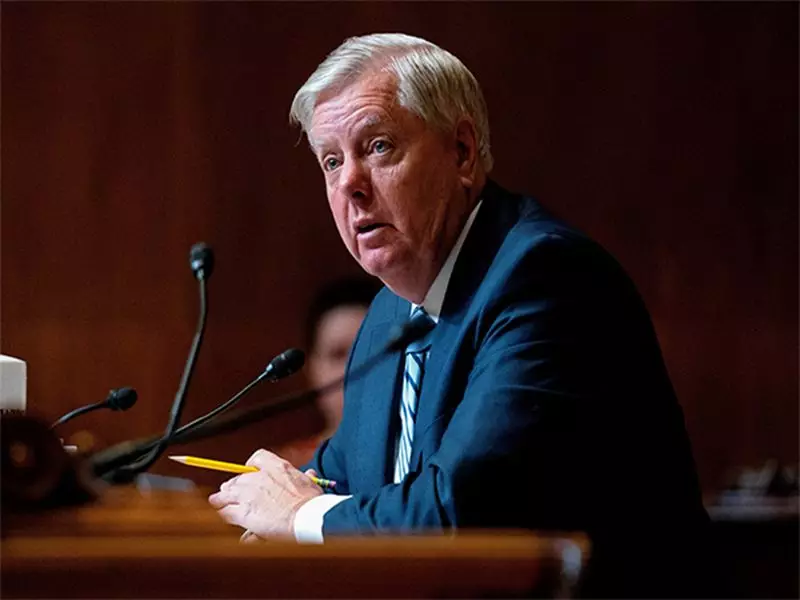
The source of the brewing trade storm is the 'Block All Russian Energy (BARE) Act', introduced by US Senator Lindsey Graham. The core objective of this legislation is to expand secondary sanctions, effectively targeting entities that facilitate transactions or provide services for the sale of Russian oil, regardless of the price cap. This represents a significant escalation from current measures.
While the bill is primarily aimed at curtailing Russia's war-funding revenue from energy sales, its wide net could ensnare key Indian economic interests. The Global Trade Research Initiative (GTRI) has sounded the alarm, stating that if passed, this act would force India into a difficult position. Indian companies, including banks, insurers, and shippers involved in the Russian oil trade, could face severe penalties from the US, potentially cutting them off from the American financial system.

India's Stakes: A Delicate Balancing Act
India finds itself walking a diplomatic and economic tightrope. On one hand, it has significantly increased its imports of discounted Russian crude following the Ukraine conflict, which has provided substantial economic benefits in terms of energy security and managing its current account deficit. On the other hand, the United States is India's largest single-country trading partner, with bilateral trade touching nearly $200 billion. The potential loss of access to this market is unthinkable for Indian exporters.
The GTRI report underscores the sheer scale of the risk. India's exports to the US, which reached approximately $120 billion in recent times, span critical sectors that employ millions. These include:
- Engineering goods and machinery
- Diamond and jewellery
- Apparel and textiles
- Pharmaceutical products
- Agricultural commodities
A disruption in this trade flow would have severe repercussions for India's economic growth and employment.
Urgent Call for a Clear Strategic Position
The think tank's analysis is not just a warning but a call to action for the Indian government. GTRI co-founder Ajay Srivastava emphasizes that India must move swiftly to formulate and communicate a clear, strategic position on its continued import of Russian oil in light of these potential US sanctions. The current ambiguity could leave Indian businesses vulnerable.
The recommendation is for India to engage in proactive and high-level diplomacy with US counterparts to secure carve-outs or waivers that protect its legitimate energy needs and its broader trade interests. The argument likely to be advanced is that India's purchases of Russian oil, conducted within the G7 price cap mechanism, do not materially boost Moscow's war chest and are essential for global energy price stability.
The timeline is pressing. While the bill's passage into law is not guaranteed and faces a complex legislative journey, its very introduction signals a hardening stance within a section of the US political establishment. India can ill afford to be a passive observer. The coming months will require deft diplomatic maneuvering to safeguard a trade partnership that is a cornerstone of India's global economic engagement, while also protecting its energy import strategy that has provided a buffer against inflationary pressures.