US-India Trade Agreement Slashes Tariffs to 18%, Reviving Textile Export Sector
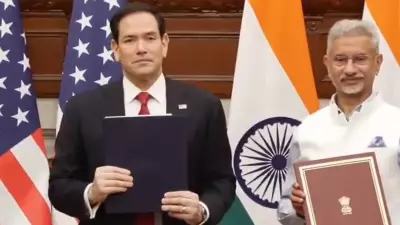
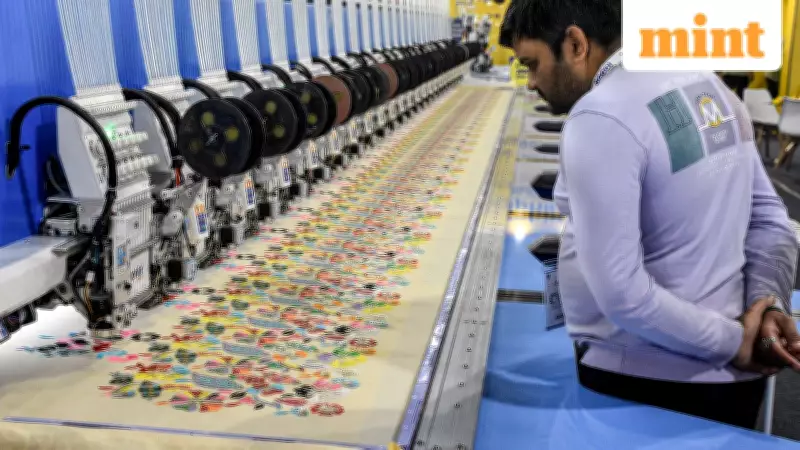
In a significant development for India's textile and apparel industry, exporters are celebrating a major breakthrough as the United States and India have successfully negotiated a reduced reciprocal tariff of 18% on Indian goods. This strategic move is poised to enhance the competitiveness of Indian exports in the global market, providing a crucial advantage over key rivals.
Stock Market Surge Reflects Optimism
The announcement has triggered a wave of optimism in the stock market, with shares of prominent exporters witnessing substantial gains. Companies with significant exposure to the US market, including Gokaldas Exports Ltd, Welspun Living Ltd, Indo Count Industries Ltd, Kitex Garments Ltd, and Faze Three Ltd, were locked in the upper circuit as of Tuesday afternoon. Additionally, other stocks such as Raymond Lifestyle Ltd and KPR Mills Ltd recorded impressive increases of 5% and 17% respectively, reflecting heightened investor confidence.
Addressing Past Challenges
Previously, Indian exporters faced a daunting cumulative tariff of 50%, comprising 25% reciprocal tariffs and an additional 25% punitive levy for purchasing Russian crude oil. This punitive structure had severely impacted the sector, diverting a substantial share of textile export business to competing markets like Vietnam and Bangladesh, which enjoyed more favorable tariff terms. Despite Indian exporters offering steep discounts—often resulting in financial losses—and benefiting from a depreciation of the Indian rupee by over 5%, the competitive disadvantage persisted.

Timeline for Full Benefits
While the agreement marks a positive step forward, industry experts caution that the full advantages will take time to materialize. Raja Shanmugam, an apparel exporter based in Tiruppur, Tamil Nadu, highlighted that the complete impact may require five to six months to take effect. He explained, "Many buyers shifted their business to other countries due to the trade disruptions between the US and India. Rebuilding these relationships will be gradual, as buyers now have existing contracts with alternative suppliers."
Order Book Implications
The timing of the deal aligns with the industry's order cycles. Apparel exporters have largely finalized orders for the Fall-Autumn 2026 collection, with shipments scheduled from May to October. Narendra Goenka, owner of Texport Industries and former chairman of the Apparel Export Promotion Council (AEPC), noted that while some incremental orders may emerge following the announcement, the primary benefits will be realized with the Spring-Summer 2027 collection. Orders for this collection will be booked in the coming months, with shipments commencing in November. Goenka added, "We have engaged with customers, and there is interest in shifting some business back to India from competitors."
Comparative Tariff Advantage
At 18%, India now enjoys the lowest US tariff among major competitors, including Vietnam (20%), Bangladesh (20%), Indonesia (19%), and China (34%). This positions Indian exporters favorably in the world's largest textile and apparel market. However, it is important to note that this rate remains higher than the pre-escalation tariffs of 7-16.5% that Indian exporters paid prior to mid-2025.
Synergy with EU Free Trade Agreement
The US-India trade deal follows closely on the heels of the India-European Union free trade agreement, which aims to eliminate India's tariff disadvantages in another critical market. Currently, Indian exports to the EU face tariffs ranging from 9% to 12% across various product categories. The FTA promises to reduce these to zero, leveling the playing field with competitors like Bangladesh and Vietnam, which already benefit from duty-free access to Europe.

Industry Expansion and Employment Prospects
The simultaneous implementation of these trade agreements is expected to drive manufacturing growth and create employment opportunities. Alexander John, CEO of NC John Garments, which supplies to the Walt Disney Co. in the US, stated, "The combined impact of the India-EU and India-US deals will necessitate increased production and supply, potentially leading to expansion of manufacturing units and higher labor demand."
Expert Insights on Long-Term Impact
Madhur Singhal, Managing Partner (Consumer & Internet) at Praxis Global Alliance, emphasized that while immediate job creation may be limited due to global demand cycles, the trade deals are designed to enhance market access and restore competitiveness over time. He noted, "In MSME-heavy clusters, employment effects typically unfold gradually through improved utilization and steadier orders. The tariff reduction to 18% is particularly significant for industries like textiles and jewellery, where thin margins make even partial corrections impactful on landed-cost competitiveness."
Future Growth Trajectory
Suketu Shah, CEO of Vishal Fabrics Ltd, highlighted the opportunities for diversification and scale-up presented by the trade agreements. He remarked, "The true impact will depend on the speed of implementation and manufacturers' ability to manage costs and scale effectively." With the US and EU accounting for approximately 50% of India's annual textile and apparel exports, valued at $36.7 billion, the potential for growth is substantial. India's Minister for Commerce and Trade, Piyush Goyal, recently projected that the textile sector could rapidly expand from $7 billion to $30-40 billion, underscoring the tremendous potential for job creation and economic advancement.