

The Known Unknowns: Six Critical Unanswered Questions About the US-India Trade Deal
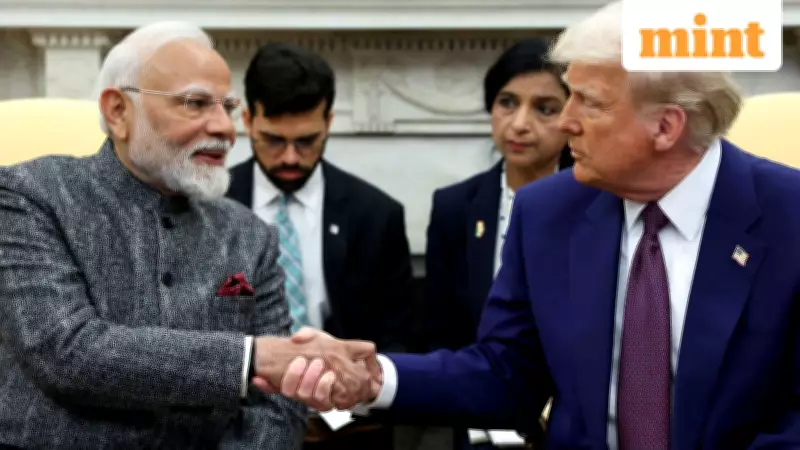
The trade agreement between India and the United States, confirmed through a late-night call between Prime Minister Narendra Modi and US President Donald Trump, represents a significant diplomatic breakthrough. According to social media posts by both leaders, the deal substantially reduces reciprocal tariffs from 25% to 18%, while also eliminating the punitive 25% tariff previously levied on India for its Russian oil purchases. This effectively lowers the overall US tariff on Indian exports from 50% to 18%, placing Indian goods at a competitive advantage compared to exports from countries like Vietnam.
While this tariff reduction is undoubtedly positive news for bilateral trade relations, several crucial questions remain unanswered, creating substantial ambiguity about the future implementation and impact of this agreement. The lack of detailed official documentation has led to speculation and uncertainty among policymakers, businesses, and trade analysts in both nations.
1. Has India Agreed to End Russian Oil Purchases?
President Trump's social media post claims that India has agreed to terminate its Russian oil purchases, but Prime Minister Modi's statement focuses exclusively on the tariff reduction without mentioning this commitment. Given that Russian oil accounted for over 30% of India's needs—approximately 1.5 million barrels per day—this question carries significant weight. Did India provide assurances about reducing or eliminating Russian oil imports, and was this the basis for Trump agreeing to drop the punitive 25% tariff? The discrepancy between the two leaders' statements requires clarification.

2. Will US and Venezuelan Oil Replace Russian Imports?
President Trump has suggested that oil from the United States and Venezuela could replace Russian supplies, but this appears impractical in the short to medium term. Currently, the US accounts for only 7% of India's crude imports, while Venezuela is just beginning to ramp up its oil production after years of challenges. Furthermore, Venezuelan oil is of a heavy variety that may not be compatible with all Indian refineries. Even if the share of American and Venezuelan oil increases in India's import basket, this transition would need to occur gradually over an extended period.
3. Has India Offered Duty-Free Access to US Imports?
Trump has asserted that India will implement 0% duties on imports from the United States and remove all non-tariff barriers. This represents an ambitious demand that could significantly impact various sectors of the Indian economy. Has India actually agreed to such comprehensive market access, and if so, which specific sectors would receive duty-free treatment? The absence of clear sectoral details creates uncertainty for businesses on both sides.
4. Has India Opened Its Agricultural Sector?
US Secretary of Agriculture Brooke Rollins has stated that the agreement will enable increased exports of American farm products to India's massive market, potentially boosting prices and injecting cash into rural America. However, it remains unclear which agricultural products would be covered by this arrangement. Agriculture has traditionally been a red line for New Delhi in trade negotiations, given that more than half of India's population depends on farming as their primary source of employment. Additionally, much of US agricultural produce is genetically modified, presenting regulatory and consumer acceptance challenges for India.
5. Does the Tariff Reduction Include Section 232 Levies?
President Trump previously used Section 232 (national security provisions) to impose additional tariffs on steel, aluminum, copper, automobiles, and auto components beyond the reciprocal tariffs. It is unclear whether Monday's announcement includes or excludes these specific tariffs. The resolution of this question will significantly impact several key industrial sectors in both countries.

6. Can India Realistically Purchase $500 Billion in US Goods?
President Trump has claimed that India will purchase goods worth $500 billion from the United States, including oil, defense equipment, agricultural products, and other items. However, no specific timelines have been provided for achieving this ambitious target. According to US Census Bureau data, India's imports from the United States totaled just $42 billion from January through November 2025, making the $500 billion figure appear extraordinarily challenging without substantial structural changes to trade patterns.
The US-India trade deal represents a significant step forward in bilateral relations, but these six unanswered questions highlight the substantial work that remains to be done. As details continue to emerge, businesses, policymakers, and trade experts will be closely monitoring how these critical issues are addressed to determine the agreement's true impact on both economies.





