

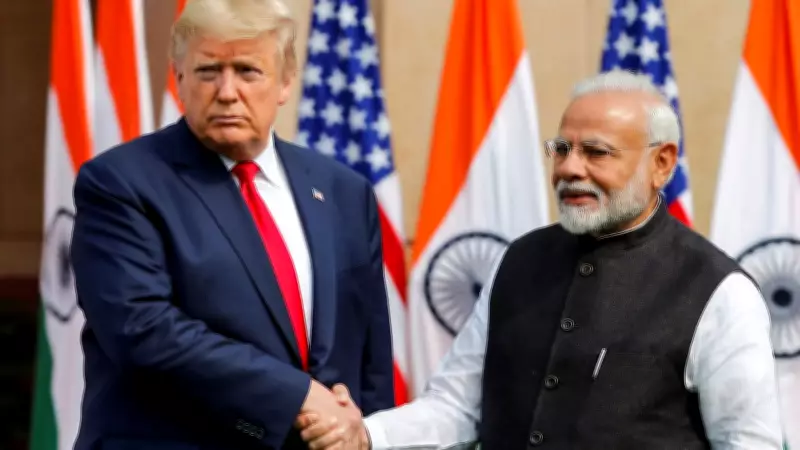
The recent statements by US Agriculture Secretary Brooke Rollins regarding increased agricultural exports to India under the new trade agreement have sparked significant concerns among Indian farmers and agricultural bodies. This development follows the reduction of tariffs on India from 50 percent to 18 percent by US President Donald Trump, as part of the bilateral trade deal.
Farmers' Concerns and Government Stance
The Indian Coordination Committee of Farmers Movements (ICCFM) had previously urged the government to exclude agriculture from the US trade deal to protect domestic farmers. In a letter to Commerce Minister Piyush Goyal, the ICCFM warned that granting duty-free access to US agricultural products could have severe consequences for India's farming community.
US Agricultural Strategy and Market Access
Secretary Rollins emphasized that the trade deal would improve access to American farm products in India's massive market, potentially lifting prices and injecting cash into rural America. She noted that America's agricultural trade deficit with India stood at $1.3 billion in 2024, highlighting India's growing population as a crucial market for US agricultural exports.

President Trump, in a social media post, mentioned Prime Minister Narendra Modi's commitment to "BUY AMERICAN" at higher levels, alongside substantial purchases of US energy, technology, agricultural, coal, and other products. This statement underscores the strengthened economic relationship between the two nations.
Prime Minister Modi's Assurance to Farmers
Prime Minister Narendra Modi has repeatedly expressed his commitment to safeguarding Indian farmers from any adverse impacts. During his Independence Day speech, he stated that the well-being of Indian farmers, fisherfolk, and cattle keepers remains the government's foremost priority, vowing to stand against any policies that could harm their interests.
Subsidy Issues and WTO Implications
The ICCFM highlighted that the US government is among the world's largest agricultural subsidizers, with the 2024 US Farm Bill allocating $1.5 trillion towards farm subsidies. These subsidies not only restrict agricultural imports into the US but also enable American products to enter export markets at artificially low prices.
Allowing such heavily subsidized US imports into India could undermine India's longstanding position at the World Trade Organization (WTO) against these very subsidies, creating a complex diplomatic and economic challenge.
Specific Sectoral Impacts
A report by the State Bank of India (SBI) cautioned that opening India's dairy sector to US imports could result in an annual loss of Rs 1.03 lakh crore to Indian dairy farmers. The report projected that milk prices in India could drop by at least 15 percent if the sector is opened up, significantly affecting the livelihoods of small dairy farmers due to the heavily subsidized US dairy industry.
Historical Context and Trade Dynamics
The US has pursued aggressive agricultural market access in all trade deals under the Trump administration, including renegotiations to include farm products. This trend raises questions about which agricultural product categories have been opened under the new India-US trade deal, with potential implications for various sectors of Indian agriculture.
The ICCFM's letter also pointed out that the US has been engaged in trade wars with China, Mexico, and Canada since 2018, which has severely affected its agricultural exports. For instance, soybean exports from the US dropped from $34.4 billion in 2022 to $24.5 billion in 2024, while corn exports fell from $18.6 billion to $13.9 billion during the same period.
This context suggests that the US may be seeking to offload its agricultural surplus onto markets like India, further intensifying concerns about the impact on local farmers and the agricultural economy.






