

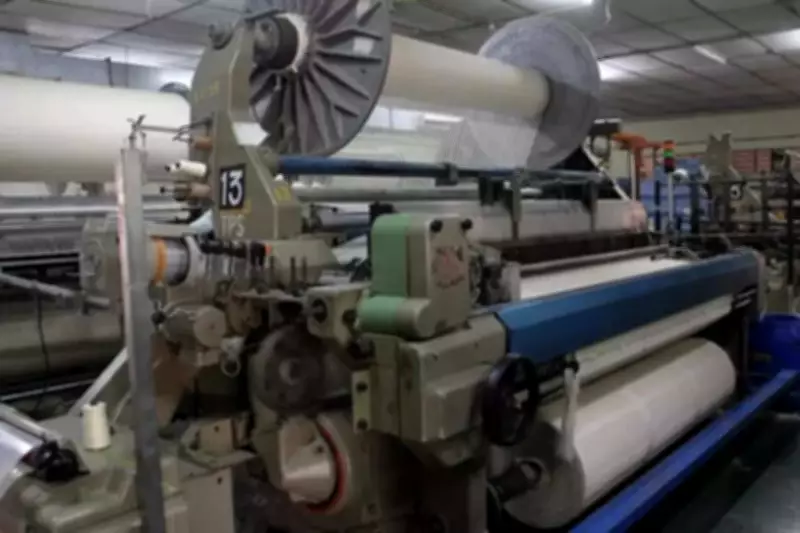
Terry towel manufacturers in Solapur, Maharashtra, have expressed significant relief following the announcement of a trade agreement between India and the United States. The deal effectively reduces the punitive tariffs imposed by the US on Indian-manufactured goods to 18%, marking a crucial turnaround for the local textile industry.
Background of the Tariff Dispute
In August 2025, the United States imposed a substantial 50% tariff on Indian goods as a penalty for India's purchase of Russian oil. This additional levy was compounded with an existing 10% duty, particularly targeting textile products, resulting in an effective tariff rate of 60%. The move severely impacted exports from Solapur, a major hub for terry towel production.
Industry Reaction to the New Deal
US President Donald Trump announced the tariff reduction to 18% via a social media post, sparking optimism among textile operators in Solapur. For the past nine months, exports to the United States—a market that yields favorable returns—had completely halted, forcing manufacturers to seek alternative, less profitable markets.

Raju Rathi, President of the Solapur Chamber of Commerce and Industry, shared insights with TOI. "Out of Rs 600 to Rs 800 crore worth of terry towel exports, the US alone accounts for Rs 200 crore," he stated. "Exports were halted after the tariffs were raised. We had to search for other markets but ended up selling at cheaper rates. However, we continued operations to keep men and machines running. Now, we hope the deal is finalized swiftly, and we will re-establish links with exporters to resume US supply."
Competitive Advantage and Production Capacity
Rathi highlighted that the 18% tariff provides India with a competitive edge over neighboring nations, which have secured deals with the US at 19% to 20% tariffs. This 1% to 2% advantage could be pivotal in reclaiming market share.
Solapur's manufacturing infrastructure is robust, with 16,000 powerlooms in the city, of which 12,000 are dedicated to terry towel production. The city also boasts 2,000 rapier and 200 airjet machines, enabling rapid and large-scale manufacturing. The daily production capacity stands at an impressive 2 lakh kilograms of towels, with approximately 60% destined for export. The United States remains the largest importer, followed by various European countries.
Future Prospects and Government Support
"Now we can expand production," Rathi emphasized. "Manufacturers should invest more and enhance their capacity as a major market reopens. The recent Union Budget offered several incentives to the industry, alongside subsidies implemented to mitigate losses from the tariff war."
The textile sector is the second-largest employer in India after agriculture. In Solapur's terry towel industry alone, rough estimates indicate around 40,000 workers are employed, with nearly half being women.
Agricultural Concerns and Farmer Reactions
While the textile industry celebrates, agricultural leaders have raised concerns. The trade deal reportedly includes provisions allowing US agro-produce, such as maize and soyabean, to enter Indian markets with zero duty. This follows strained US-China relations, prompting the US to seek new markets for its agricultural surplus.
Raju Shetti, former MP and leader of Swabhimani Shetkari Sanghatana, voiced apprehension. "Since the beginning, unions warned the government about US attempts to sell cheaper agricultural produce in India," he said. "US farmers grow maize and soyabean at lower costs due to genetically modified seeds and advanced machinery. Farmers in Marathwada and Vidarbha cannot compete. We urge PM Modi to clarify Trump's claims. If such a deal is signed, farmers nationwide will resist."
Shetti noted that India produced record quantities last year: 152.7 lakh tonnes of soyabean, 434 lakh tonnes of maize, and 300 lakh bales of cotton. "We expected the government to engage China, a huge market, for our maize and soyabean. Instead, priorities seem misplaced," he added.

Textile Export Performance and Global Standing
In the January-December 2025 period, India's textile and apparel exports remained stable at US$37.5 billion. The sector saw notable growth in handicrafts (17.5%), readymade garments (3.5%), and jute products (3.5%).
A key achievement in 2025 was significant market diversification. From January to November 2025, India's textile exports grew across 118 countries, reducing dependency on any single market.
India holds the position of the sixth-largest exporter of textiles and apparel globally, with a 4.1% market share in 2024. The sector, including handicrafts, contributed 8.6% to India's total merchandise exports in 2024-25, valued at US$37.7 billion. While the USA was the largest export destination, accounting for 28.9% of textile and apparel exports, it represented only 6% of India's overall textile industry, underscoring the sector's diversified global footprint.





