

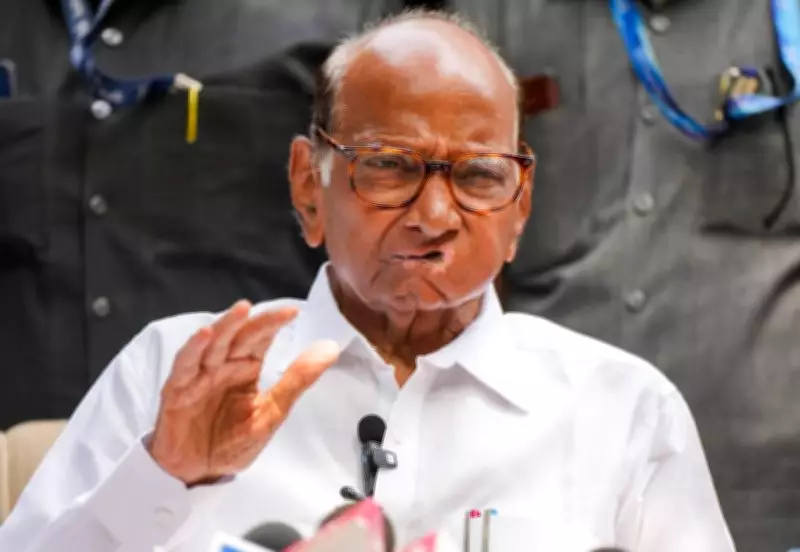
In a significant development that could reshape global agricultural trade, a new tariff policy introduced by the United States has been reported to favor agricultural exports, sparking considerable concern for Indian farmers, as highlighted by veteran politician Sharad Pawar. This policy shift, emerging amidst ongoing trade negotiations and economic adjustments, is poised to influence market dynamics and farmer livelihoods in India, a nation heavily reliant on agriculture for both domestic sustenance and export revenues.
Understanding the US Tariff Policy and Its Implications
The recently unveiled US tariff policy is designed to bolster American agricultural exports by providing incentives and reducing barriers for key products. This strategic move aims to enhance the competitiveness of US farmers in international markets, potentially leading to increased shipments of commodities such as grains, dairy, and processed foods. However, for India, this development raises red flags, as it could result in heightened competition for Indian agricultural goods abroad, affecting export volumes and pricing structures.
Sharad Pawar's Concerns for Indian Farmers
Sharad Pawar, a prominent figure in Indian politics with extensive experience in agricultural affairs, has voiced deep apprehension regarding the potential fallout from this US policy. He emphasizes that Indian farmers, already grappling with challenges like climate variability, input costs, and market fluctuations, may face additional pressures if US exports flood global markets. Pawar points out that this could undermine India's efforts to boost its own agricultural exports and secure better terms for farmers, who form the backbone of the rural economy.

Key areas of concern highlighted by Pawar include:
- Market Access: Increased US exports might reduce demand for Indian products in key markets, leading to lower prices and reduced income for farmers.
- Trade Negotiations: The policy could complicate India's trade talks with the US and other nations, as it may necessitate countermeasures or adjustments to protect domestic interests.
- Farmer Livelihoods: With agriculture employing a large segment of India's population, any negative impact on exports could exacerbate rural distress and economic instability.
Broader Impact on India's Agricultural Sector
Beyond immediate trade concerns, this US tariff policy has broader implications for India's agricultural sector. India has been striving to enhance its export capabilities through initiatives like the Agricultural Export Policy, aiming to double farm exports and improve farmer incomes. The new US move could pose a setback to these goals, requiring strategic responses from policymakers to safeguard Indian interests.
Potential strategies to mitigate the impact might involve:
- Strengthening domestic support mechanisms for farmers, such as subsidies and insurance schemes, to cushion against external market shocks.
- Diversifying export markets to reduce reliance on regions where US competition is strongest, exploring opportunities in Africa, Asia, and other emerging economies.
- Enhancing product quality and value-addition in Indian agriculture to compete more effectively on a global scale, rather than relying solely on price advantages.
Looking Ahead: Navigating Trade Challenges
As the global trade landscape evolves, India must proactively address the challenges posed by the US tariff policy. Sharad Pawar's warnings serve as a timely reminder of the need for robust policy frameworks that balance international trade obligations with the welfare of Indian farmers. Engaging in diplomatic dialogues with the US and other trading partners could help negotiate favorable terms, while domestic reforms aimed at boosting agricultural productivity and resilience are crucial for long-term sustainability.
In conclusion, while the new US tariff policy may benefit American agricultural exports, it raises significant concerns for Indian farmers, as articulated by Sharad Pawar. By fostering innovation, strengthening trade strategies, and prioritizing farmer support, India can navigate these challenges and continue to advance its agricultural sector in a competitive global environment.






