US Tariff Increases Cripple Maharashtra's Seafood Export Industry
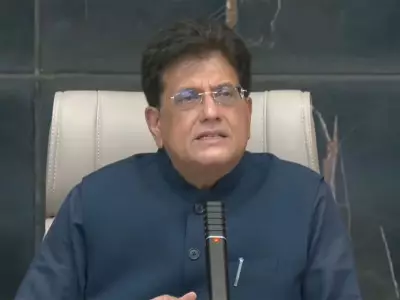
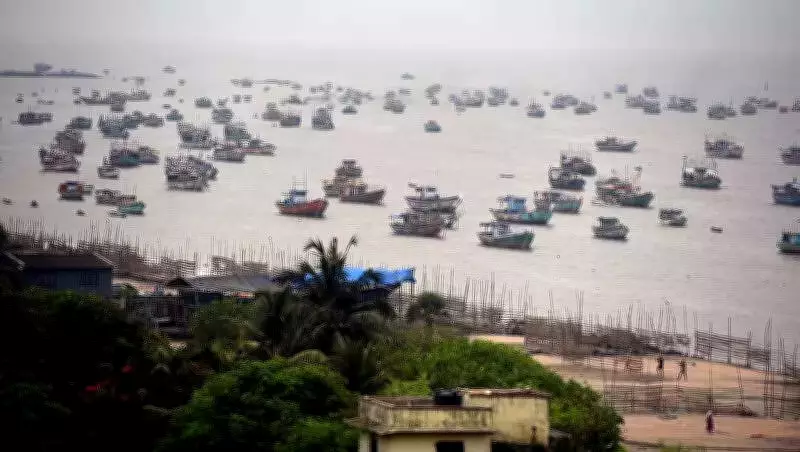
Maharashtra's fishing and seafood export sectors are facing significant challenges due to recent tariff hikes imposed by the United States, according to state Fisheries Minister Nitesh Rane. During a session in the legislative assembly on Wednesday, Rane provided detailed information about the economic impact on local businesses and outlined government measures designed to mitigate the damage.
Minister's Assembly Statement Reveals Export Crisis
In a written response to questions from MLA Babaji Kale, Minister Rane disclosed that information from the Marine Products Export Development Authority (MPEDA) confirms the US tariffs on Indian seafood products have particularly disrupted shrimp exports. The minister emphasized that while import duty negotiations fall under central government jurisdiction, the state is implementing its own relief strategies.
"According to the information received from MPEDA, an organization under the jurisdiction of the centre's department of commerce, negotiations are underway between India and the US regarding a trade agreement," Rane stated. "The issue of imposing import duty on American products is a subject of the Centre. Regarding the possible loss to the fisheries sector due to the increase in import duty imposed by the US, measures have been taken to provide relief to the fishermen."
Government Relief Measures and Domestic Market Focus
The state government has developed a comprehensive plan to strengthen domestic fish markets as a response to potential damage from US import duties. Administrative approval was granted in March 2026 for the Chief Minister's Fisheries Scheme, which aims to promote both inland fisheries and marine areas throughout Maharashtra.
Additionally, the central government has implemented supportive fiscal measures, reducing the Goods and Services Tax (GST) on fishing equipment and essential inputs from 18% to 5%. This reduction represents a significant cost-saving initiative for fishermen and seafood processors across the state.
Exporters Describe Devastating Business Impact
Seafood exporters in Mumbai report catastrophic consequences from the tariff changes. Irfan Khan, director of Harbour Exports, revealed that "not a single prawn" has been exported from Mumbai to the United States since September 2025 due to the sanctions.
"We have not shipped a single container to the US since Sept 2025," Khan explained. "Not a single prawn — let alone a single container. Thankfully I have a factory in Dubai so we are reworking our packaging and trying to finish our orders, just to hold on to one big client. We have even incurred costs on setting up an office in Vietnam to export fish to the US as a Vietnamese exporter — even at a loss."
Khan expressed particular frustration about the broader economic implications, noting that "What pains me is that the revenue and foreign exchange that could have been earned by India's farmers and fishermen is sadly being lost."
Maharashtra's Limited Export Infrastructure
Subray Pavar, assistant director of MPEDA, provided context about Maharashtra's seafood export capabilities, revealing that fisheries exports from the state remain minimal. "There are hardly two or three units registered with US FDA," Pavar noted. "Most of our consignments go to Europe. Shrimp exports are done from Andhra Pradesh, since that is where most of the cultivation is done."
Pavar highlighted a broader national concern, explaining that "seafood exporters nationwide are confounded because the US tariff rates and conditions are changing so rapidly," creating uncertainty throughout the industry.
Exceptions Amid the Export Crisis
Despite the widespread challenges, some companies continue to maintain US exports. Kader Exports represents one of the fortunate exceptions, with their consignments still reaching American markets. Mohammed Farid Khan, general manager of corporate exports for the company, provided insight into their continued operations.

"Our shrimp exports to the US have not stopped," Khan stated. "The earlier situation was different when tariff was 50%. But that is now lowered to 10%. Moreover, the US Supreme Court has questioned the tariffs. So our shrimp exports are normal."
This exception highlights the complex and evolving nature of international trade regulations affecting India's seafood industry, with different companies experiencing varying impacts based on their specific circumstances and adaptability.