

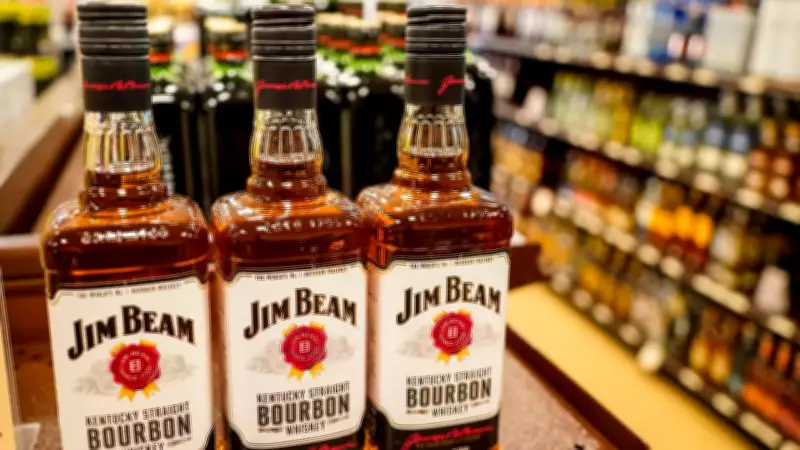
US Whiskey Duty Cuts Unlikely to Shake Indian Market, Say Industry Experts
Duty concessions on American whiskey and wine, which may be part of a forthcoming India-US trade agreement, are anticipated to have a negligible impact on Indian domestic companies. Similar to previous trade deals with Australia, Europe, and the UK, these concessions are expected to come with a minimum import price, limiting their market penetration.
Low Market Share and Distinct Preferences
The volumes of American whiskey in India are currently very low. For instance, American whiskey accounts for less than 0.1% of the Indian whiskey market, with total sales of only 229,000 cases of nine-litre bottles. In comparison, Scotch whiskey holds over a 3% share, and Irish whiskey has under 0.2%.
Vinod Giri, director general of the Brewers Association of India, explained the consumer dynamics: "Most Bourbons and Tennessee whiskies have distinct darkish colors and stronger flavors, which, like single malt whiskies, appeal to a more discerning palate and less so to the majority of premium whiskey consumers."

He further noted that pricing is not the primary barrier to adoption. This is evidenced by the modest performance of bottled-in-India Jim Beam, which retails at a very affordable price below locally bottled Scotch whiskey. Therefore, a duty reduction on Bourbon is unlikely to significantly impact the premium whiskey market.
Industry Awaits Deal Details with Caution
The Indian alcohol industry is awaiting the specifics of the trade deal, with government officials assuring that the interests of domestic players will not be adversely affected.
Anant S Iyer, director general of the Confederation of Indian Alcoholic Beverages Companies (CIABC), stated: "CIABC believes that the bilateral trade deal will be equitable and mutually beneficial for both countries. CIABC is not against reduction in import duty, but wants it in a phased manner."
Wine Market Also Insignificant
When it comes to wine, the segment constitutes less than 0.5% of the Indian alcohol market, with Australian wine being the largest player. Success in the Indian wine market, especially for imported varieties, is driven not just by provenance but by the ability to distribute effectively, as highlighted by Giri.
Overall, the consensus among industry veterans is that duty concessions on American alcoholic beverages will not disrupt the dominance of Indian players in the market.






