India's First Vande Bharat Sleeper Train Launched, Marking a New Chapter in Rail Travel
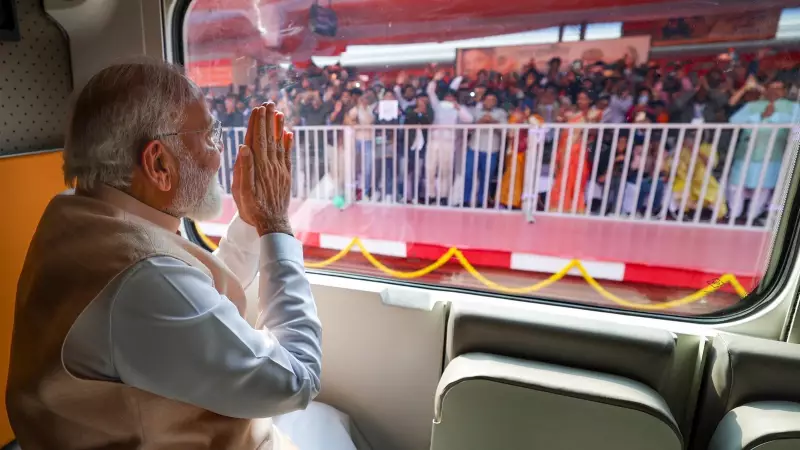
Prime Minister Narendra Modi officially launched India's inaugural Vande Bharat Sleeper train on Saturday. The event took place in Malda, West Bengal, where he flagged off the train connecting Howrah and Guwahati. Simultaneously, he virtually inaugurated a second sleeper train running from Guwahati's Kamakhya Junction to Howrah. This launch represents a significant milestone for Indian Railways, introducing a new standard for overnight train journeys.
Modern Facilities and Enhanced Passenger Experience
The Vande Bharat Sleeper trains, manufactured by BEML, come equipped with numerous advanced features. These include hot water availability in first AC compartments, GPS-based LED displays for real-time updates, sensor-operated intercommunication doors, and modular pantry services. The trains also incorporate Kavach, an automatic train protection system, along with an emergency talk-back system and disinfectant technology for improved sanitation.
Passengers will notice cleaner toilets, CCTV cameras for enhanced security, and aerodynamic exteriors. The driver's cab features advanced controls, making operation smoother for trained personnel.

Passenger Reactions and Expectations
At Kamakhya Junction, the train stood decorated with marigold garlands, drawing curious onlookers. Jharna Shil, a 49-year-old resident, expressed her excitement. "This train brings pride to Assam. For women travelers, safety is a major concern, and the CCTV cameras provide reassurance. The clean toilets are a welcome change," she remarked. Currently, the Saraighat Express takes about 16 hours and 30 minutes for the journey, while the Vande Bharat Sleeper is expected to reduce travel time to approximately 14 hours.
Geetanjali Saha appreciated the decision to serve local Assamese and Bengali cuisine onboard. "Train food often lacks flavor, but offering regional dishes is a step in the right direction," she said while taking a selfie with the train.
Student Perspectives and Broader Implications
Among the inaugural passengers were 47 students from South Point Public School in Guwahati. Anukriti Dasgupta, a sixth-grade student, shared her love for train travel. "Trains allow you to see forests, rivers, and mountains. The journey itself becomes an adventure," she said, aspiring to become a songwriter and drawing inspiration from her travels.
Ain Hazarika, an 11th-grade student and aspiring journalist, highlighted the train's potential to bridge cultural gaps. "If people want to understand India, they should visit the Northeast. This train can help foster that connection," she noted, while also expressing concerns about maintenance over time.
Operational Details and Future Plans
The train will cover the 972-kilometer distance between Guwahati and Kolkata in 14 hours. It is scheduled to depart from Kamakhya at 6:15 PM, reaching Howrah at 8:15 AM the next day. The return journey will depart from Howrah at 6:20 PM, arriving at Kamakhya by 8:20 AM the following morning.
Officials confirmed that two rakes are currently being equipped, with eight more trains slated for production by the end of the year. The fares are set at Rs 2,299 for third AC, Rs 2,970 for second AC, and Rs 3,640 for first AC.
Challenges and Hopes for Accessibility
While the train has been praised for its modern amenities, some concerns about affordability remain. Arvind Prasad, a Railways employee with 22 years of service, mentioned, "The train is beautiful, but it may remain a dream for many. Even after saving for a year, I might afford only one trip with my family."
However, maintenance staff like Prasad also noted improvements, stating that upkeep now takes 6-8 hours compared to over 12 hours previously.
A New Benchmark for Indian Railways
A senior Railways Ministry official described the launch as a "Rajdhani moment for a new era." The Rajdhani Express, introduced in 1969, set high standards for safe and comfortable travel. The Vande Bharat Sleeper aims to build on that legacy, making premium travel more accessible to the middle class.

The launch comes as Assam and West Bengal prepare for assembly polls this year, adding a political dimension to this infrastructural achievement. The train not only promises enhanced travel experiences but also symbolizes progress in connecting India's diverse regions.