

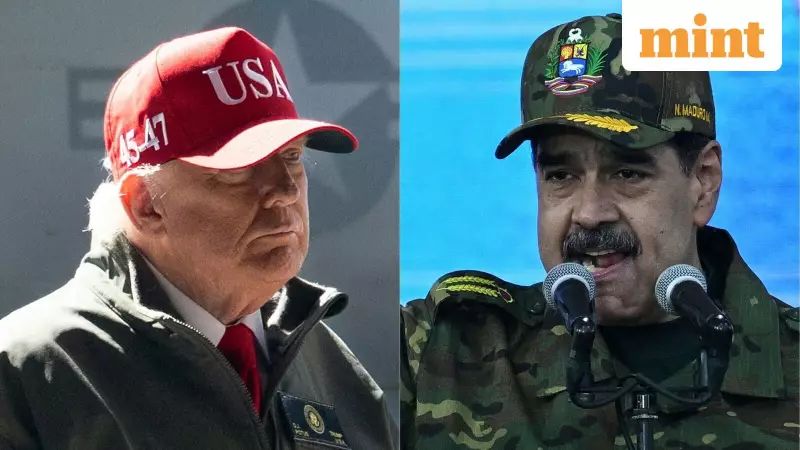
The dramatic capture of Venezuelan President Nicolás Maduro by United States forces has sent shockwaves through global geopolitics and energy markets, presenting an immediate and complex challenge for India. The event, which took place in early January 2026, thrusts Washington's assertive new security doctrine into sharp focus and places India's significant oil investments in the South American nation under a cloud of profound uncertainty.
A Blatant Violation and Its Oil Spillovers
While the electoral legitimacy of the Maduro regime has long been questioned internationally, the United States' direct use of military force to apprehend a sitting head of state is widely viewed as a blatant contravention of established international law. US President Donald Trump declared that Washington would administer Venezuela until the country is deemed ready for self-rule, citing alleged support for drug-trafficking and terrorism by Maduro.
The strategic underpinnings of this move, however, extend beyond security. President Trump's explicit mention of American oil firms entering the Venezuelan market makes it clear that the nation's vast crude reserves are a central factor. Venezuela sits on the world's largest proven oil reserves, primarily located in the heavy oil belt of the Orinoco Basin. This development directly threatens the interests of other global players with stakes in the region, including India.

ONGC Videsh's High-Stakes Venezuelan Gamble
India's state-owned exploration giant, ONGC Videsh Ltd (OVL), has a substantial and valuable stake in this volatile landscape. The company holds a significant participating interest in the San Cristobal oil field project within the prolific Orinoco Basin. This investment represents a strategic effort by India to secure energy assets abroad and ensure a degree of supply security.
For years, OVL's partnerships and India's intermittent crude imports from Venezuela have operated under the persistent shadow of US sanctions. The year 2026, however, has introduced a far greater and more immediate level of risk. The change in the nation's governance, enforced by an external power, creates legal and operational ambiguities that could jeopardize the very ownership and viability of these multi-billion dollar assets.
India's Diplomatic Tightrope and Strategic Imperatives
New Delhi now faces a delicate diplomatic balancing act. While engaged in crucial trade negotiations with the United States, the Indian government must urgently initiate discussions to clarify and secure OVL's contractual rights and asset ownership in the new, US-influenced Venezuelan context. A broad strategic calculus may prevent India from joining China and Russia in outright condemnation of President Trump's actions.
Nevertheless, this episode underscores the fragility of the current world order. It demands that India redouble its efforts to safeguard its overseas investments and protect its strategic autonomy. The nation must leverage all diplomatic channels and legal frameworks to ensure that its energy security is not collateral damage in a geopolitical confrontation. The need for a swift, clear, and firm response to protect national interests has never been more pressing.
As global instability reshapes energy politics, India's ability to navigate this crisis will test its diplomatic mettle and have lasting implications for its quest for energy independence.






