

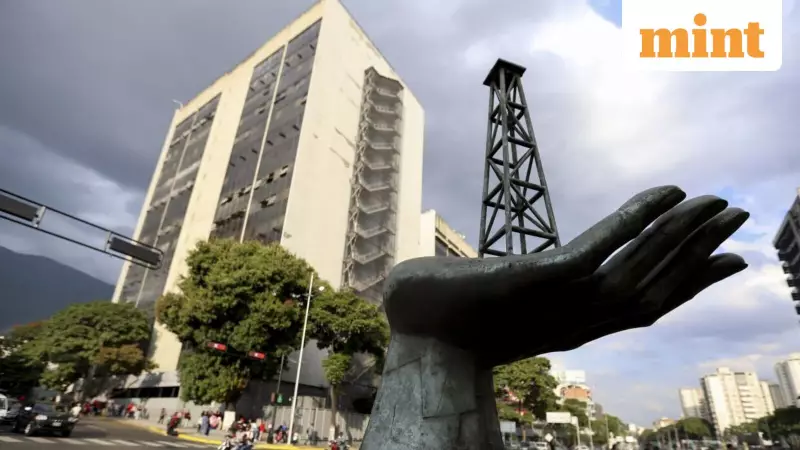
Global oil markets reacted with surprising calm this week following a significant geopolitical event: the US-led incursion into Venezuela and the subsequent ousting of strongman Nicolás Maduro. Despite President Trump's pledge to send American drillers to revive the country's crippled crude industry, oil futures saw only a slight decline, highlighting deep-seated skepticism about a quick recovery.
A Muted Market Response
When trading opened on Sunday night, the financial world's reaction was notably subdued. US oil futures for delivery later in January fell by a mere 0.5%, trading around $57 a barrel. The international benchmark, Brent crude, saw an even smaller dip, hovering near $60.50. This tepid movement stands in stark contrast to the potential disruption such a major political shift in a major oil-rich nation could typically cause.
The broader financial landscape echoed this calm. US stock futures edged up slightly, with S&P 500 contracts gaining 0.1%. Precious metals like gold and silver saw more notable gains, but the energy sector remained unfazed. This collective shrug from traders underscores a widespread belief that significant obstacles remain before Venezuelan oil flows freely into global markets again.

The Daunting Challenge of Reviving Venezuelan Oil
Venezuela's oil story is one of colossal potential hampered by profound decay. The country claims the world's largest crude oil reserves, exceeding 300 billion barrels. However, years of mismanagement, underinvestment, and stringent US sanctions have reduced its output to a trickle. Production currently languishes near 900,000 barrels per day, a far cry from its historical peak of approximately 3 million barrels per day.
Analysts are unanimous in their assessment: a turnaround will be neither quick nor cheap. Even with an orderly political transition, restoring output to previous levels would require years and investment totalling tens of billions of dollars. Jefferies analysts noted that in a best-case scenario, Venezuela could add about 500,000 barrels per day within three to five years through existing joint ventures with firms like Chevron. However, growth beyond that would be "much more complex and costly."
RBC Capital Markets analysts, citing executives on the ground, estimate that revitalising Venezuela's energy sector would cost about $10 billion annually. This immense financial burden could force US oil companies into a "quasi-governmental role," handling development far beyond their typical scope.
Sanctions and Structural Hurdles Remain
A key immediate barrier is the web of US sanctions. Secretary of State Marco Rubio confirmed on CBS's "Face the Nation" that the US would maintain its tanker blockade, initiated last month, to keep pressure on Venezuelan leadership. This "quarantine" aims to force changes in how the oil industry is run and curb illicit activities, but it also directly impedes any rapid export recovery.
The market context further dampens the impact. Oil prices have been depressed, with US benchmarks down 20% last year and near five-year lows. This is due to a global surplus, driven by record US shale output nearing 14 million barrels per day and OPEC+ rolling back production cuts. The potential future addition of Venezuelan oil is a distant concern compared to today's oversupply.
Furthermore, the specific type of oil matters. Many US refineries, especially on the Gulf and West coasts, are configured to process the heavy, sour crude that Venezuela and Mexico produce. They cannot easily switch to the light, sweet oil flowing from American frackers, creating a structural demand that Venezuelan oil could eventually fill—but not anytime soon.
In summary, the market's muted reaction is a sober verdict on the monumental task ahead. While the political landscape may have shifted, the physical, financial, and logistical hurdles to restoring Venezuela as a major oil exporter remain firmly in place, assuring global markets that a flood of new crude is not on the immediate horizon.






