The recent military intervention by the United States in Venezuela, leading to the capture of President Nicolás Maduro, has set the stage for a potential transformation of the global oil landscape. For India, the world's third-largest oil importer, this development could unlock a new source of discounted crude in the medium to long term, particularly benefiting its sophisticated refining sector. While immediate changes are unlikely, experts point to a significant strategic inflection point for India's energy security and refining economics.
From Sanctions to Potential Stability: The Venezuela Opportunity
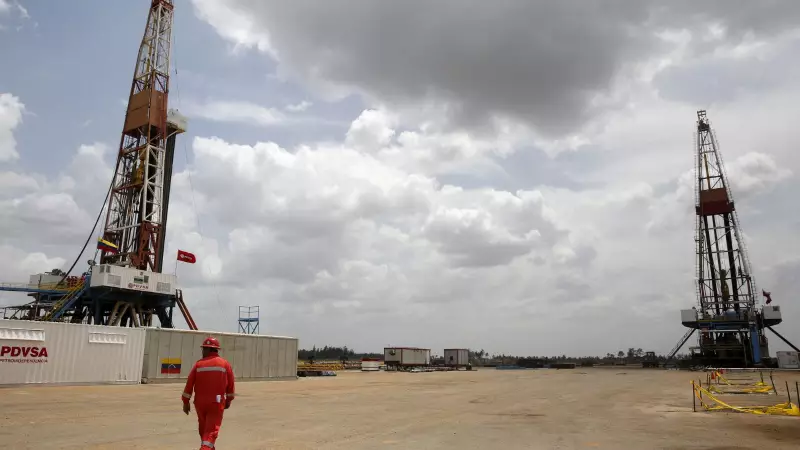
Following the events of January 3, 2026, US President Donald Trump announced Washington's intent to take control of Venezuela's oil sector, pledging billions in investment from American companies to revive its crippled industry. Venezuela sits on the world's largest oil reserves yet contributes less than 1 per cent of global production. A successful US-led stabilisation could eventually render Venezuelan oil sanctions-free, bringing more of its barrels to the international market.
Commodity analytics firm Kpler noted that while the intervention does not alter India's oil dynamics in the near term, it introduces a crucial potential shift for future crude supply. "The change in control increases the likelihood of sanctions recalibration and a gradual reintegration of Venezuelan barrels into global markets," the firm stated. Historically, India, specifically Reliance Industries (RIL), was a major buyer of Venezuelan crude until US sanctions in 2019 halted flows. A brief resumption occurred after a temporary sanctions waiver in October 2023, but imports stopped again due to geopolitical tensions.

A Niche for Complex Refineries: The Heavy Crude Advantage
The real opportunity for India lies in the specific nature of Venezuelan oil. It is predominantly heavy to extra-heavy crude, which is thicker and more viscous than lighter grades. Processing such crude requires highly complex and capital-intensive refinery units. Consequently, heavy crudes typically trade at a discount, offering better economics for refiners equipped to handle them.
In India, only a handful of refineries possess this capability. The private sector giants Reliance Industries and Nayara Energy (NEL) have been the largest processors. Some public sector units like Indian Oil's Paradip refinery, the Mangalore Refinery and Petrochemicals (MRPL) plant, and the HPCL-Mittal Energy (HMEL) joint venture also process heavy crudes occasionally. Kpler suggests that planned upgrades, such as those at HPCL's Visakhapatnam refinery, could gradually expand India's capacity to absorb more Venezuelan heavy oil.
"Venezuelan crude is expected to re-enter the market at a discount, reinforcing its attractiveness for compatible refineries," Kpler's analysis added. This would improve feedstock options, enhance procurement flexibility, and strengthen India's negotiating position with other suppliers like those in West Asia.
Strategic Diversification and Long-Term Implications
Beyond refinery economics, Venezuelan crude presents a politically acceptable diversification option for New Delhi. This is particularly relevant as the United States continues to exert pressure on India to reduce its imports of Russian oil. Adding Venezuelan volumes to the import mix would help India balance its crude sourcing strategy without directly confronting American concerns.
However, experts caution that the road to meaningful Venezuelan production growth is long, requiring years and billions of dollars in investment. Any benefits will be incremental and contingent on the evolving US sanctions policy and the pace of Venezuela's operational recovery. "The impact is more structural than immediate," Kpler concluded, noting that benefits will accrue unevenly across India's refining landscape.

For now, the situation remains in flux. The coming weeks and months will be critical in determining whether the US and Venezuela's new leadership can negotiate a lasting easing of sanctions. If successful, it could open a steady, discounted supply channel for India's complex refineries, bolstering energy security and refining margins for years to come.