

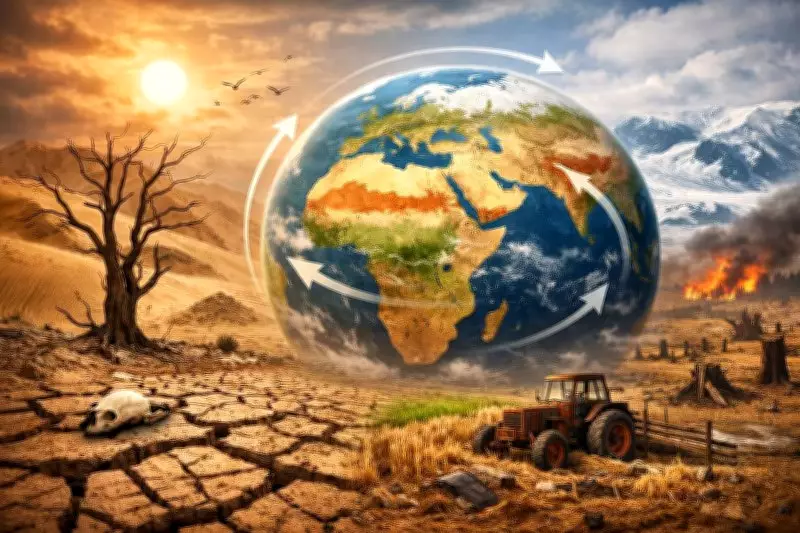
Desertification: Understanding a Global Environmental Challenge
Desertification represents a critical form of land degradation that occurs specifically in arid, semi-arid, and dry sub-humid regions across the globe. This environmental phenomenon, which has been formally defined and addressed under the United Nations Convention to Combat Desertification (UNCCD), results from a complex interplay between natural climatic variations and unsustainable human activities.
The Formal Definition and Scope
The UNCCD has established a precise definition for desertification, characterizing it as the degradation of land in dryland ecosystems. This degradation process transforms once-productive landscapes into barren, desert-like conditions, significantly reducing their biological productivity and economic value. Importantly, desertification is not limited to natural desert expansion but encompasses human-induced deterioration of land in vulnerable climatic zones.
Primary Causes of Desertification
Climatic factors play a substantial role in driving desertification processes. These include:

- Prolonged droughts and reduced precipitation patterns
- Increased temperature extremes and evaporation rates
- Changing weather patterns and climate variability
Human activities significantly exacerbate and accelerate desertification through:
- Deforestation and removal of natural vegetation cover
- Overgrazing by livestock beyond land carrying capacity
- Unsustainable agricultural practices and poor irrigation management
- Urban expansion and infrastructure development on fragile lands
Consequences and Global Implications
The consequences of desertification extend far beyond the immediate affected areas, creating ripple effects across multiple sectors:
- Environmental impacts: Loss of biodiversity, reduced soil fertility, increased vulnerability to climate change, and disruption of water cycles
- Economic consequences: Decreased agricultural productivity, loss of livelihoods, increased poverty, and strain on national economies
- Social ramifications: Forced migration, food insecurity, conflicts over dwindling resources, and threats to human security
Why Desertification Knows No Climatic Boundaries
Contrary to common perception, desertification is not confined to specific climatic zones or geographical regions. The interconnected nature of global ecosystems means that land degradation in one area can have far-reaching consequences elsewhere. Desertification processes can:
- Affect regions beyond traditional dryland areas through atmospheric dust transport
- Influence global climate patterns through altered land-atmosphere interactions
- Impact international trade and food security through reduced agricultural output
- Create transboundary environmental challenges that require cooperative solutions
This comprehensive understanding of desertification is particularly valuable for civil services aspirants preparing for examinations such as the UPSC, especially in Geography papers where it serves as a crucial link between physical geography, environmental studies, economic development, and human security considerations.






