

CM Naidu Elevates Jaladhara-Jalaharati to Mission Status with Strict Monitoring Mandate
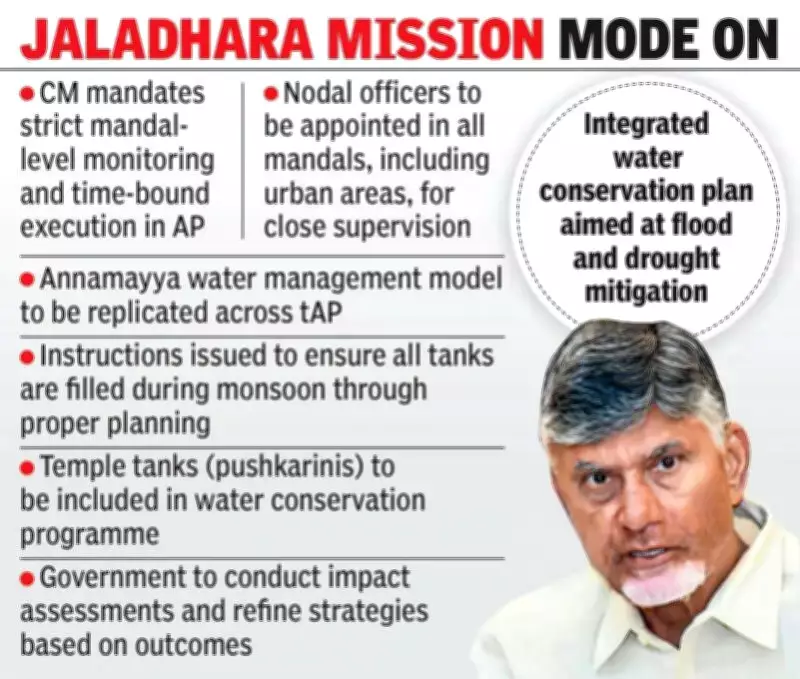
In a decisive move to address water security, Chief Minister Chandrababu Naidu has officially directed state officials to treat the Jaladhara–Jalaharati program as a full-fledged mission. During a comprehensive teleconference review on Sunday, Naidu mandated rigorous monitoring at the mandal level and insisted on time-bound execution to secure and enhance water resources throughout Andhra Pradesh.
Structured Oversight and Accountability Framework
The Chief Minister emphasized that nodal officers appointed in every mandal must be the primary drivers of implementation. This oversight will extend to urban mandals as well, which will now come under the same rigorous supervision framework. Designated officers will be held accountable for ensuring measurable progress and tangible outcomes.
In a significant administrative decision, Naidu appointed Annamayya district collector Nishant Kumar as the state-level nodal officer for the Jaladhara initiative. The Chief Minister highlighted the successful water management model developed in Annamayya district and instructed officials to study and replicate this effective framework across the entire state.

Challenge-Driven Approach with Concrete Goals
Naidu called for a challenge-driven methodology, urging officials to focus on delivering specific, visible results. Key priorities include the urgent repair of canals and tanks to prevent seasonal flooding, coupled with strategic planning to ensure all water bodies are adequately filled during the monsoon season through efficient water utilization techniques.
The Chief Minister also issued specific directives for West Godavari district, asking for strengthened drainage systems to effectively curb persistent waterlogging issues that have plagued the region.
Economic and Community Benefits of Water Security
Highlighting the broader economic implications, Naidu explained that improved groundwater levels would directly reduce agriculture's dependence on electricity for irrigation. This reduction in power demand would ease the state's substantial financial burden, freeing up crucial funds that could be redirected to other vital development programs and public welfare initiatives.
In a culturally sensitive move, the Chief Minister directed that traditional temple tanks, known locally as pushkarinis, be formally included in the conservation initiative. Detailed action plans must be developed to preserve these historical water systems while simultaneously adapting them to serve contemporary community needs.
Public Participation and Adaptive Strategy
Naidu strongly emphasized the critical role of public participation, urging citizens to become active stakeholders in water conservation efforts to ensure long-term sustainability and community ownership of water resources.
The Chief Minister called for regular impact assessments and continuous refinement of strategies based on measurable outcomes and field data. He reiterated the state government's unwavering focus on achieving long-term water security through integrated efforts in conservation, storage, and efficient utilization.
Naidu concluded that these comprehensive measures are crucial to safeguard Andhra Pradesh against both floods and droughts while simultaneously supporting the agricultural sector and securing rural livelihoods for future generations.






