JEE Main 2026 Day 3 Shift 2 Analysis: A Comprehensive Review of Paper Difficulty and Candidate Reactions
The Joint Entrance Examination (JEE) Main 2026 continued with its third day of sessions, specifically focusing on the second shift held on January 23, 2026. This crucial engineering entrance exam, conducted by the National Testing Agency (NTA), witnessed thousands of aspirants attempting the paper across various centers in India. The analysis of this shift provides valuable insights into the overall difficulty level, section-wise challenges, and immediate reactions from both candidates and subject matter experts.
Overall Paper Difficulty and Structure Assessment
Initial feedback from students who appeared for the JEE Main 2026 Day 3 Shift 2 indicates a moderately challenging paper. The examination followed the standard pattern comprising three core subjects: Physics, Chemistry, and Mathematics. Each section was designed to test the conceptual understanding and problem-solving abilities of the candidates. Reports suggest that the paper maintained a balanced approach, with a mix of direct formula-based questions and those requiring analytical thinking.
Section-Wise Breakdown and Student Experiences
Physics Section: The Physics portion was described as moderately difficult by many test-takers. Questions covered key topics from the Class 11 and 12 syllabus, including mechanics, electromagnetism, and modern physics. Students noted that while some problems were straightforward, others demanded a thorough grasp of fundamental principles and their applications.

Chemistry Section: Inorganic and Physical Chemistry were highlighted as relatively easier compared to Organic Chemistry, which posed significant challenges. Candidates reported that questions from chemical bonding, periodic table properties, and thermodynamics were manageable, but organic reaction mechanisms and named reactions required careful attention.
Mathematics Section: This section emerged as the most time-consuming and challenging for many aspirants. Topics such as calculus, coordinate geometry, and algebra featured complex problems that tested not only knowledge but also speed and accuracy. Several students expressed difficulty in completing the Mathematics section within the allotted time, citing lengthy calculations and tricky questions.
Expert Reactions and Analysis
Education experts and coaching institute faculty have weighed in on the JEE Main 2026 Day 3 Shift 2 paper. They observed that the examination adhered to the prescribed syllabus and was consistent with previous years in terms of difficulty distribution. Experts emphasized that the paper effectively discriminated between well-prepared and average candidates, with a focus on application-based questions.
According to seasoned mentors, the Physics section was fair and aligned with expected standards, while Chemistry required a strong memory of facts and reactions. Mathematics, as per expert analysis, was designed to challenge high-achievers, with several questions pushing the boundaries of conventional problem-solving. Overall, the paper is seen as a reliable indicator of a candidate's preparedness for the advanced JEE Main and subsequent JEE Advanced examinations.
Candidate Feedback and Post-Exam Sentiments
Immediate reactions from students varied, reflecting individual preparation levels and subject strengths. Many candidates described the paper as "balanced but tough," particularly highlighting the Mathematics section. Some expressed satisfaction with their performance in Physics and Chemistry, while others felt pressured by the time constraints in Mathematics.
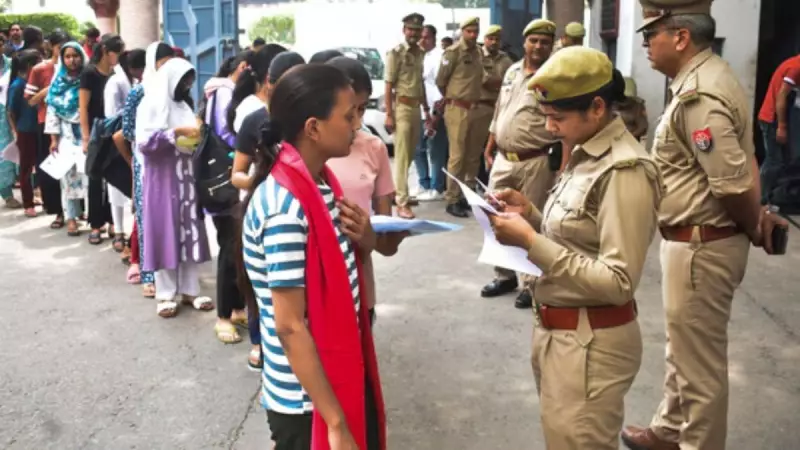
Aspirants also shared that the online examination process was smooth, with no major technical glitches reported. The overall atmosphere at test centers was reported to be conducive, allowing students to focus on their papers without external disruptions. As the JEE Main 2026 continues, candidates are advised to analyze their performance in this shift to identify areas for improvement in subsequent attempts.