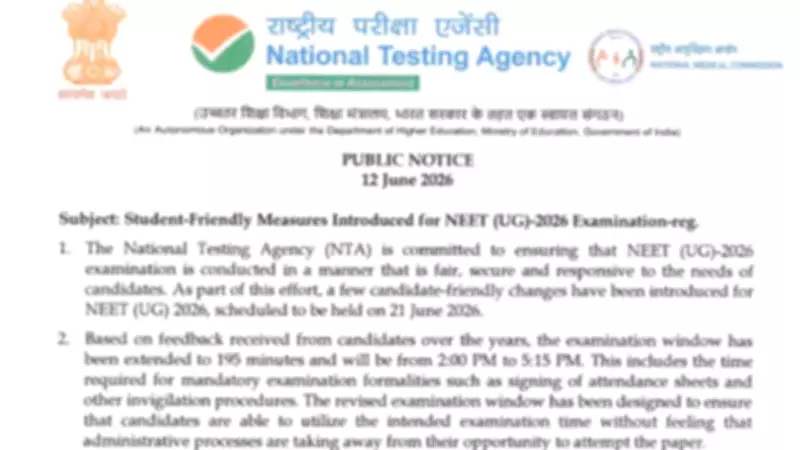
The National Testing Agency (NTA) has unveiled a series of candidate-friendly modifications for the NEET (UG) 2026 examination, scheduled for June 21. These changes aim to enhance comfort and convenience for students while upholding fairness and security.
Extended Examination Window
According to an official notice, the examination window has been extended to 195 minutes, now running from 2:00 pm to 5:15 pm. The NTA clarified that this additional time includes mandatory formalities such as signing attendance sheets and other invigilation procedures. The revised schedule ensures that candidates can utilize the intended examination time without feeling that administrative tasks are eating into their answering time.
Increased Rough Work Pages
Another significant change involves the rough work pages in the question paper booklet. The NTA has increased the number of rough work pages from two to four, providing students with more space for calculations, diagrams, and other workings during the exam.

Revised Layout for Rough Work Pages
The layout of these pages has been redesigned based on student feedback. Previously, all rough work pages were placed at the end of the booklet. However, some candidates, particularly left-handed students, found this arrangement inconvenient. To address this, two rough work pages will now be placed immediately after the instruction page at the beginning of the booklet, while the remaining two pages will continue to be available at the end. This revised format applies to both English and regional language question paper booklets.
NTA's Statement
In the notice, the NTA stated, “Even small improvements in examination design can have a positive impact on the experience of candidates during a high-stakes examination.” The agency emphasized that these measures are designed to make the examination process more candidate-friendly while maintaining the highest standards of fairness and security.
Additional Information
The NTA also noted that these changes reflect its commitment to continuous improvement based on stakeholder feedback. Candidates are advised to familiarize themselves with the new format and plan their exam strategy accordingly.