

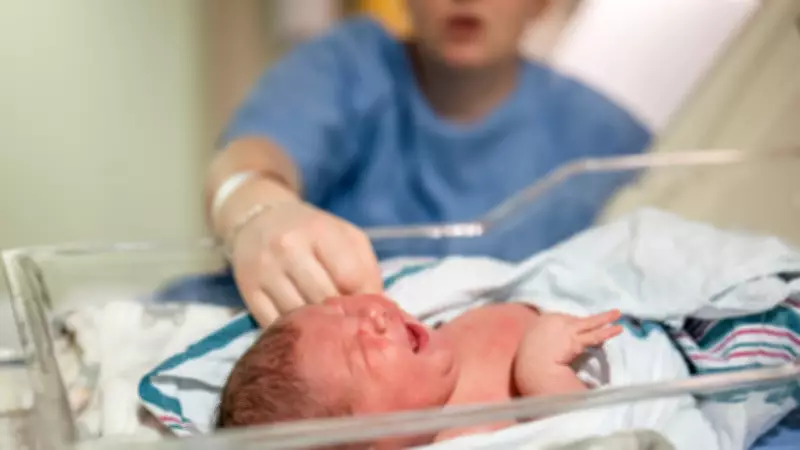
A one-year-old girl born with a single opening for her urinary, reproductive, and intestinal systems, along with a double uterus and twin vaginas, has been given a new chance at life after doctors successfully performed one of the most complex pediatric reconstructive surgeries seen in recent years.
Rare Condition: Common Cloaca
The child was born with a rare condition known as Common Cloaca, a severe birth defect in which the urinary tract, reproductive organs, and intestine fail to develop separate openings and instead merge into a single channel. What made the case even more extraordinary was the presence of a double uterus (uterine didelphys), complete vaginal duplication (twin vaginas), and a rare intestinal abnormality called Type I Congenital Pouch Colon, in which the normal large intestine is replaced by an abnormal pouch-like structure.
Exceptional Rarity
According to doctors, cloacal malformations occur in approximately one in 50,000 live births. The coexistence of a double uterus, twin vaginas, and congenital pouch colon alongside this condition makes the anomaly exceptionally rare and among the most complex congenital pelvic malformations encountered in pediatric surgery.

Detailed Preoperative Planning
Before surgery, specialists carried out detailed MRI scans and advanced endoscopic investigations to understand the child's highly unusual anatomy. The scans revealed two uterine structures, two vaginal channels, and a complex connection between the urinary, reproductive, and intestinal systems.
Intricate Reconstructive Procedure
Following extensive planning by a multidisciplinary team, doctors undertook a highly intricate reconstructive procedure. The surgery involved creating a new anal opening, reconstructing the urinary tract, and rebuilding the reproductive anatomy. Surgeons carefully reconstructed the duplicated vaginal structures and established separate functional pathways for the bowel, urinary, and reproductive systems.
Expert Insights
Dr. Nitin Jain, Senior Consultant, Pediatric Surgery, Amrita Hospital, Faridabad, said, "This was one of the most challenging reconstructive procedures because several rare congenital anomalies were present together. Every step required meticulous planning and precision. Our objective was not only to correct the anatomy but also to restore function and give the child the best possible quality of life in the years ahead. The successful outcome reflects the expertise and teamwork required to manage such exceptionally complex cases."
The procedure involved prolonged operating time, complex pelvic reconstruction, and meticulous preservation of delicate structures, making it a significant surgical challenge.
Dr. Ridhima Bhatia, Consultant, Pediatric Anesthesia, Amrita Hospital, Faridabad, said, "Managing a prolonged and highly complex reconstruction in a one-year-old child requires continuous monitoring and careful coordination between surgical and anesthesia teams. Such procedures demand meticulous perioperative planning to ensure patient safety throughout the operation."
Recovery and Outlook
Following surgery, the child recovered well under close medical supervision and continues to be monitored by specialists.
Doctors say the successful reconstruction demonstrates how advances in pediatric surgery and multidisciplinary care are enabling children born with some of the most complex congenital anomalies to lead healthier and more fulfilling lives.
For the family, however, the outcome means something far more personal: the possibility of a normal childhood and a brighter future for their daughter.






