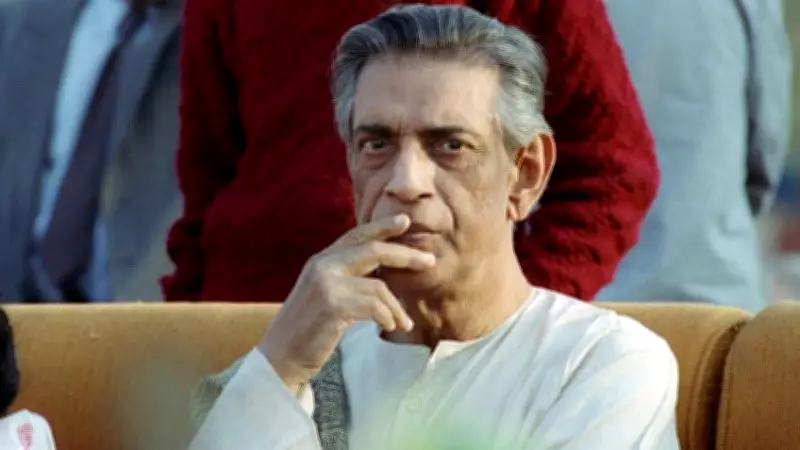
Satyajit Ray on Cinema: A Thought-Provoking Quote
Renowned filmmaker Satyajit Ray once remarked, “I did not look for a work of art every time I went to a cinema…” This statement reflects his nuanced perspective on film as both an artistic medium and a form of popular entertainment. Ray, who is celebrated for his masterful storytelling and cinematic vision, made his directorial debut with Pather Panchali in 1955. The film not only received international acclaim but also served as a gateway for Indian cinema to global audiences.
The Legacy of Pather Panchali
Pather Panchali (Song of the Little Road) was the first installment of Ray's famed Apu Trilogy. It won the Best Human Document award at the Cannes Film Festival and established Ray as a leading auteur. The film's naturalistic style, poignant narrative, and evocative music (composed by Ravi Shankar) broke away from the conventions of mainstream Indian cinema. According to film historians, Pather Panchali remains a landmark in world cinema, influencing generations of filmmakers.
Ray's Philosophy on Art and Cinema
Ray's quote underscores his belief that cinema could be both art and entertainment. He did not demand artistic profundity from every film he watched, acknowledging the medium's diverse purposes. This pragmatic yet idealistic view is consistent with his broader approach to filmmaking, where he balanced artistic integrity with accessibility. Ray once said, “The best films are those that are both personal and universal.” His works often explored human relationships, social issues, and the complexities of modern India.

Impact on Indian and Global Cinema
Satyajit Ray's contributions extend beyond his films. He was also a writer, illustrator, and composer. His influence is seen in the works of directors like Martin Scorsese, Akira Kurosawa, and Wes Anderson. In India, he inspired a generation of parallel cinema filmmakers. The Government of India honored him with the Bharat Ratna, the country's highest civilian award, in 1992. As of 2026, his films continue to be studied in film schools worldwide.