The rapid advancement of technology is fundamentally transforming the world of work, creating both uncertainty and opportunity for professionals across India. Artificial intelligence has moved beyond laboratory experiments and now operates in classrooms, corporate offices, and healthcare facilities worldwide. As algorithms increasingly handle repetitive tasks and machines learn to simulate human reasoning, a crucial question emerges: what happens when entry-level positions that traditionally launched careers begin to disappear?
The Automation Anxiety and Education Crisis
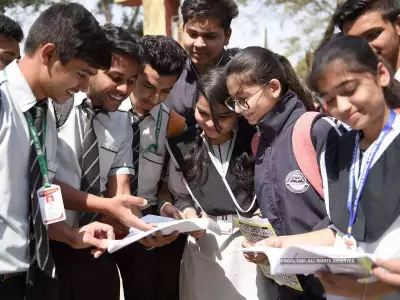
For countless young Indian professionals and recent graduates, this question carries particular urgency. Soaring education costs have made traditional four-year degrees increasingly difficult to justify financially, while automation simultaneously threatens the very entry-level positions that once provided pathways to economic stability. This dual pressure creates a perfect storm of career uncertainty for the next generation of Indian workers.
Amid this growing anxiety, however, significant hope emerges. Recent research has identified specific career paths that not only withstand the automation wave but actually thrive because of their reliance on inherently human qualities. Resume Now conducted comprehensive analysis of data from the US Bureau of Labor Statistics and O*NET to pinpoint these future-proof occupations.

What Makes a Career Automation-Resistant?
The research identified four key characteristics that protect jobs from AI replacement. Future-proof careers typically require interpersonal interaction, critical thinking capabilities, manual precision, and adaptability - all areas where human skills continue to outperform even the most sophisticated automation.
Analysts established three concrete pillars to define career resilience in the AI age: education accessibility, compensation level, and growth potential. The study specifically focused on roles welcoming candidates with minimal experience while offering strong long-term prospects.
The criteria included:
- Education: Entry possible with high school diploma, certificate, or associate/bachelor's degree without requiring years of experience
- Salary: Median annual pay of approximately $50,000 or higher
- Growth: Occupations projected to grow at least 5% through 2034, exceeding the national average
Top Future-Proof Careers Defying Automation
Dental Hygienists: Where Science Meets Compassion
Dental hygienists represent the perfect fusion of technical skill and human empathy. Their responsibilities extend far beyond teeth cleaning to include oral health assessment, patient anxiety management, and adapting techniques to individual comfort levels.
Key statistics: Median pay of $94,260 per year with projected growth of 7% (much faster than average). This role requires an associate degree and licensure, but cannot be automated due to its demand for manual dexterity, intuitive patient interaction, and conversational skills.
Diagnostic Medical Sonographers: Technical Artistry
While operating ultrasound equipment involves technical knowledge, the true artistry lies in interpretation and human connection. Sonographers constantly adjust machinery, position patients for optimal imaging, and communicate critical findings to physicians in real-time.
With median pay of $89,340 annually and explosive 13% projected growth, this field offers exceptional stability. Each procedure demands clinical judgment that machines cannot replicate, ensuring the sonographer's role remains indispensable. Education typically involves an associate degree or postsecondary certificate.
Respiratory Therapists: Crisis Management Experts
When patients struggle to breathe, respiratory therapists make split-second decisions that save lives. These healthcare professionals manage complex ventilator systems, monitor oxygen levels, and provide crucial emotional support to distressed patients and families.

The profession offers median compensation of $80,450 per year with 12% projected growth. During medical emergencies, human instinct and empathy - not algorithmic calculations - determine outcomes. This fundamental human requirement ensures lasting demand for respiratory therapists, who typically enter the field with an associate degree.
Radiologic and MRI Technologists: The Human Touch in Technology
While AI increasingly assists in reading medical images, the technologist's role remains vital. These professionals prepare patients for procedures, ensure precise imaging exposure, and maintain strict safety protocols throughout the process.
With median earnings of $78,980 annually and 5% average growth, this career offers stability in the evolving healthcare landscape. Their responsibility is dual-focused: mastering complex machinery while preserving patient comfort - a balance that technology alone cannot maintain. An associate degree provides the necessary foundation.
Occupational Therapy Assistants: Personalized Recovery Guides
The recovery journey is deeply personal, and occupational therapy assistants guide patients through this process. They help individuals regain essential daily skills - from dressing to cooking - through creative, customized therapeutic activities.
This field boasts impressive 18% projected growth with median pay of $66,050 per year. Each therapy plan differs because every patient's circumstances and goals are unique. This individualized approach keeps the work securely beyond AI's capabilities. Entry typically requires an associate degree.
Embracing a Human-Centric Professional Future
The research findings offer more than just a list of promising careers - they provide crucial perspective for Indian students and professionals planning their futures. The most sustainable careers aren't those competing directly against technology, but rather those working alongside it while leveraging distinctly human strengths.
Automation will undoubtedly streamline workplaces and eliminate some routine tasks, but it cannot replicate human compassion, creativity, or the nuanced understanding that comes from genuine personal connection. Whether expressed through a reassuring smile during dental treatment, precise equipment adjustment for optimal imaging, or comforting words during respiratory distress, these roles reaffirm a powerful truth: the future of work belongs not to the fastest processor, but to the most human professional.
For Indian youth concerned about career stability in the age of AI, these findings highlight pathways where emotional intelligence, adaptability, and interpersonal skills create lasting professional value that technology cannot replace.