Sam Altman Questions Traditional Career Advice at IIT Delhi Event
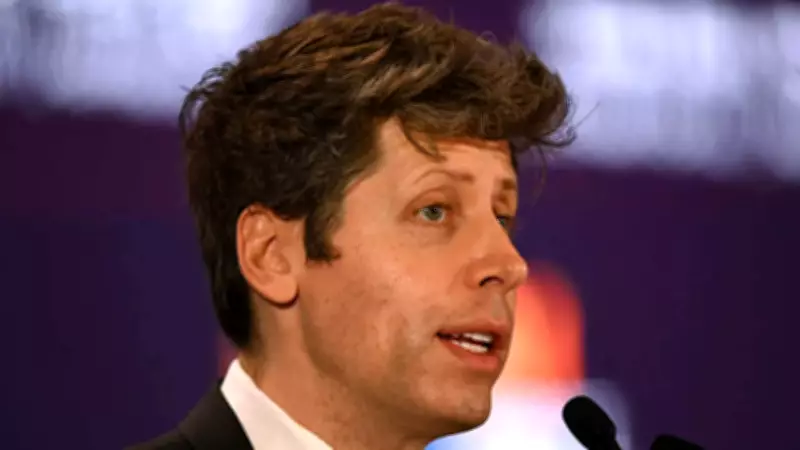
In Indian families, career choices are rarely made by individuals alone. These decisions are typically discussed over family dinners and contemplated for years before a final, collective verdict is reached. This process has historically prioritized stability over ambitious, high-risk pursuits. However, OpenAI CEO Sam Altman recently challenged this long-standing logic during a speech at the Dogra Hall of IIT Delhi, exposing the fragility of career paths built on predictability in today's rapidly changing world.
Altman's Direct Advice to Young Students
"I think listening to old people is the biggest mistake young people make. You will have to quickly develop your own intuitions and trust them. The traditional career advice is probably not going to work as well," Altman told a packed auditorium of students. He emphasized that while parents remain crucial for imparting values and life guidance, their ability to accurately forecast the future of work in an AI-dominated landscape is limited.
"For a predictor of what the world is going to be like going forward, I don't think you should trust me for having good intuition of the rate of change," he added. "Young people always figure this out the best."

Why Traditional Career Wisdom Is Fading
For decades, career guidance in India followed a well-rehearsed script:
- Study diligently
- Select a high-status degree
- Enter a secure profession
- Climb the corporate ladder steadily
Fields like engineering, medicine, and civil services have traditionally offered the comfort of predictability—a clear career path, stable income, and life certainty. Families often chose caution over potentially more rewarding but riskier professions based on rational calculations.
However, in today's disruptive age driven by artificial intelligence, careers no longer follow neat, linear trajectories. They bend, break, and restart frequently. They evolve with market demands and sometimes require mid-career reinvention while professionals are still actively working.
The AI-Driven Disruption of Predictability
Altman's argument points directly to a fundamental shift in the 21st-century labor market: artificial intelligence is destabilizing the very concept of predictability. When algorithms can draft legal documents, write software code, assist in research, automate analytics, and compress months of entry-level work into seconds, the definition of "safe" careers transforms in unimaginable ways.
At IIT Delhi, Altman acknowledged the brutal reality that some job roles will disappear due to AI advancements. Consequently, advice rooted in yesterday's job climate may prove irrelevant for navigating tomorrow's unpredictable career landscape.
The Changing Nature of "Safe" Professions
Global workforce reports indicate that numerous roles once considered secure no longer offer the same promise of continuity. While these positions may not vanish overnight, the nature of work within them is evolving significantly.
The World Economic Forum's Future of Jobs Report 2025 predicts that routine clerical work will steadily decline, listing roles such as bank tellers and data entry clerks among the fastest-declining occupations. These are precisely the jobs families have long regarded as safe.
McKinsey research explains how generative AI can accelerate or automate everyday tasks in office support and customer-facing roles, including documentation, standard queries, and routine processing. Similarly, the widely cited Science paper "GPTs are GPTs" emphasizes that many occupations involve tasks that large language models can now perform almost effortlessly.
The Bottom Line: A New Career Reality
Sam Altman's advice at IIT Delhi might come as a shock to traditional Indian sensibilities, but it reflects the hard realities of today's career landscape. The foundation beneath "safe" professions is quietly shifting. Roles are being redefined from within, tasks are diminishing, and predictability is no longer guaranteed solely by obtaining a degree. Therefore, career guidance derived from past experiences may no longer align with a job market that refuses to remain static.