For aspirants targeting the Civil Services Examination 2026, consistent answer writing practice is the cornerstone of success. This week's edition of UPSC Essentials focuses on two critical areas from the General Studies Paper 3 syllabus: the challenges in India's clean energy manufacturing and a groundbreaking innovation in medical science.
Question 1: The Solar Manufacturing Conundrum
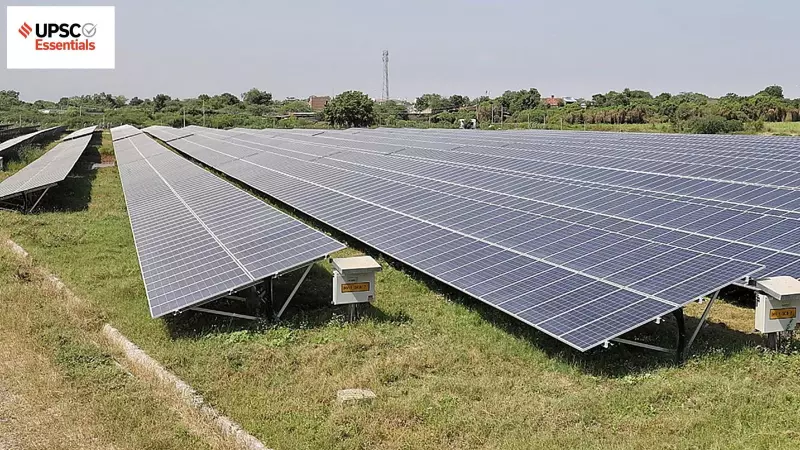
The Indian government's push for renewable energy has seen a significant surge in domestic solar module assembly capacity. However, a stark reality persists: India imported nearly 66 gigawatts (GW) of photovoltaic modules and cells in 2024, even as exports saw a marginal decline. This heavy reliance on imports, primarily from China, underscores deep-seated structural issues within the domestic supply chain.
The core problem lies in the upstream segments of production. While module assembly has grown, India lacks substantial capacity in manufacturing the essential components that come before it: polysilicon, ingots, wafers, and cells. This creates a critical dependency. Furthermore, the industry grapples with high costs due to imported machinery and specialized consumables like silver paste. A shortage of a skilled workforce tailored for high-tech manufacturing and occasional policy inconsistencies add to the hurdles.

Beyond Manufacturing: The Ecosystem Challenges
The bottlenecks extend beyond the factory floor. The financial ecosystem supporting renewable power shows stress points. Distribution companies (DISCOMs) in several states struggle with mounting unpaid dues, and instances of attempted contract renegotiation after competitive auctions create uncertainty, eroding investor confidence.
Infrastructure is another major constraint. An estimated 60 GW of renewable projects face limitations due to inadequate transmission networks. Without robust grid expansion, the clean power generated cannot reach demand centers. Compounding this is the issue of curtailment, where grid operators reduce renewable output for stability reasons, often without compensating developers, thereby increasing the overall cost of capital.
The ambitious National Green Hydrogen Mission, aiming for 5 million metric tonnes of annual production by 2030, faces its own set of challenges. While pilot projects are underway, the production cost of green hydrogen remains significantly higher than conventional 'grey' hydrogen. The sector also confronts a classic chicken-and-egg dilemma in developing storage, transport, and end-use infrastructure.
Despite these challenges, progress is visible. In 2024 alone, domestic companies added 25.3 GW of new module capacity, nearly doubling national manufacturing strength, largely spurred by the Production Linked Incentive (PLI) scheme. The path forward requires protecting contractual sanctity, synchronizing transmission expansion with generation, and creating clear frameworks for curtailment and green hydrogen demand.
Question 2: Nanobots - The Future of Precision Cancer Therapy
Current cancer treatments like chemotherapy and radiation often struggle to distinguish between healthy and malignant cells, leading to severe side effects. Nanotechnology, specifically the development of nanobots, promises a paradigm shift towards targeted, precision medicine that could minimize collateral damage.
How Do These Microscopic Machines Work?
Inspired by the movement of bacteria, certain nanobots are designed with a helical, corkscrew-shaped tail. A tiny magnetic component attached to this helix allows them to be guided through the body's complex environments—blood vessels, dense tissues, and even inside cells—using externally applied magnetic fields. This drilling motion propels them forward with precision.
These nanobots function as sophisticated nano-scale delivery trucks. Their surface or tip can be coated with anti-cancer drugs. Constructed from body-compatible materials like silica and iron, they are navigated magnetically to the exact site of a tumor. Once there, they can preferentially bind to cancer cells and release their payload directly into the malignant tissue, sparing surrounding healthy cells.

Beyond drug delivery, their applications are versatile. For instance, they can be used in magnetic hyperthermia, where they generate localized heat above 42°C to destroy cancer cells. Research has shown efficacy against ovarian and breast cancer cells, including those deep within dense tissue that might evade advanced scans. Interestingly, similar technology has proven effective as an antimicrobial agent in dental procedures like root canal treatments, offering a potent alternative to traditional chemicals.
The Road Ahead for Nanomedicine
A significant advantage of this technology is that it does not require extremely expensive superconducting magnets like MRIs; simpler electromagnets can suffice. The primary challenges now are not just scientific but also related to market adaptation, scaling up production, and gaining widespread acceptance among clinicians and patients. If these hurdles are overcome, nanobots could herald a new era of minimally invasive, targeted cancer therapy with reduced side effects and recovery times.
This answer-writing practice is designed to help UPSC aspirants structure their thoughts, integrate static knowledge with current developments, and articulate comprehensive responses. Candidates are encouraged to use these points as fodder for building well-rounded, analytical answers for the Mains examination.