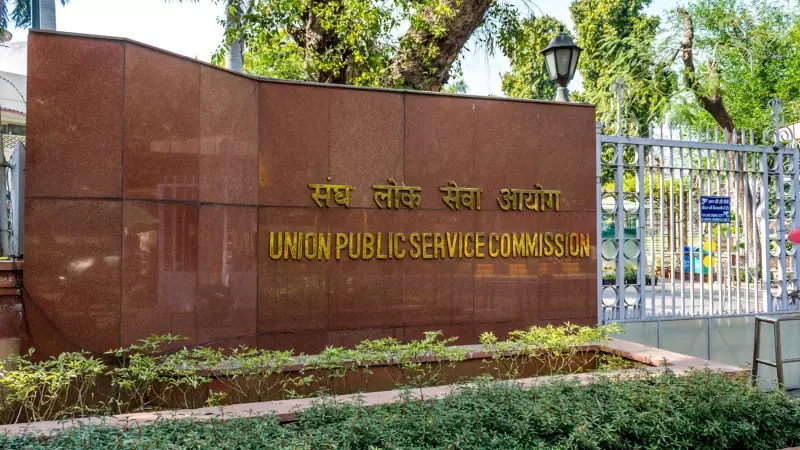
The Union Public Service Commission (UPSC) has announced a significant technological upgrade to its examination process. In a move aimed at bolstering the integrity of its prestigious recruitment tests, the Commission will now mandate face authentication for all candidates at examination venues.
What is the New UPSC Face Authentication Rule?
A formal note on the UPSC website clearly states the new protocol: "All candidates appearing in the UPSC examination will undergo facial authentication at the venue." This directive applies to aspirants for all recruitment examinations conducted by the Commission, including the highly competitive Civil Services Examination (CSE) that selects officers for the Indian Administrative Service (IAS), Indian Foreign Service (IFS), and Indian Police Service (IPS).
The Commission has clarified that this measure is designed to add a robust layer of security, ensuring that the person taking the exam is the genuine registered candidate. This step is expected to effectively prevent impersonation and related malpractices that can undermine the fairness of the country's top-level recruitment process.

Successful Pilot Paves the Way for Nationwide Rollout
This is not an untested technology for the UPSC. The Commission successfully conducted a pilot of an artificial intelligence-enabled facial authentication system during two major examinations held on September 14, 2025.
The pilot was implemented during the National Defence Academy (NDA) and Naval Academy (NA) II Examination, as well as the Combined Defence Services (CDS) II Examination. It was conducted at select examination centres in Gurugram.
During the pilot, the live facial image of each candidate was captured at the centre and digitally matched in real-time against the photograph submitted by the candidate in their online application form. The results were highly promising.
Faster Entry and Enhanced Security
According to UPSC Chairman Ajay Kumar, the new AI-driven system proved to be a major efficiency booster. It reduced the average verification time per candidate to just 8 to 10 seconds, streamlining the entry process significantly compared to traditional manual checks.
This swift authentication not only minimizes queues and crowding at entry points but also integrates a powerful, non-intrusive security feature. The technology ensures a high degree of accuracy in verifying candidate identity, making the examination process more secure and trustworthy.
The successful trial has given the UPSC the confidence to implement this technology across all its future examinations. Candidates appearing for upcoming UPSC tests should be prepared for this new digital verification step at their respective exam centres.