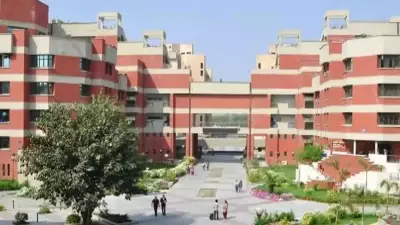
India's higher education sector is undergoing a significant transformation, driven by policy reforms and a collective push towards excellence. How effectively this system prepares the nation's vast youth population for learning, work, and leadership will critically shape India's future social and economic growth. The momentum, guided by the National Education Policy (NEP), is creating a new landscape where flexibility, innovation, and quality are becoming central pillars.
Three Defining Shifts in the Past Year
The past year has witnessed three major developments reshaping the sector. First, the state has moved decisively to institutionalise a robust research ecosystem. The establishment of the Anusandhan National Research Foundation (ANRF) and the launch of the massive Rs 1-lakh-crore Research, Development and Innovation (RDI) Scheme mark a powerful dual-track approach. While the ANRF focuses on nurturing long-term scientific inquiry and industry-academia collaboration, the RDI Scheme emphasises private-sector participation in market-ready innovation.
Second, higher education institutions (HEIs) themselves are aggressively pushing innovation. Several IIMs have announced new undergraduate programmes, and colleges are increasingly integrating well-being, life skills, and apprenticeships into curricula. Following the NEP, universities are graduating their first four-year undergraduate cohorts, with the Bachelor’s with Honours in Research emerging as a key pathway for depth and global competitiveness. At Ashoka University, for instance, two new schools—the Havells School of Management and Leadership and the Ashoka School of Advanced Computing—were launched to advance interdisciplinary research.

Third, the landscape of global student mobility is changing rapidly. With over 1.25 million Indian students studying abroad, tighter visa regimes and geopolitical conditions are creating a demand for high-quality domestic alternatives. This is leading to a two-way globalisation: foreign universities entering India and Indian institutions expanding overseas.
Progress Metrics and Upcoming Regulatory Changes
These concerted efforts are reflecting in global rankings. In the QS World University Rankings 2026, 54 Indian universities found a place, a dramatic rise from just 11 in 2015 and 46 in 2025. India is now the fourth-most represented country and the fastest-rising G20 nation in these rankings, indicating tangible progress in research output, faculty strength, and international engagement.
Looking ahead, the proposed Viksit Bharat Shiksha Adhishthan Bill, 2025 is set to be a game-changer. It aims to address the fragmentation of the current regulatory system by proposing a single apex structure with independent councils for regulation, standards, and accreditation. This integrated oversight is crucial for fostering the holistic and multidisciplinary educational experiences that today's economy demands. With private institutions serving two-thirds of India's student population, a strong, unified system for accreditation and public disclosure is essential to signal quality.
The Critical Focus on AI and Experiential Science
Two other areas will guide the next phase of evolution. The increasing integration of Artificial Intelligence (AI) into learning, teaching, and administration is inevitable. India's unique diversity positions it to lead the global discourse on context-sensitive AI applications. The launch of the Ministry of Education’s four centres of excellence in AI, focused on education, health, agriculture, and sustainable cities, hosted at premier institutions, is a timely step to explore best practices.
Concurrently, there is a pressing need for a stronger focus on science education. While promoting scientific excellence is key to innovation, significant gaps in practical exposure remain. Science education must become more hands-on and experiential. Utilising campus makerspaces, deepening engagement with startups and industry for skilling, and ensuring access to robust tools are essential to cultivate the high-calibre talent pool required for a competitive deep-tech ecosystem.

As India works towards the goal of a 50% Gross Enrolment Ratio by 2035, higher education must be treated as critical national infrastructure. Leveraging the expanding digital landscape can help scale learning beyond physical constraints. However, a true love for learning and high academic standards will continue to define quality education. For a Viksit Bharat, producing high-quality talent requires seamless implementation, trust between the state and institutions (both public and private), and an unwavering commitment to excellence. The direction is set, momentum is building, and the task ahead is to keep advancing.