Renault India's Bigster SUV Spotted Testing Ahead of Launch
Renault India is intensifying its product strategy in the competitive automotive market, with a significant focus on expanding its SUV lineup. While the upcoming new-generation Duster has garnered much attention, fresh spy shots from Indian roads indicate that the company is also advancing plans to introduce the Bigster SUV. This three-row version of the Duster is poised to enter a highly contested segment, setting the stage for a direct rivalry with established models like the Mahindra XUV 7XO and Tata Safari.
Design and Exterior Features Revealed in Spy Shots
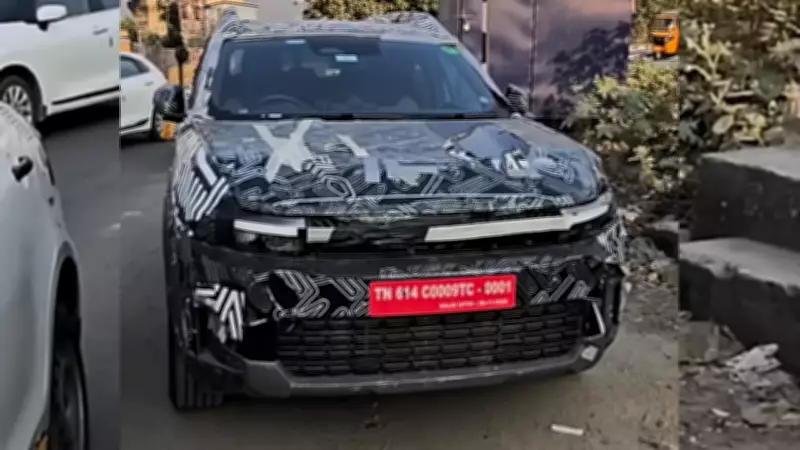
The test mule of the Renault Bigster was captured heavily camouflaged, making it challenging to discern full design details. However, key elements are visible, offering insights into its aesthetic and functional aspects. At the front, the SUV showcases a wide horizontal LED daytime running light signature, with the main headlamp units positioned lower on the fascia. This arrangement creates a layered lighting effect, enhancing both style and visibility.
Although the grille and bumper remain concealed under wraps, the overall proportions suggest an upright and robust SUV stance, aligning with Renault's design philosophy for rugged vehicles. From the side, the Bigster exhibits a large, boxy profile typical of three-row SUVs, emphasizing practicality and space. It rides on sizable alloy wheels, likely measuring around 19 inches, and features prominent wheel arch cladding that adds to its adventurous appeal.

A tall roofline and extended rear overhang hint at ample interior room, particularly for accommodating a third row of seats. At the rear, the prototype appears to include a roof spoiler and vertically oriented tail lamps, though exact designs are obscured. The upright tailgate and wide stance contribute to a commanding road presence, reminiscent of the Duster's strong reputation in India.
Interior and Feature Expectations
While interior details are not yet disclosed, the production model is anticipated to mirror the cabin layout of the Duster, potentially incorporating several shared features. Expected amenities include:
- A large touchscreen infotainment system with wireless Android Auto and Apple CarPlay connectivity
- A digital instrument cluster for enhanced driver information display
- Automatic climate control for optimal comfort
- Push-button start and keyless entry for convenience
- Rear AC vents to ensure passenger comfort
Higher variants may offer additional luxuries such as ventilated seats, a panoramic sunroof, a premium audio system, and advanced driver assistance systems, positioning the Bigster as a competitive offering in its segment.
Powertrain and Performance Specifications
Engine options for the Renault Bigster are likely to be carried over from the Duster, with some adjustments to suit its larger frame. The entry-level 1.0-litre turbo petrol engine is not expected to be available. Instead, the SUV is projected to utilize a 1.3-litre turbo petrol engine, delivering 163 PS of power and 280 Nm of torque, paired with a six-speed DCT automatic transmission for smooth performance.
In a move towards sustainability, Renault may also introduce a 1.8-litre E-Tech strong hybrid powertrain. This system aims to improve fuel efficiency and enable limited electric-only driving at low speeds in urban conditions, aligning with global trends towards electrification. Notably, diesel engines will not be part of Renault's India lineup, as the company has signaled a strategic shift towards hybrid technology in the near term and full electrification over the longer horizon.
Market Competition and Strategic Implications
The launch of the Renault Bigster marks a critical step in the brand's efforts to strengthen its foothold in India's SUV market. By entering the three-row segment, Renault aims to capture a share of the growing demand for spacious and versatile vehicles. Competitors like the Mahindra XUV 7XO and Tata Safari have set high benchmarks in terms of features, performance, and value, making this a challenging yet opportunistic arena for Renault.

Industry analysts suggest that the Bigster's success will hinge on its pricing, feature set, and the effectiveness of its hybrid offerings in appealing to eco-conscious consumers. As Renault continues to gear up for this product push, the automotive community eagerly awaits official announcements regarding launch timelines and detailed specifications.