38th Kerala Science Congress Concludes with Groundbreaking Innovations
The 38th Kerala Science Congress wrapped up in Kochi on Monday after a four-day event filled with deliberations, exhibitions, and interactive programs. This gathering successfully brought together a diverse audience, including scientists, researchers, students, and the general public, fostering a vibrant exchange of ideas and knowledge.
Technical Sessions and Sci-Sol Competition
The congress featured extensive technical sessions spanning multiple scientific disciplines, alongside the Sci-Sol competition. This competition was a highlight, presenting practical scientific solutions tailored to address local issues. Many of the entries showcased innovative and out of the box approaches, demonstrating the creativity and problem-solving skills of participants.
AI Teacher: A Virtual Educator by Students
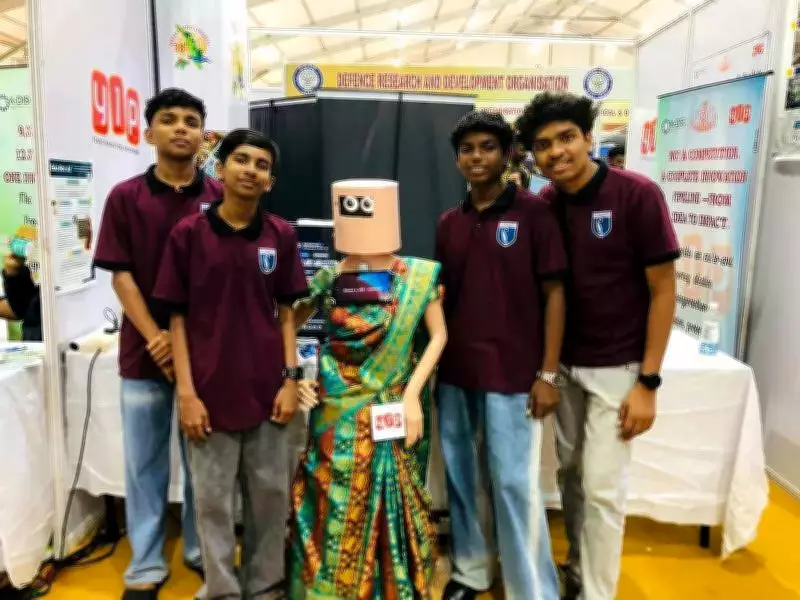
One standout innovation that captured significant attention was an AI-powered virtual teacher developed by a group of 10th standard students. A Agney, P C Haseef Mohammed, A Niranjan, and K Archith Prakash from PMHS Kakkoor in Malappuram created this AI teacher, dressed in a sari, to ensure uninterrupted learning even when a physical teacher is absent.

The system, named Edu Bot, allows a real teacher to control it remotely from anywhere in the world using the Edu Connect mobile app. This app facilitates admin management and activity tracking, making it a comprehensive tool for educators.
How the Edu Bot System Works
Operating on a custom Edu Bot OS, the system integrates modern web technologies such as HTML, CSS, JavaScript, jQuery, and Bootstrap. It includes six key applications that enhance the educational experience:
- Video calls for real-time interaction
- File sharing capabilities
- Real-time updates on school activities
- Chat functionality for communication
- A voice assistant that provides instant answers to student queries
- Attendance tracking via RFID scanning of school ID cards
Teachers can upload notes to the virtual AI teacher's screen through the Edu Connect app. When connected to a projector, these notes are displayed on a digital whiteboard, and any writing done on the mobile app from home appears simultaneously on the board. This setup enables the AI teacher to take attendance and interact directly with students, while parents can stay informed about school news and monitor their child's progress.
The young innovators expressed confidence in their creation, stating, "We can guarantee that Edu Bot AI will make learning more engaging," addressing concerns about long-term student engagement.
Other Notable Inventions
Beyond the AI teacher, the congress featured other significant innovations. A team from Cochin University presented a sensor capable of detecting synthetic drugs like MDMA when mixed with beverages, offering a potential tool for safety and health monitoring.
Additionally, students from Rajagiri Engineering College developed a non-invasive screening system that analyzes pupil response using a smartphone camera to assess drug consumption. This technology provides a quick and accessible method for detection without invasive procedures.
These inventions underscore the congress's role in promoting scientific research and practical applications that address real-world challenges, from education to public health.